TRENDING

Thursday, 15 October 2026
----------------------
4 Jumada Al-Awwal 1448 AH
A federal judge has temporarily blocked the White House's attempt to ban several prominent media outlets, citing likely violations of the First Amendment. This decision underscores a deep-seated struggle for control over information and the public narrative.
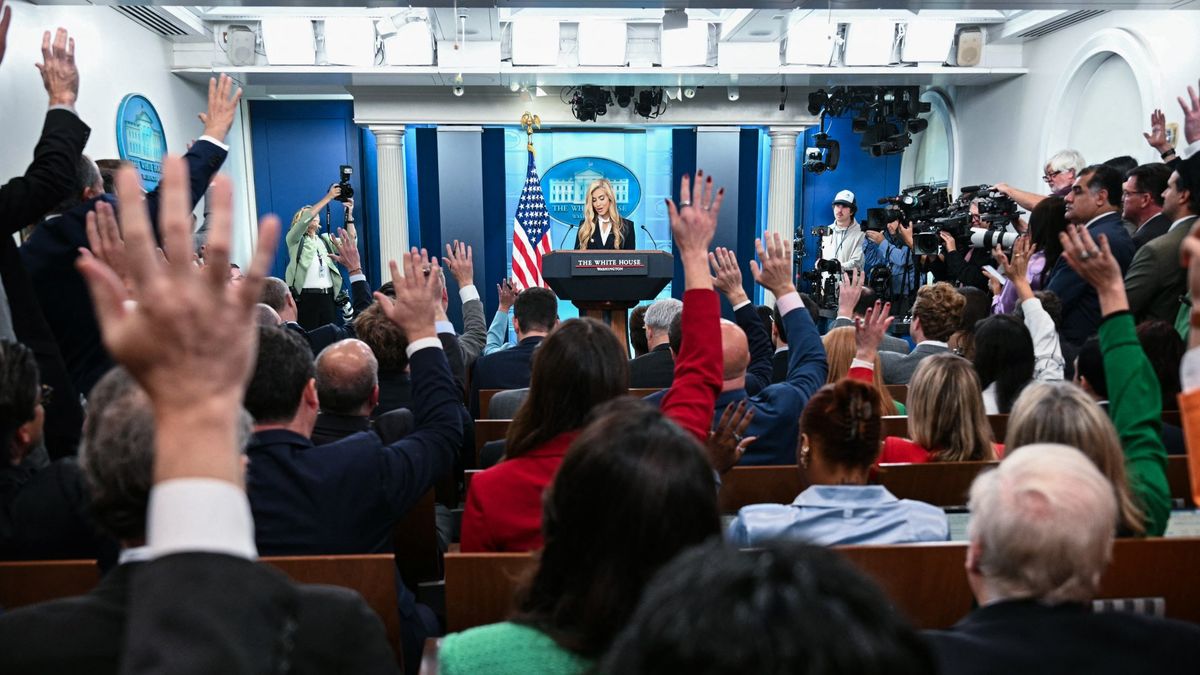
A federal judge has temporarily reinstated White House access for three major US media organizations—CNN, MS Now, and Politico—after President Donald Trump attempted to ban them from official briefings. US District Judge Timothy Kelly ruled that the administration likely violated the First Amendment by discriminating against the news outlets based on their viewpoints. The judge explicitly rejected the Department of Justice's claim that the ban was enacted on national security grounds, noting that President Trump himself had justified the decision by accusing the organizations of publishing "FICTION and LIES." This interim order stands until a final determination is made or an appeals court intervenes.
This judicial intervention is a stark illustration of the ongoing power struggle between the executive branch and both the judiciary and the free press in the United States. At its core, President Trump's attempt to ban specific media outlets from the White House is a calculated move to control the narrative and delegitimize critical reporting. For any powerful actor, control over information is paramount, and for an administration that frequently faces scrutiny, limiting access to those deemed hostile is a direct path to shaping public perception.
Historically, the White House press corps has served as a crucial check on presidential power, providing direct, real-time accountability. By attempting to revoke passes, the administration sought to bypass this traditional mechanism, effectively creating a more pliable information environment. The judge's ruling, however, reasserts the judiciary's role as a guardian of constitutional principles, specifically the First Amendment, which protects freedom of the press. This puts the power of the courts directly against the executive's desire for unchecked authority over public information.
The administration's tactic of labeling critical reporting as "fake news" or "lies" is not merely rhetorical; it is a strategic weapon. It serves to rally a political base that already distrusts mainstream media, while simultaneously discrediting any information that contradicts the official narrative. This strategy, increasingly common among authoritarian leaders globally, aims to erode public trust in independent institutions, leaving citizens more reliant on official government channels or ideologically aligned sources. The claim of "national security" by the Department of Justice, quickly dismissed by the judge, further reveals a willingness to invoke serious state concerns to mask politically motivated actions, a dangerous precedent for the use of executive power.
Ultimately, this episode highlights the deep-seated tension between a president seeking to maximize political survival and control, and the foundational democratic principles designed to ensure transparency and accountability. The ability to control who reports from the seat of power is a potent tool, and this legal battle is about defining the limits of that power in a modern, hyper-polarized information landscape.
The immediate impact of restricting White House media access might seem confined to journalists and politicians, but its ripple effects extend deeply into the lives of ordinary citizens, both within the United States and globally. When a government attempts to silence or selectively grant access to the press, the primary casualty is the public's right to know and its ability to make informed decisions.
Repeated attacks on the credibility of news organizations by the highest office erode public trust not only in the media but also in government institutions themselves. When citizens are constantly told that the press is lying, they become cynical and disengaged, finding it difficult to discern truth from falsehood. This creates a vacuum that is often filled by misinformation, conspiracy theories, and partisan narratives, leaving the public vulnerable to manipulation and making rational discourse nearly impossible.
A healthy democracy relies on an informed citizenry capable of scrutinizing its leaders and policies. By limiting access to diverse, independent reporting from the White House, the public is denied crucial perspectives and facts necessary to understand the complexities of governance. This makes it harder for individuals to hold their elected officials accountable, participate meaningfully in civic life, and protect their own interests against powerful forces. The result is a less engaged, less empowered populace.
Beyond the legal battles, the rhetoric surrounding these bans creates a hostile and dangerous environment for journalists. When a president labels specific outlets as purveyors of
President Trump claimed their reporting was "FICTION and LIES" and biased against him. His administration later attempted to justify the ban on national security grounds, a claim rejected by the federal judge.
The ruling temporarily upholds the First Amendment right of the press to access the White House, pushing back against executive attempts to control information and punish critical reporting. It reinforces the judiciary's role as a check on executive power.
It limits the public's ability to receive diverse, independent information directly from the seat of power, potentially leading to a less informed citizenry and erosion of trust in institutions. It also sets a dangerous global precedent for press freedom.
Source referenced: ALJAZEERA
This brief was synthesized by our Editorial Engine and reviewed by The Ground Narrative team.


