TRENDING

Wednesday, 14 October 2026
----------------------
3 Jumada Al-Awwal 1448 AH
Iran summoned the British ambassador after London accused Tehran of a plot at RAF Fairford. The dispute reveals deeper power games and a hidden human toll.
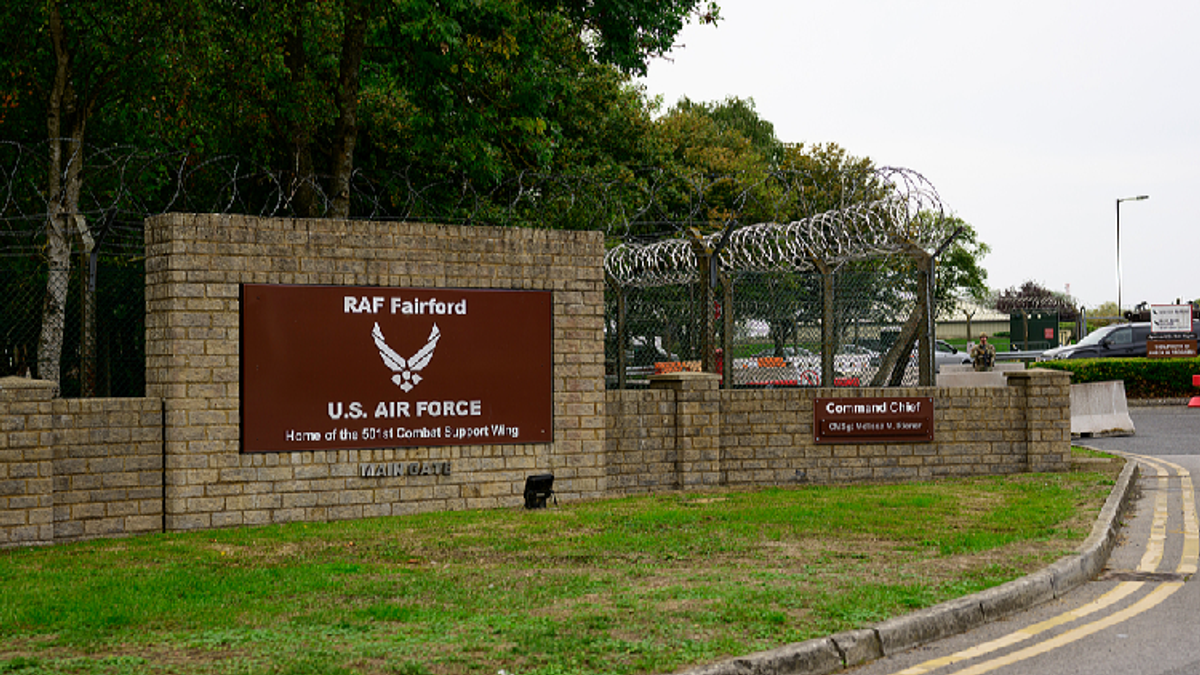
On 14 October 2026, Iran's foreign ministry summoned British ambassador Hugo Shorter to protest London’s claim that Tehran was behind a suspected plot targeting the Royal Air Force Fairford base in Gloucestershire. The British prime minister, Andy Burnham, had said it was “highly likely” Iran was involved after police detained five young men near the base in late September. Iran called the allegation “baseless,” demanded evidence, and warned of a reassessment of relations if the UK did not back up its charge.
Both capitals are using the incident to send messages to domestic audiences. In Britain, the Burnham government faces pressure to appear tough on security after a series of high‑profile terrorist scares. By publicly linking the Fairford episode to Iran, the prime minister reinforces a narrative of a vigilant government protecting national interests, which can translate into electoral capital.
In Tehran, the foreign ministry’s strong protest serves a dual purpose. First, it deflects any narrative that Iran is a rogue actor, preserving the regime’s claim of sovereignty against foreign interference. Second, it signals to internal hard‑liners that the leadership will not be shamed into submission, bolstering the regime’s legitimacy among nationalist constituencies.
The Fairford base is a key launch point for U.S. strikes against Iranian targets in the Middle East. Britain’s hosting of the facility ties it directly to the broader American‑Israeli campaign against Tehran. By accusing Iran, the UK implicitly aligns itself with that coalition, reinforcing the strategic partnership while also trying to keep the narrative focused on a non‑state threat rather than a state‑to‑state escalation.
Iran, for its part, leverages the accusation to highlight Britain’s role in the “U.S.–Israeli aggression” it repeatedly condemns. By framing the dispute as a symptom of Western hostility, Tehran attempts to rally other regional actors—such as Russia and China—who have expressed criticism of Western military basing in the Middle East.
The British police operation that seized the five suspects was based on surveillance of three vans heading toward the base. While gasoline was found, no explosives were recovered, leaving the case legally ambiguous. The lack of concrete evidence gives the UK government leeway to present the incident as a thwarted terrorist plot without committing to a full-blown espionage narrative that would require higher proof thresholds.
Iran’s demand for “documents and evidence” is a classic diplomatic tactic: it forces the UK to either disclose intelligence—risking sources—and potentially expose gaps in its case, or to retreat, which would look like a concession. The stalemate keeps both sides from escalating while preserving their respective bargaining chips.
The five individuals arrested were all in their twenties, a demographic already vulnerable to socioeconomic marginalisation in the UK. Their brief detention, public labeling as “terrorist suspects,” and subsequent bail have lasting repercussions: criminal records, employment difficulties, and social stigma. Families, many of whom are from immigrant or low‑income backgrounds, face emotional distress and financial strain from legal fees and the loss of household income.
Gloucestershire residents, accustomed to the quiet of rural life, now confront heightened security measures, increased police presence, and media scrutiny. The perception of a nearby terrorist threat can depress local tourism, affect property values, and foster a climate of fear that erodes community cohesion.
The Iranian community, already navigating a complex identity in post‑Brexit Britain, experiences renewed suspicion. Media narratives that link Iranian nationals to security threats can fuel xenophobic sentiment, leading to hate crimes, workplace discrimination, and tighter immigration controls that affect students, professionals, and families.
The Fairford base supports a network of contractors, suppliers, and service workers. Any disruption—whether through heightened security protocols or a diplomatic fallout that threatens base operations—could jeopardise jobs for hundreds of local civilians, from logistics staff to hospitality workers serving military personnel.
While the British government publicly asserted a “high likelihood” of Iranian involvement, it has not released the intelligence that underpins the claim. This omission serves two purposes: it protects sources and methods, and it allows the narrative to remain flexible. By keeping the evidence classified, officials avoid a scenario where a lack of hard proof could undermine public confidence or embolden Iran to demand reparations.
Tehran’s statement referenced the “U.S.–Israeli military aggression” and the hosting of “anti‑Iran terrorist groups.” What is left unsaid is the extent of Britain’s cooperation with covert operations targeting Iranian dissidents abroad. Intelligence reports over the past decade have documented joint UK‑US surveillance of Iranian opposition figures, a fact that the Iranian foreign ministry deliberately omits to keep the focus on the Fairford incident.
Both sides are courting allies. In the background, Russia has issued statements condemning Western military basing near its sphere of influence, while China has called for restraint and dialogue. These powers stand to gain from a weakened UK‑US partnership, yet their diplomatic comments are largely absent from mainstream coverage, obscuring a wider geopolitical contest.
Western outlets have largely framed the story as a counter‑terrorism success, emphasizing the “quick police action” and the “danger averted.” Iranian state media, conversely, paints the incident as a manufactured pretext for Western aggression. The middle ground—where the truth likely lies in a mix of genuine security concerns and political posturing—is rarely explored, leaving the public with polarized narratives.
- Evidence disclosures: Any leak or official release of the intelligence that linked Iran to the Fairford vans will shift the diplomatic balance. Watch for parliamentary inquiries or whistleblower reports.
- Retaliatory measures: Iran has warned of a “serious reconsideration” of relations. Potential actions include scaling back cooperation on counter‑terrorism, limiting access for British firms in Iran, or leveraging its influence in the Non‑Aligned Movement to isolate the UK.
- Allied responses: Monitor statements from the United States, Israel, Russia, and China. Their positioning will indicate whether the incident becomes a flashpoint in larger great‑power competition.
- Domestic political fallout: In Britain, opposition parties may demand a parliamentary debate on the handling of the case, especially if evidence remains undisclosed. In Iran, hard‑liners could use the incident to justify crackdowns on dissent.
- Community impact: Follow legal outcomes for the detained youths and any rise in hate crimes against Iranians in the UK. Local NGOs and civil‑rights groups will likely issue reports that reveal the human side of the diplomatic tug‑of‑war.
Staying attuned to these threads will help ordinary citizens understand how a handful of vans can ripple through international alliances, domestic politics, and everyday lives.
The UK has not released the intelligence publicly. Police reported gasoline in the vans but no explosives, and officials cited a “high likelihood” of Iranian involvement without detailing the sources.
If Tehran follows through on its threat to reconsider relations, sanctions could be tightened, and existing trade agreements may be suspended, impacting sectors like oil, pharmaceuticals, and tourism.
Editor's Note: Analysis based on publicly available statements and historical patterns; some intelligence details remain undisclosed.
Source referenced: CGTN
This brief was synthesized by our Editorial Engine and reviewed by The Ground Narrative team.