TRENDING

Thursday, 15 October 2026
----------------------
4 Jumada Al-Awwal 1448 AH
Israel faces an escalating internal crisis over Haredi military conscription exemptions, now a defining fault line in its politics. This debate exposes deep divisions over national identity, shared sacrifice, and the state's future.
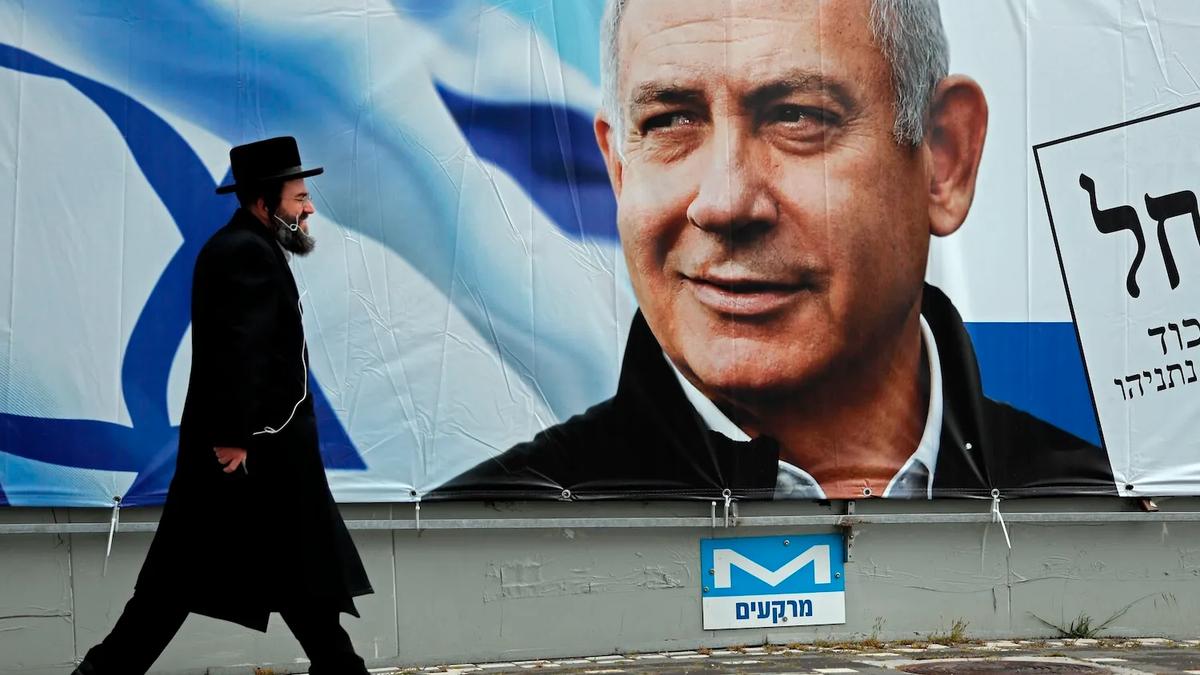
Israel is grappling with an escalating internal crisis over the long-standing exemption of Haredi (ultra-Orthodox) men from compulsory military service. This deeply divisive issue has taken center stage as the nation faces prolonged conflicts in Gaza and Lebanon, alongside heightened tensions with Iran, leading to an urgent demand for military personnel. For decades, a small number of yeshiva students were exempted, a policy established by David Ben-Gurion in 1948. However, the Haredi population has grown exponentially, now an estimated 13% of Israel's population, with projections suggesting they could make up nearly one in four Israelis by 2050. The Israel Defense Forces (IDF) warns of a significant soldier shortage, directly calling on the ultra-Orthodox community. This follows a Supreme Court of Israel ruling in June 2024 that blanket exemptions lacked legal basis and ordered conscription. This triggered a political earthquake, with ultra-Orthodox parties like Shas and United Torah Judaism (UTJ) vehemently opposing the draft, even withdrawing from Prime Minister Benjamin Netanyahu’s coalition in 2025. As a national election approaches on October 27, 2026, the Haredi conscription debate has eclipsed other critical national discussions, becoming the defining fault line in Israeli politics.
The current crisis starkly illustrates the intricate balance of power within Israel, where demographic shifts, religious identity, and political expediency collide with national security imperatives. The Haredi parties wield immense political leverage due to their consistent bloc voting and kingmaker role in Israel’s fragmented coalition system. This power has long safeguarded their traditional way of life, particularly the exemption from military service and state subsidies for Torah study. What began as an exemption for a few hundred scholars in 1948 has expanded to cover tens of thousands, creating a parallel system of citizenship where some contribute to national defense while others are exempt.
Prime Minister Netanyahu is caught between the urgent demands of the IDF, public resentment over unequal burden, and his own political survival. His coalitions rely heavily on Haredi support, making him reluctant to enforce conscription. His attempts to pass temporary legislative workarounds, annulled by the High Court, highlight this political tightrope. Haredi parties have made preserving the exemption a non-negotiable condition for any future government, framing Torah study as a "Torah Dome" protecting Israel spiritually—a view clashing sharply with the secular and national-religious emphasis on military service.
The Supreme Court acts as a critical counter-balance, repeatedly striking down legislative exemptions on grounds of equality. This judicial activism, while upholding a core principle for many Israelis, exacerbates the political crisis. Meanwhile, mainstream political leaders, including Benny Gantz and Gadi Eisenkot, increasingly call for universal service. Their growing momentum reflects a broader public sentiment, especially after October 7, 2023, that the burden of war must be shared equally. This clash of power centers—the Haredi political bloc, the Prime Minister's office, the Supreme Court, and mobilized public opinion—defines the current political landscape, making the upcoming election a referendum on Israel's social contract.
The ongoing debate over Haredi conscription carries profound human costs that ripple through Israeli society. The most immediate burden falls on the vast majority of non-Haredi Israelis who perform compulsory military service, often extending into years of reserve duty. These individuals dedicate significant portions of their lives to national defense, risking their lives in prolonged conflicts. The perception that a growing segment of the population is exempt fuels deep resentment, leading to feelings of unfairness and betrayal. Soldiers and their families grapple with the physical and psychological toll of war, while observing others seemingly shielded from these sacrifices. This disparity erodes morale and trust, fostering a sense of a two-tiered citizenship.
Beyond individual burdens, the conscription crisis is tearing at the fabric of Israeli society. The deepening divide between secular, national-religious, and ultra-Orthodox communities threatens to unravel fragile social cohesion. Public protests, clashes between Haredi demonstrators and police, and open defiance of draft orders signal dangerous internal friction. This fragmentation weakens the collective will and diverts national energy from external threats to internal strife. The idea of a shared national destiny, forged through common sacrifice, is increasingly challenged.
While often portrayed as a monolithic bloc resisting the draft, individual Haredi men and their families also face a complex human cost. Those considering enlistment risk social ostracization, pressure from community leaders, and disruption of their traditional way of life. The fear of exposure to secular culture and mixed-gender environments is a genuine concern. For a young Haredi man, choosing military service can mean navigating a profound personal and communal conflict. This internal struggle highlights the tension between individual conscience and deeply ingrained communal identity. Furthermore, a significant portion of Haredi men dedicate their lives to Torah study, often relying on state subsidies. This places an increasing economic burden on the state, especially as the Haredi population grows. This imbalance contributes to resentment from taxpayers who perceive themselves as supporting a community not fully participating in the national economy or defense, creating a long-term unsustainable dependency.
The public discourse often frames Israel's Haredi conscription crisis as a simple matter of "equality" or "burden sharing." While critical, this framing overshadows deeper, more fundamental narratives that powerful actors downplay or omit. The true untold story lies in the existential questions this crisis poses about the very identity and future of the Israeli state.
This is not merely a debate about military service; it is a profound ideological struggle over what kind of nation Israel is destined to be. Is it a secular, democratic state where all citizens share equal responsibilities, or a nation fundamentally defined by religious law and the primacy of Torah study? The Haredi community implicitly argues for the latter, viewing their way of life and religious scholarship as central to Israel's spiritual survival. Mainstream Israelis, however, see the IDF as the ultimate unifying force and guarantor of the state's physical existence, demanding universal participation. Governments, keen to avoid alienating crucial voting blocs, often reduce this profound cultural clash to a technical debate about draft quotas, obscuring the deeper battle for Israel's foundational principles.
Beyond immediate wartime needs, the long-term demographic trends are the elephant in the room. The Haredi population's rapid growth means the proportion of non-serving citizens will continue to expand. This isn't just about filling 12,000 soldier slots today; it's about the sustainability of the IDF and the national economy in decades to come. As the military-eligible population shrinks and the economic burden of a large, non-integrated segment of society grows, the state's capacity to defend itself will be severely strained. Politicians often prioritize short-term electoral cycles, downplaying looming structural challenges that demand painful, long-term reforms. Furthermore, while the IDF and some politicians propose "Haredi units" or tailored frameworks, their effectiveness and scalability are often overstated. Integrating tens of thousands of Haredi men while fully preserving their insular lifestyle is a complex logistical and cultural challenge. The military, by nature, fosters national cohesion, often requiring individuals to adapt to a common culture. The "Haredi as Haredi" promise, while politically appealing, risks creating a parallel military that struggles with integration and combat effectiveness. The deeper issue is bridging a vast cultural chasm and building trust, not just creating separate battalions. This nuance is often omitted in political rhetoric, which prefers the simpler narrative of "accommodating" the Haredim.
Finally, the crisis often festers because it serves certain political interests. For Netanyahu, Haredi parties are indispensable for maintaining power, making decisive action on conscription a direct threat to his premiership. For Haredi parties, the conscription issue is their raison d'être, a powerful tool to mobilize their base and extract concessions. This perpetual crisis thus becomes a feature of the political landscape, ensuring a comprehensive, long-term solution addressing national security and societal equality is deferred, leaving the nation in perpetual internal conflict.
As Israel approaches its critical election on October 27, 2026, the outcome will profoundly shape the trajectory of the conscription crisis and the nation's future. The immediate focus will be on the formation of the next government:
- Coalition Negotiations: Will any party form a government without the Haredi blocs, or will their kingmaker status remain? Watch for concessions or creative legislative maneuvers to appease Haredi parties while addressing public anger.
- The Supreme Court's Continued Role: Should a new government attempt to circumvent conscription, the Supreme Court is likely to intervene again. This judicial-political clash will indicate the health of Israel's democratic institutions.
- Haredi Community Response: How will the Haredi community react if stricter enforcement begins? Watch for the scale of protests and any shift in internal community dynamics regarding enlistment.
- IDF Readiness and Public Morale: The IDF's ability to meet personnel needs will be closely watched. If the issue remains unresolved, the military may face increasing operational challenges, further straining public morale.
- Societal Cohesion: Observe the broader societal mood. Will divisions deepen, or will a pragmatic compromise, driven by national necessity, emerge? The long-term stability of Israel hinges on its ability to reconcile these deeply opposing visions for its future. The debate over who serves is a symptom of a larger struggle for the nation's identity, and its resolution will define Israel's character for generations.
The exemption originated in 1948 when Israel's first Prime Minister, David Ben-Gurion, granted it to a small number of yeshiva students to preserve religious scholarship after the Holocaust. Over decades, as the Haredi population grew, this exemption expanded significantly, becoming a deeply entrenched policy.
The Haredi community is Israel's fastest-growing demographic, projected to be nearly one in four Israelis by 2050. This growth exacerbates the military conscription crisis, strains the national economy due to a large non-working male population, and deepens societal divisions over shared civic responsibilities and national identity.
The conscription debate is a central issue in Israeli politics, especially with an upcoming election. Haredi parties wield significant power as kingmakers in coalition governments, making their support for exemptions a critical factor for any potential Prime Minister, including Benjamin Netanyahu, who relies on their political backing.
Source referenced: FOREIGNPOLICY
This brief was synthesized by our Editorial Engine and reviewed by The Ground Narrative team.