TRENDING

Wednesday, 14 October 2026
----------------------
3 Jumada Al-Awwal 1448 AH
A hypothetical 'Iran war' has shattered the United States' long-held assumptions about its fixed military bases in the Persian Gulf, forcing a fundamental re-evaluation of its power projection in the Middle East.
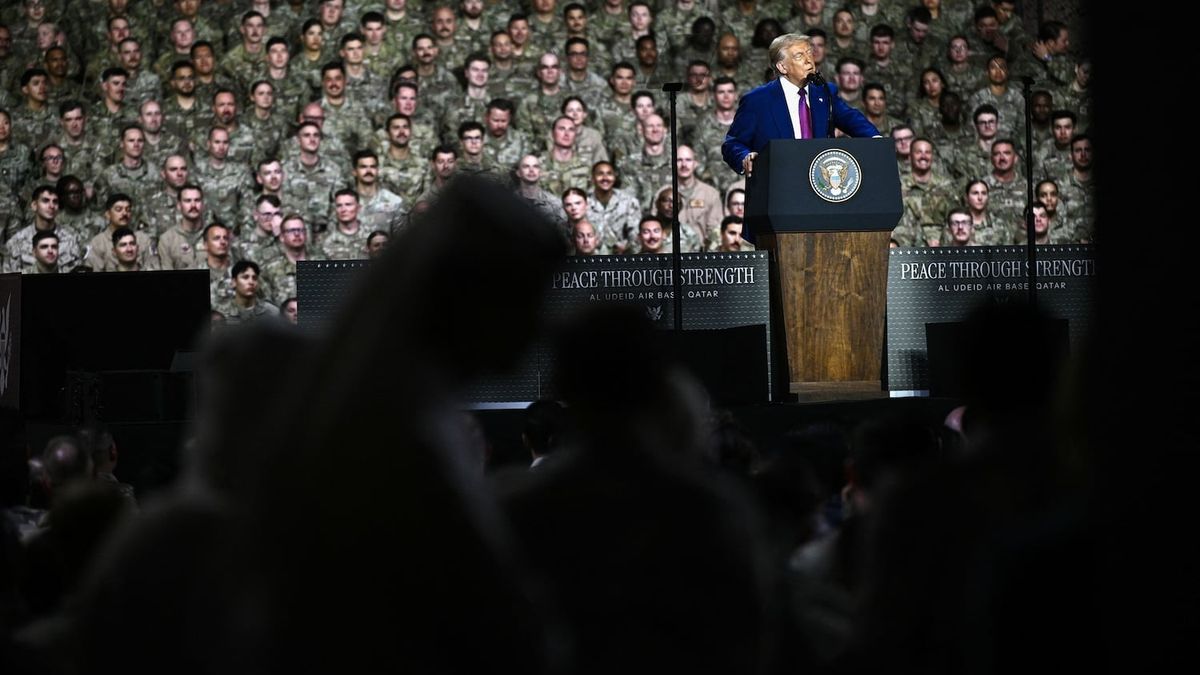
The "Iran war," as described in 2026, has fundamentally reshaped the United States' military posture in the Middle East. For decades, the US relied on large, permanent bases across the Persian Gulf to project power, confident in their invulnerability to regional adversaries. However, sustained attacks by Iranian missiles and drones repeatedly struck these facilities, forcing the evacuation of personnel and the shifting of operations, effectively shattering the long-held assumption that such fixed sites were safe. This operational reality has compelled the Pentagon to reconsider its entire forward basing strategy, moving away from simply hardening existing sites or relocating them westward, towards a more dispersed and modular approach that prioritizes agility and resilience over fixed presence.
This strategic pivot is a direct consequence of a fundamental shift in the balance of military power and the evolving nature of modern warfare. The United States' traditional reliance on large, fixed installations, such as Al Udeid Air Base in Qatar or Prince Sultan Air Base in Saudi Arabia, was predicated on an era where adversaries lacked the precision and range to effectively target such sites. This assumption, however, proved fatally flawed against Iran's evolving arsenal.
Tehran has demonstrated a sophisticated capability to deploy a mix of missiles and drones, which, while individually less costly than the advanced interceptors used by the US, can overwhelm defenses through sheer volume and persistent targeting. The intelligence suggests Iran possessed detailed knowledge of US base layouts, enabling precise strikes on critical infrastructure like command centers, hangars, and fuel depots. This asymmetric cost exchange – where the attacker expends relatively cheap munitions to force the defender to use expensive interceptors or evacuate – creates an unsustainable burden for the defending force. The report notes the US expended over 1,000 interceptors, including a significant portion of its Patriot and THAAD stocks, in just six weeks. This is a clear display of Iran's power to dictate terms on the battlefield through economic attrition, effectively turning the US's fixed assets into liabilities.
The US military's ability to quickly shift operations, evacuating facilities like Al Udeid's Combined Air Operations Center before it was struck, highlights a tactical success in adapting to the immediate threat. However, it also underscores the strategic failure of the initial basing doctrine. The very notion of a "permanent base" implies a level of security and operational continuity that no longer exists in an environment saturated with long-range precision weapons. The war has shown that the true power lies not in fixed fortifications, but in agility, dispersal, and the ability to operate from a wide array of locations, including civilian infrastructure. This adaptability is now seen as the key to maintaining power projection capabilities in a contested environment, rather than relying on static, vulnerable strongholds.
The power dynamics extend beyond the direct US-Iran confrontation to include the host nations. The report reveals instances where Saudi Arabia and Kuwait temporarily restricted US access to their facilities, driven by concerns about US commitment to their defense and a perceived downplaying of Iranian attacks. Similarly, Israel capped the number of US tankers at Ben Gurion Airport due to civilian air traffic concerns. These incidents expose a critical vulnerability in the US's traditional basing model: a reliance on host nation cooperation that can be withdrawn or limited when their national interests diverge from Washington's. This gives host nations significant, albeit often overlooked, leverage over US operations. The "entanglement costs" of alliances, particularly with Israel, are also highlighted, where US forces could be drawn into conflicts initiated by allies without direct US provocation, further complicating the power matrix and potentially straining relations with other Arab partners.
The Pentagon faces a choice between rebuilding and hardening existing bases, shifting them westward to countries like Jordan and Israel, or adopting a more modular, dispersed posture. The analysis argues against the first two, asserting they merely relocate or exacerbate the fundamental problems of vulnerability and cost. Rebuilding would be prohibitively expensive and still leave targets exposed. Shifting west would put new permanent targets within Iran's expanded range and increase political risks with host nations. The proposed alternative – a "lighter, more modular posture" – seeks to regain power through unpredictability and resilience, distributing assets across numerous sites, including civilian airfields, and keeping most forces at home in peacetime. This strategy aims to reduce the target footprint, complicate Iranian targeting, and mitigate the political risks associated with large, permanent foreign deployments. It signifies a recognition that the power to project force is no longer solely about overwhelming presence, but about adaptable absence and rapid, distributed deployment.
While strategic discussions often focus on military assets and geopolitical maneuvers, the human element remains central to any conflict and its aftermath. The shift in US military basing strategy, forced by the "Iran war," carries significant human costs, affecting not only military personnel but also regional populations and the broader socio-economic fabric.
For the thousands of US service members deployed to the Middle East, the "Iran war" and the subsequent strategic pivot represent a profound disruption to their lives and operations. The previous model, while involving deployments, offered the relative stability of large, established bases with extensive infrastructure, housing, and support services. These facilities, often resembling small American towns, provided a semblance of normalcy and routine in a foreign land. The repeated Iranian missile and drone strikes, however, transformed these perceived safe havens into active targets. This created an environment of heightened alert, constant threat, and the psychological burden of operating under direct attack.
The forced evacuation of bases and the need to rapidly shift operations to alternative, often less equipped, locations means increased stress, uncertainty, and a reduction in quality of life. Personnel are likely operating from more austere environments, with fewer amenities and potentially less robust support networks. The emphasis on dispersal means smaller, more isolated detachments, which can impact morale, unit cohesion, and access to critical services like medical care or mental health support. The constant movement and lack of a fixed "home" base can exacerbate feelings of instability and contribute to burnout, ultimately affecting readiness and long-term well-being.
The proposed shift towards utilizing a wider variety of airfields, including civilian ones, and dispersing military assets across the region, introduces a new layer of risk for local populations. Integrating military operations into civilian infrastructure, even temporarily, blurs the lines between combatant and non-combatant zones. While this strategy aims to protect US forces by making them harder to target, it inadvertently increases the potential for collateral damage to civilian areas should these dispersed sites come under attack. A civilian airport, for instance, suddenly hosting military refueling tankers or munitions, becomes a legitimate military target in the eyes of an adversary, placing the surrounding communities at greater risk.
Furthermore, the presence of military assets, even if dispersed, can heighten tensions and make host nations more vulnerable to retaliation. The "Iran war" itself, though focused on US bases in the intelligence, undoubtedly had broader devastating impacts on regional stability, economies, and civilian lives that are not detailed. A continued, albeit reconfigured, US military presence means the region remains a theater of potential conflict, with ordinary citizens bearing the brunt of any escalation. Local economies, which might have benefited from the stable presence of large bases, could face disruption as these facilities are downsized or abandoned, leading to job losses and economic uncertainty for those employed in support roles.
The instances where Saudi Arabia, Kuwait, and Israel restricted US access to their facilities highlight the inherent political and social strain of foreign military presence. While these actions were driven by national interests, they reflect a broader unease and a desire to control their own destiny. For host populations, the presence of foreign troops can be a source of resentment, seen as an infringement on sovereignty or a magnet for conflict. A more dispersed, less visible US presence might reduce some of these overt tensions, but it could also lead to a perception of reduced commitment, potentially empowering other regional actors or creating a security vacuum. The human cost here is less about direct casualties and more about the erosion of trust, the manipulation of local politics, and the long-term impact on regional self-determination. The decision to shift military strategy is not just a logistical puzzle; it's a complex interaction with the lives, livelihoods, and political aspirations of millions across the Middle East.
The narrative presented by the raw intelligence, while offering a clear-eyed assessment of US military vulnerabilities and strategic options, inherently focuses on the perspective of the Pentagon and its immediate operational challenges. What remains largely unsaid are the broader contexts, the deeper historical currents, and the human realities that underpin such a significant strategic shift.
The most glaring omission is the nature and scale of the "Iran war" itself. The intelligence refers to it as a catalyst for strategic rethinking, but offers no details about its origins, its broader human toll, or its geopolitical consequences beyond the immediate impact on US bases. Was it a limited conflict, a proxy war, or a full-scale regional conflagration? How many lives were lost – civilian and military, Iranian and otherwise? What was the economic devastation? By framing the conflict solely through the lens of US basing strategy, the immense human suffering and regional instability caused by such a war are effectively downplayed, if not erased. This allows the conversation to remain technical and strategic, sidestepping the profound ethical and political questions surrounding the initiation and conduct of such a conflict.
The proposed strategy of relying on "access to a wide variety of airports and host-country air bases" and deploying personnel "only in a crisis" sounds flexible and cost-effective. However, it downplays the political complexities and long-term implications of such arrangements. Securing "access" is not a one-time transaction; it involves continuous diplomatic effort, security guarantees, and often, quid pro quos. Host nations, particularly those with less stable governments or strong anti-Western sentiments among their populations, may find it politically difficult to grant such access, especially if it means becoming a potential target in a US-Iran conflict.
Furthermore, the idea of "prepositioning weapons, equipment, and fuel" at select sites, with US personnel surging in during a crisis, still creates a footprint. These prepositioned sites would become targets, regardless of whether US personnel are permanently stationed there. The narrative also omits the potential for these "temporary" arrangements to become de facto permanent over time, as operational needs dictate, leading to the same issues of host nation resentment and "entanglement costs" that the new strategy seeks to avoid. The political capital required to maintain such a complex, distributed network of access agreements is substantial and often underestimated.
The report highlights that the US relied on large, fixed bases for "a generation," confident they were "beyond the reach" of adversaries. This implicitly downplays a significant historical oversight and a degree of strategic myopia. For decades, military analysts and intelligence agencies have warned about the proliferation of precision-guided munitions and drones, and the increasing vulnerability of fixed targets. The fact that it took an actual "Iran war" to "shatter that assumption" suggests a failure to adapt to evolving threats proactively. This omission sidesteps questions about accountability for past strategic miscalculations and and the institutional inertia that allowed an outdated basing doctrine to persist for so long. The true cost here is not just financial or military, but the cost of strategic complacency and a reactive rather than proactive defense posture.
Beyond the tactical adjustments, the shift in US basing strategy signals a deeper, unspoken geopolitical reordering in the Middle East. A less permanent, more dispersed US presence could be interpreted in various ways by regional actors. Some might see it as a strategic retreat, creating a vacuum that other powers, like China or Russia, might seek to fill. Others might view it as a more agile and therefore more formidable US posture. The report downplays the potential for misinterpretation and the subsequent destabilization this could cause. The long-term implications for regional alliances, the balance of power, and the willingness of smaller states to align with the US are significant and largely unaddressed in the tactical discussion of base configuration. The "untold story" here is the potential for a new era of regional power struggles, less constrained by a visible, overarching US presence, leading to unpredictable shifts in allegiances and security dynamics.
The "Iran war" has forced the United States to confront the obsolescence of its long-standing military basing strategy in the Middle East. As the Pentagon deliberates its next steps, several critical indicators will reveal the true direction and impact of this strategic pivot.
First, observe the Pentagon's concrete policy announcements regarding its force posture. Will it fully embrace the "lighter, more modular" approach, or will there be a compromise that still involves significant investment in hardening existing large bases or establishing new, albeit smaller, permanent facilities in new locations like Jordan or Israel? The allocation of billions of dollars for infrastructure projects will be a clear signal of the chosen path. Pay attention to the budget requests and congressional debates surrounding these decisions, as they will reflect the internal power struggles and differing strategic visions within the US defense establishment.
Second, monitor the reactions and actions of key Middle Eastern host nations. How will Qatar, Saudi Arabia, Kuwait, and others respond to a potentially reduced or reconfigured US presence? Will they view it as a sign of diminished commitment, prompting them to seek alternative security partners or pursue independent military build-ups? Conversely, will they welcome a less intrusive, albeit still capable, US military footprint? Watch for any new defense agreements, military exercises with non-US partners, or public statements that indicate a shift in their strategic alignments. The willingness of these nations to grant "access" to their civilian and military airfields for US operations will be a crucial test of the new strategy's viability.
Third, keep a close eye on Iran's military development and regional activities. If the US adopts a dispersed posture, will Tehran continue to invest heavily in long-range precision missiles and drones, attempting to counter the new US strategy by developing capabilities to target a wider array of smaller, more mobile sites? Or will Iran perceive a reduced US footprint as an opportunity to expand its influence or challenge regional rivals more aggressively? Any significant shifts in Iran's military doctrine or its proxy network's operations will be directly linked to its interpretation of the evolving US posture.
Finally, assess the long-term impact on US military personnel and their operational readiness. The success of a dispersed strategy hinges on the ability of forces to train effectively at home and rapidly deploy and operate in austere, varied environments. Look for reports on troop morale, retention rates, and the effectiveness of new training regimes designed for this modular approach. The human element will ultimately determine whether this strategic pivot is a sustainable path forward or merely a temporary fix to a deeper problem. The shift away from fixed mega-bases is not just a tactical adjustment; it represents a fundamental re-evaluation of how America projects power, with profound implications for regional stability and the future of warfare."
,
The 'Iran war' (2026) exposed the vulnerability of large, fixed US military bases in the Persian Gulf to sustained Iranian missile and drone attacks. This shattered the assumption of their invulnerability, forcing the Pentagon to seek more adaptable strategies.
US service members face increased stress and reduced quality of life due to constant movement and austere conditions. Local populations near civilian airfields used for military operations could face increased risk of conflict spillover, and regional economies might be disrupted by base reconfigurations.
Host nations might view a less permanent US presence as diminished commitment, potentially seeking alternative security partners. Their willingness to grant crucial access to their airfields will be a key factor, as their national interests may diverge from Washington's.
Editor's Note: Analysis is based on a hypothetical 'Iran war' scenario as presented in the raw intelligence, focusing on the strategic implications without questioning the premise of the conflict itself.
Source referenced: FOREIGNPOLICY
This brief was synthesized by our Editorial Engine and reviewed by The Ground Narrative team.


