TRENDING

Friday, 25 September 2026
----------------------
14 Rabi' Al-Thani 1448 AH
Serbian President Aleksandar Vucic's announcement to step down, following months of widespread protests, signals a pivotal moment for the Balkan nation. This development triggers early elections and intensifies international scrutiny on Serbia's democratic trajectory and its delicate geopolitical balancing act between the European Union, Russia, and China.
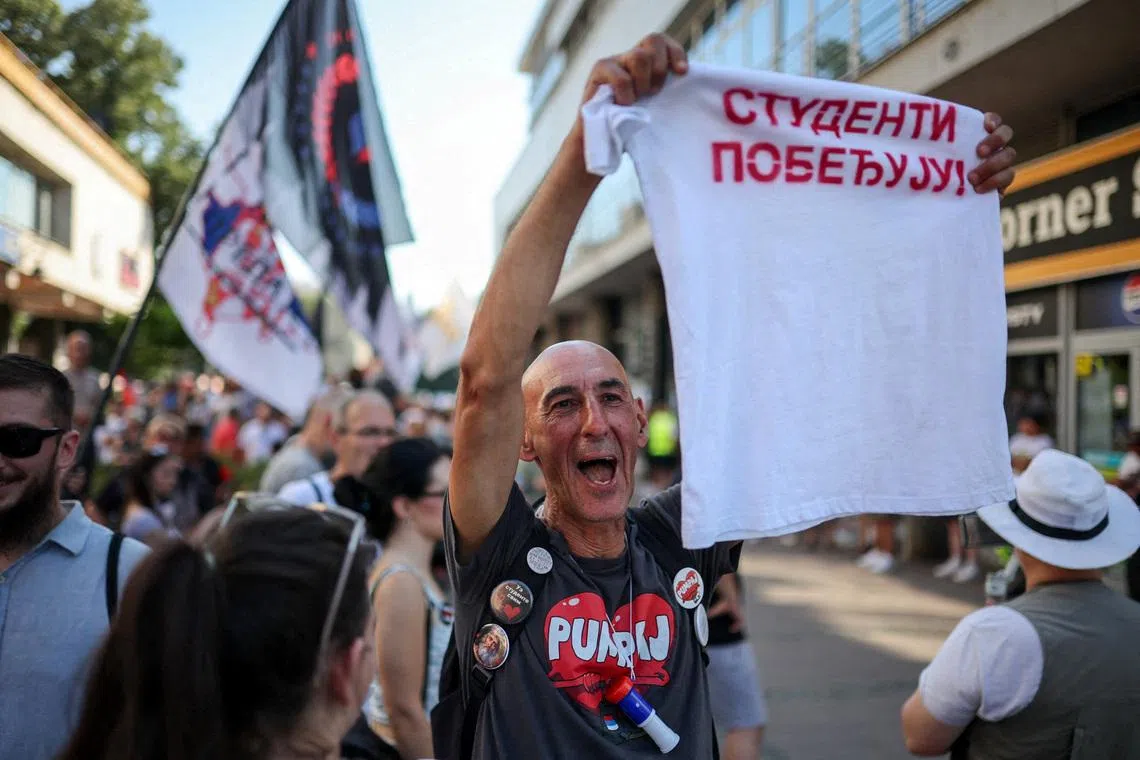
On June 28, 2026, Serbian President Aleksandar Vucic, a dominant figure in Serbian politics for 12 years, announced his intention to step down, paving the way for early presidential and parliamentary elections. This decision comes after months of sustained, student-led protests that have grown to become the largest demonstrations in Serbia since the overthrow of Slobodan Milosevic in 2000. The immediate catalyst for the unrest was the tragic collapse of a concrete awning at a railway station in Novi Sad in late 2024, which resulted in 16 fatalities. This incident quickly became a potent symbol of widespread public discontent over perceived government mismanagement and deep-seated corruption under Vucic's administration.
While Vucic denies any corruption, the protests, initially demanding justice for the victims, rapidly escalated into calls for his resignation and comprehensive political change. The announcement of his departure, though seemingly a concession to public pressure, is viewed by many analysts and protesters with a degree of skepticism. Observers suggest that Vucic, a seasoned political operator, may be orchestrating a strategic maneuver to retain power by potentially running for prime minister or installing a close ally in the presidency. Such a move would allow him to continue wielding significant influence over the nation's political landscape, effectively shifting his formal role while maintaining de facto control. This tactic is not uncommon in regions where strong leaders seek to navigate public dissent or constitutional limits without fully relinquishing authority.
Serbia's political developments are not merely an internal affair; they carry significant geopolitical weight due to the country's strategic location and complex international allegiances. Situated on the European Union's eastern doorstep, Serbia is a candidate for EU membership, a process that demands adherence to democratic principles, rule of law, and alignment with the bloc's foreign policy. However, Belgrade has simultaneously cultivated strong ties with both Russia and China, a delicate balancing act that Vucic has meticulously managed throughout his tenure.
The EU has been a vocal critic of certain aspects of Serbia's governance, particularly raising concerns about press freedom, the independence of the judiciary, and the use of force against peaceful protesters. For Brussels, the upcoming elections and the broader political transition represent a critical test of Serbia's commitment to democratic reforms, which are prerequisites for its eventual accession to the bloc. The EU's demands include tangible improvements in the rule of law, eradication of corruption and organized crime, and the establishment of normalized relations with Kosovo, its former province that declared independence in 2008.
Beyond the EU, both Moscow and Beijing are closely monitoring the unfolding events. Russia views Serbia as a key traditional ally in the Balkans, a region where it seeks to maintain influence amidst NATO and EU expansion. Any significant shift in Serbia's political orientation or a weakening of pro-Russian sentiment could have broader implications for Russia's strategic interests in Southeast Europe. Similarly, China, a major investor in Serbian infrastructure projects through its Belt and Road Initiative, will be keen to ensure stability and continuity in its economic partnerships.
The coming weeks will be crucial in determining the true nature of Serbia's political transition. While the protests in cities like Kraljevo continue, reflecting a persistent demand for genuine change, the ultimate outcome remains uncertain. The question is not merely whether Vucic steps down, but how power will be redistributed and whether the forthcoming elections will genuinely reflect the will of the people, free from undue influence. The trajectory of Serbia's democratic institutions, its commitment to European values, and its complex geopolitical alignment will all be profoundly shaped by these developments, making the nation a focal point of international attention in the months ahead.