TRENDING

Monday, 5 October 2026
----------------------
24 Rabi' Al-Thani 1448 AH
Despite heightened concerns over safety, Turkish officials report that ships are passing smoothly through the Turkish straits to the Black Sea. However, the ongoing conflict between Russia and Ukraine poses significant risks to regional stability. As Turkey navigates its relationships with both nations, the human cost of the conflict continues to rise.
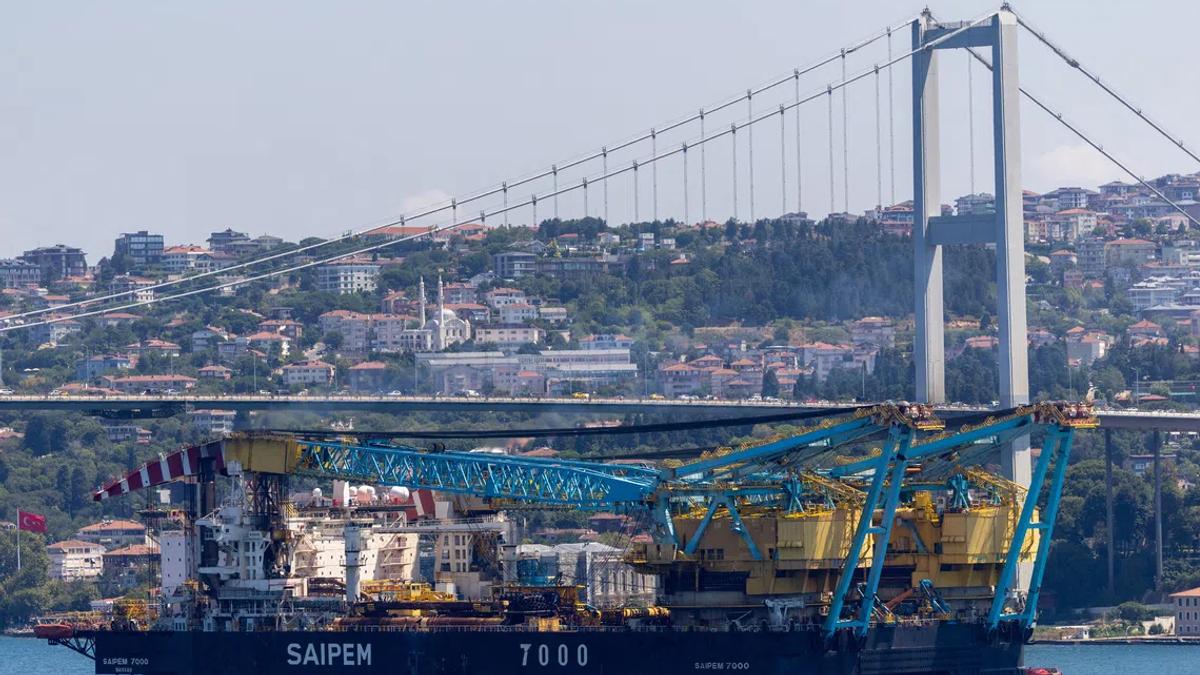
Turkish officials have confirmed that the passage of ships through the Turkish straits to the Black Sea is proceeding smoothly, despite recent attacks on vessels in the area. The Turkish government has issued warnings to both Russia and Ukraine, urging them to take measures to ensure navigational safety. The situation is complex, with Turkey maintaining cordial ties with both nations while refusing to join Western sanctions on Russia.
The 1936 Montreux Convention gives Turkey control over the Bosphorus and Dardanelles, allowing it to regulate the transit of naval warships and guarantee the free passage of civilian vessels in peacetime. This convention is crucial in the current conflict, as it enables Turkey to maintain a delicate balance between its relationships with Russia and Ukraine. Turkey's decision to provide military support to Ukraine while refusing to join Western sanctions on Russia demonstrates its attempts to navigate this complex geopolitical landscape.
The ongoing conflict in the Black Sea has significant human implications. The attacks on vessels have raised concerns about the safety of maritime trade, which could have far-reaching consequences for the global economy. Furthermore, the conflict has already resulted in significant human suffering, with thousands of civilians caught in the crossfire. As the situation continues to escalate, it is essential to consider the human cost of the conflict and the impact it has on local communities.
One aspect of the conflict that is often downplayed is the role of external actors in exacerbating the situation. The United States and other Western nations have been accused of providing military aid to Ukraine, which some argue has contributed to the escalation of the conflict. Meanwhile, Russia's actions in the Black Sea have been widely condemned, but the country's motivations and strategic objectives are often oversimplified or misunderstood. It is essential to consider the complex web of interests and alliances that are driving the conflict, rather than relying on simplistic narratives or binary oppositions.
As the situation in the Black Sea continues to unfold, it is crucial to monitor the actions of key players, including Turkey, Russia, and Ukraine. The implementation of the Montreux Convention and the regulation of maritime trade will be critical in determining the trajectory of the conflict. Additionally, the response of external actors, such as the United States and other Western nations, will be essential in shaping the outcome of the conflict. As the human cost of the conflict continues to rise, it is essential to prioritize diplomatic efforts and seek a peaceful resolution to the crisis.
Editor's Note: The analysis is based on publicly available information and may not reflect the full complexity of the situation on the ground.
Source referenced: STRAITSTIMES
This brief was synthesized by our Editorial Engine and reviewed by The Ground Narrative team.


