TRENDING

Monday, 5 October 2026
----------------------
24 Rabi' Al-Thani 1448 AH
A youth-led movement in India is demanding the resignation of the Chief Election Commissioner, alleging an unfair purge of millions of voters from the electoral roll. This controversy highlights the critical battle over who controls the democratic process in the world's largest democracy.
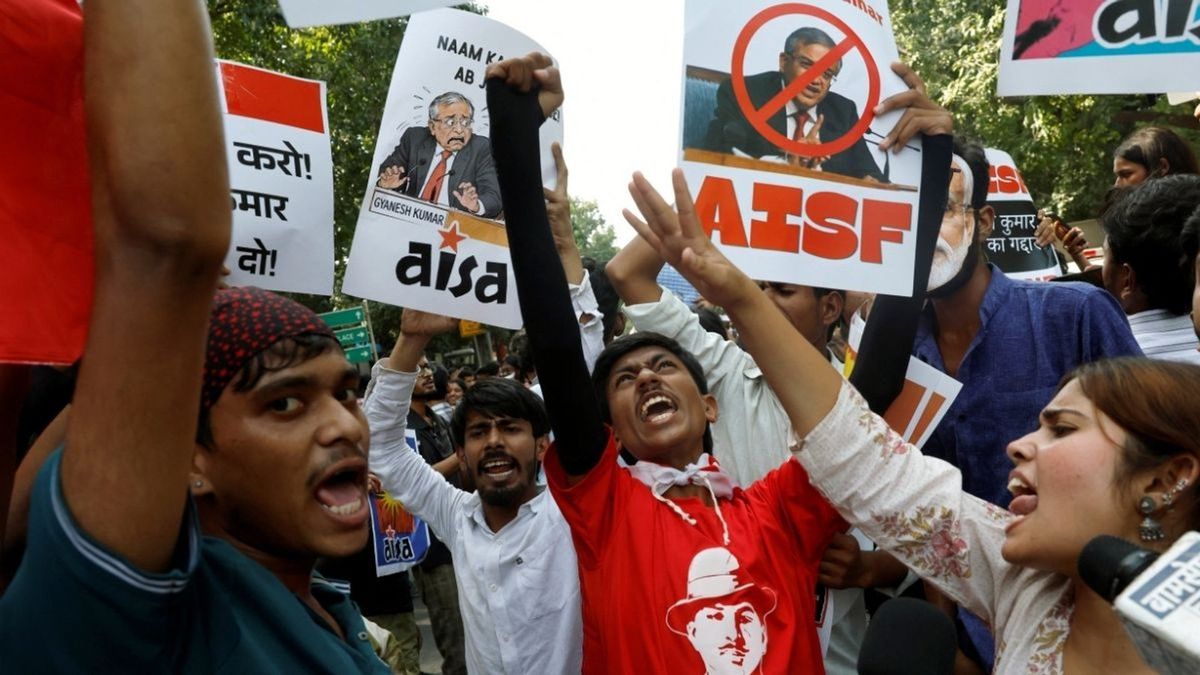
India is currently gripped by a significant democratic challenge as the youth-led Cockroach Janta Party (CJP) movement demands the resignation of the Chief Election Commissioner (CEC). The core of the dispute centers on an ongoing review of the nation's electoral roll, which critics, including the CJP, allege has unfairly led to the removal of tens of millions of eligible voters. Protesters contend that these revisions are a deliberate assault on the democratic process, designed to benefit the governing Bharatiya Janata Party (BJP) by disenfranchising specific segments of the electorate. The Election Commission, an ostensibly independent body, maintains that the reforms are long overdue and necessary to weed out duplicate entries and ensure the integrity of the voter list. This latest push by the CJP follows a successful campaign in July that saw the resignation of the education minister, signaling a growing public appetite for accountability.
At the heart of this controversy lies the fundamental power dynamic of who controls access to the ballot box in the world's largest democracy. The Election Commission of India (ECI) is constitutionally mandated to conduct free and fair elections, acting as an independent arbiter. However, its independence is always under scrutiny, particularly when the governing party holds a strong majority. The power to define who is an eligible voter is immense; it can shape election outcomes before a single vote is cast. The BJP, like any ruling party, seeks to consolidate its power, and control over the electoral process is a potent tool in this endeavor. While the Election Commission cites the need to remove duplicate entries, the sheer scale of the alleged removals—tens of millions—raises questions about the methodology and intent behind such an extensive purge.
The structural forces at play involve the delicate balance between institutional independence and political influence. The appointment process for the Chief Election Commissioner and other commissioners often involves the executive branch, creating a potential avenue for political alignment. If the ECI is perceived as acting in concert with the ruling party, it erodes public trust in the democratic system itself. This erosion of trust is a critical factor, as it can destabilize the social contract between the government and its citizens. Furthermore, the CJP's emergence as a potent force demonstrates the power of organized youth movements in challenging established authority. Their previous success in securing a ministerial resignation highlights a shift in the landscape of political activism, where direct action and public pressure can force concessions from powerful actors. This creates a parallel power structure, where the street can become a significant check on institutional power, especially when traditional checks and balances are perceived as weakened.
Economically, a stable and predictable electoral system is crucial for investor confidence and long-term planning. Any perception of widespread voter suppression or electoral manipulation can deter foreign investment and create internal economic instability. The political survival of the BJP is intrinsically linked to its ability to win elections, making the electoral roll a strategic asset. Conversely, the opposition and civil society groups see the integrity of the roll as the bedrock of their ability to challenge the incumbent. The current dispute, therefore, is not merely an administrative matter but a high-stakes battle over the very definition of democratic legitimacy in India.
The most immediate and profound human cost of the alleged electoral roll revisions falls on the
Source referenced: ALJAZEERA
This brief was synthesized by our Editorial Engine and reviewed by The Ground Narrative team.