TRENDING

Monday, 5 October 2026
----------------------
24 Rabi' Al-Thani 1448 AH
A bright, burning object streaked across the sky above Tripoli, sparking explosions and panic. The incident exposes tangled foreign interests and a civilian population caught in the crossfire.
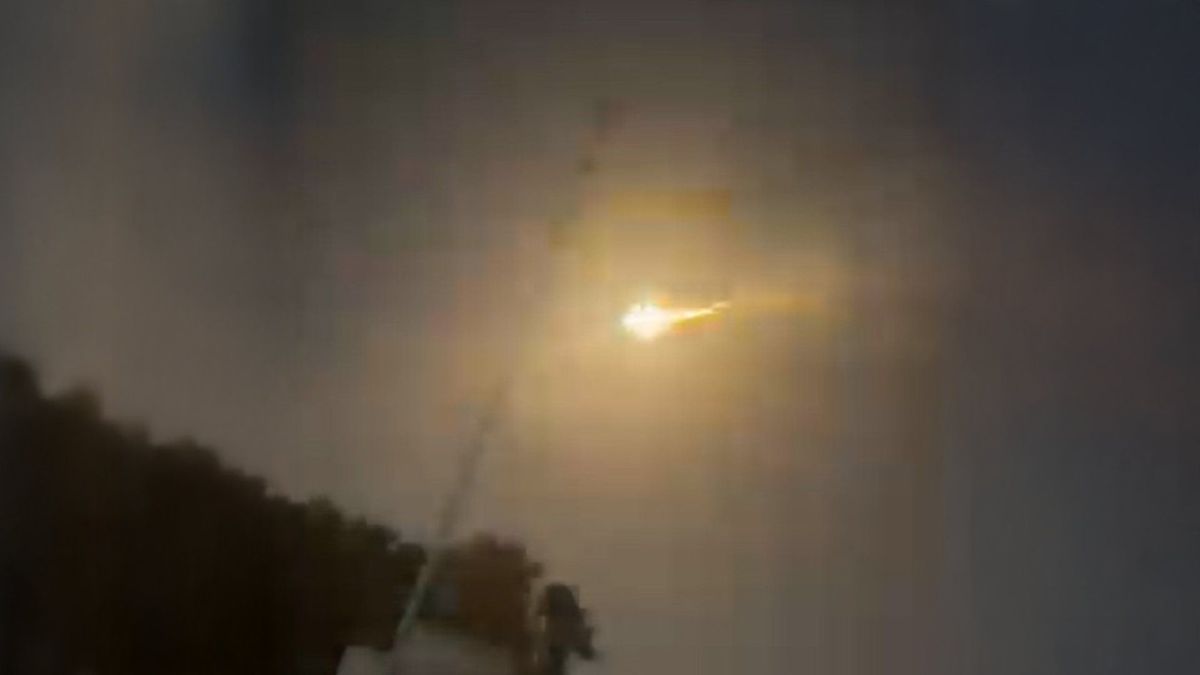
A luminous object was captured on video flying low over Tripoli and western Libya on the night of 4 October 2026. Witnesses reported a sudden, deafening explosion shortly after the object vanished, and social media flooded with shaky footage of a glowing trail against the dark horizon. No official statement has yet clarified whether the phenomenon was a missile, a drone, or something else, leaving the public to speculate amid a climate of uncertainty.
The skies above Libya have long been a testing ground for regional powers seeking influence without overtly breaching international norms. In recent years, the United Arab Emirates and Turkey have supplied rival militias with advanced loitering munitions and armed drones, turning the country into a proxy battleground. These weapons offer low‑cost, deniable strike capability, allowing external actors to pressure local factions while preserving plausible deniability. At the same time, the United States maintains a strategic interest in curbing extremist groups and securing migration routes, often providing intelligence and limited air support to the Government of National Unity (GNU). The mysterious object could be a product of this arms proliferation, a test of new technology, or a signal to rival backers that the balance of power remains fluid. Economic incentives also play a role: control of Libya’s oil infrastructure promises billions in revenue, prompting foreign investors to back whichever militia can guarantee access, even if that means covertly deploying unmanned weapons.
Civilians in western Libya already endure a fragile security environment, with frequent skirmishes disrupting daily life. The sudden explosion shattered windows in densely populated neighborhoods, injuring at least three people and prompting a temporary evacuation of nearby schools. Local markets, already struggling due to disrupted supply chains, faced further setbacks as merchants feared renewed attacks on transport routes. Moreover, the psychological toll of unpredictable skyborne threats erodes public confidence in the GNU’s ability to protect its citizens, fueling migration to Europe and deepening humanitarian strain. The oil sector, a lifeline for many families, risks shutdowns if aerial attacks target export terminals, potentially costing thousands of jobs and exacerbating poverty in already vulnerable communities.
Official channels have been conspicuously silent, a tactic that serves multiple purposes. By withholding details, the United Nations‑backed arms embargo remains superficially intact, allowing states to continue covert deliveries under the radar of international monitors. Simultaneously, regional media outlets downplay foreign involvement, framing the incident as a domestic accident to avoid inflaming nationalist sentiments. This narrative suppression masks the reality that external powers are exploiting Libya’s fragmented security apparatus to test new weaponry and signal resolve to rivals. The lack of transparent investigation also shields suppliers from accountability, preserving lucrative contracts and strategic footholds in the Mediterranean.
Observers should monitor satellite imagery for fresh scorch marks on known militia bases and any movement of drone launch sites near the coast. Diplomatic chatter at upcoming UN meetings on the Libyan arms embargo will reveal whether the international community will press for a formal inquiry. Finally, the GNU’s response—whether it calls for an independent investigation or simply tightens security checkpoints—will indicate how much political capital it is willing to expend to reassure its populace and deter further covert strikes.
Eyewitness videos show a luminous, fast‑moving object that exploded, suggesting it could be a drone, missile, or loitering munition, but no official confirmation has been made.
Analysts point to the **United Arab Emirates**, **Turkey**, and possibly the **United States**, all of which have supplied weapons to Libyan factions and could be testing new aerial technology.
Editor's Note: Analysis based on open‑source reports and historical patterns of foreign involvement in Libya.
Source referenced: ALJAZEERA
This brief was synthesized by our Editorial Engine and reviewed by The Ground Narrative team.


