TRENDING

Monday, 5 October 2026
----------------------
24 Rabi' Al-Thani 1448 AH
A Ku Klux Klan leader claims increasing support, attempting to rebrand the group around 'family and faith' ahead of US midterm elections. This analysis unpacks the strategic motivations behind such claims and their potential impact on American society.
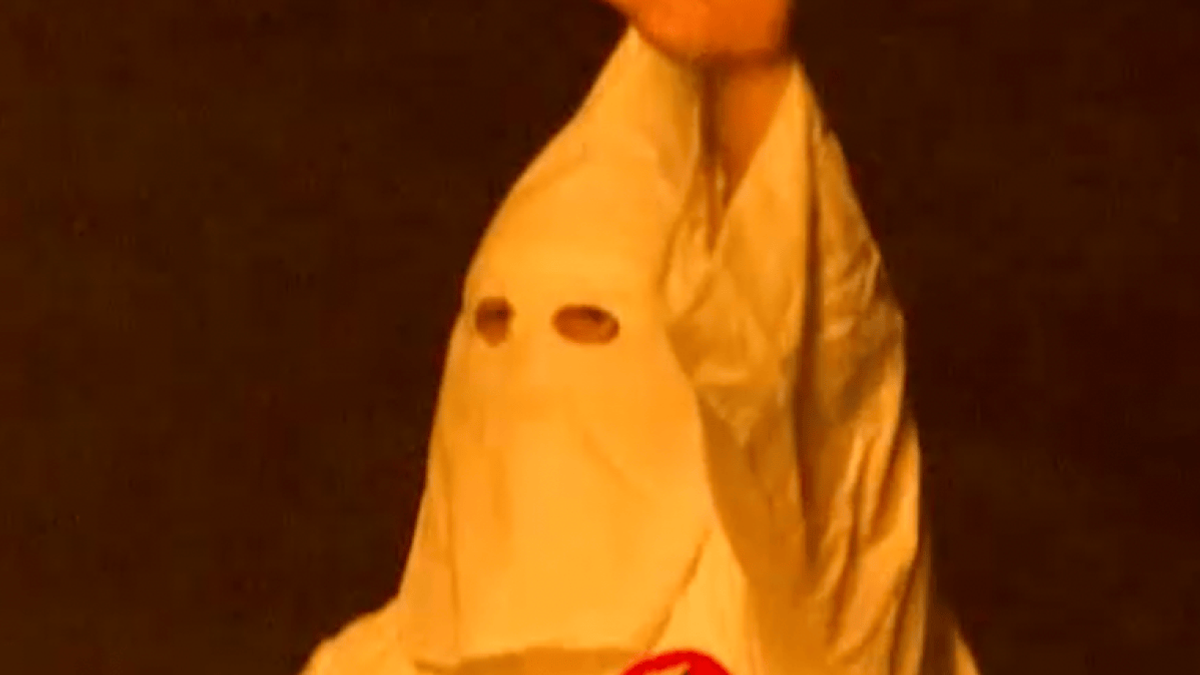
A leader of the Ku Klux Klan (KKK) recently asserted a resurgence in support for the organization, strategically attempting to reframe its public image around the themes of "family and faith." This claim emerges in the critical period leading up to the upcoming US midterm elections, a time when political rhetoric is often amplified and societal divisions can be exploited. The assertion, made to media outlets, suggests a deliberate effort by a historically violent and racist organization to broaden its appeal and influence the political landscape, even if its actual numerical strength remains marginal.
The KKK's claim of growing support, particularly its attempt to rebrand, is a calculated maneuver within a complex web of power dynamics. Historically, the KKK has waxed and waned in influence, often resurfacing during periods of significant social, economic, or political upheaval in the United States. Its current strategy reflects an understanding that overt racism and violence are largely repudiated by mainstream society, necessitating a more palatable facade.
Midterm elections are inherently divisive, often becoming referendums on the incumbent administration and hotbeds for cultural grievances. Fringe groups like the KKK understand that extreme rhetoric, even if not directly endorsed, can thrive in an environment of heightened polarization. By framing their message around seemingly innocuous concepts like "family and faith," they aim to tap into existing anxieties about cultural change, economic insecurity, or perceived threats to traditional values. This allows them to subtly introduce elements of their core ideology into broader public discourse, normalizing what was once unthinkable.
The attempt to rebrand is a power play focused on narrative control. It seeks to sanitize a legacy of domestic terrorism, lynching, and systemic oppression. The words "family" and "faith" are potent symbols in American society, often associated with community, morality, and tradition. By co-opting these terms, the KKK leader attempts to create a veneer of respectability, making their message less overtly threatening to those who might otherwise dismiss it outright. This strategy aims to lower the barrier to entry for potential sympathizers, particularly those who feel alienated or unheard by mainstream politics, offering them a seemingly virtuous banner under which to gather. It's not a change in ideology, but a change in marketing, designed to exploit vulnerabilities in the political landscape.
In the contemporary media environment, the power of fringe groups is no longer solely dependent on large-scale public demonstrations. The internet and social media platforms provide unprecedented opportunities for niche ideologies to find and coalesce supporters. Even a small number of dedicated individuals can generate significant online noise, creating echo chambers where their claims of growing support can be amplified and appear more substantial than they are. This digital presence allows for targeted recruitment and the dissemination of propaganda, bypassing traditional gatekeepers and directly reaching individuals susceptible to their messaging. The perception of influence can sometimes be as powerful as actual numbers.
Mainstream political actors face a delicate balance when confronted with such claims. Ignoring them risks allowing the rhetoric to fester and normalize, while directly engaging and condemning them can inadvertently provide the very platform and attention the groups crave. The power dynamic here is that the KKK, by making such claims, forces a reaction, consuming political oxygen and potentially shifting the Overton window – the range of ideas tolerated in public discourse. The challenge for established parties is to unequivocally reject hate speech without inadvertently legitimizing its proponents through excessive focus, while simultaneously addressing the underlying grievances that extremist groups exploit.
While the KKK's actual numbers may be small, the human cost of its continued existence and its attempts to reassert influence is profound and far-reaching. The rhetoric of hate groups, regardless of their size, inflicts psychological and often physical damage on individuals and communities, eroding the very fabric of a pluralistic society.
The primary human cost falls upon the communities historically targeted by the KKK: African Americans, Jewish people, immigrants, and other minority groups. For these populations, the KKK's claims are not abstract political statements but a direct threat. The rebranding around "family and faith" does not erase a history of terror, violence, and systemic oppression. Instead, it can trigger deep-seated trauma and fear, creating an environment of anxiety and insecurity. Children growing up in these communities are exposed to the specter of hate, impacting their sense of safety and belonging within their own country.
The KKK's core mission is to sow division and distrust. When such groups claim rising support, it fractures social cohesion, making it harder for diverse communities to coexist peacefully and constructively. It encourages an "us vs. them" mentality, where differences are weaponized rather than celebrated. This erosion of trust can manifest in increased social tension, prejudice, and a breakdown in civic engagement, as individuals retreat into their own identity groups, fearing the "other." The political discourse becomes less about common good and more about tribal loyalty.
For marginalized communities, the presence and perceived resurgence of hate groups can act as a powerful deterrent to democratic participation. The historical context of the KKK's efforts to suppress minority votes through intimidation and violence means that any claim of increased support can reignite fears of voter suppression. This can lead to decreased voter registration, lower turnout, and a general disengagement from the political process, effectively silencing voices that are already underrepresented. The promise of a truly representative democracy is undermined when citizens fear for their safety or feel their participation is futile.
The presence of active hate groups, or even the perception of their growing influence, can have tangible economic consequences. Regions or states perceived as tolerant of such extremism may struggle to attract investment, skilled labor, and tourism. Businesses may be hesitant to establish operations in areas where social divisions are high, fearing reputational damage or employee unrest. This can lead to a brain drain, as talented individuals from diverse backgrounds choose to relocate to more inclusive environments, further exacerbating economic disparities and limiting growth potential for the affected areas.
Behind the KKK leader's claims and the media's spotlight lies a more nuanced and often downplayed narrative about the true nature of extremist influence and the environment that allows it to persist.
What is often downplayed by the groups themselves, and sometimes not fully dissected by observers, is that the "rebranding" around "family and faith" is not an evolution of ideology but a tactical deception. It is an attempt to exploit the ambiguity of these terms, using them as a Trojan horse to introduce hateful concepts into public discourse. Governments and official statements often condemn hate groups in general terms, but rarely do they explicitly break down how such groups strategically manipulate language and symbols to gain a foothold. The untold story is the deliberate psychological warfare being waged, designed to make extremism palatable to a wider, often unsuspecting, audience.
Powerful actors, including political parties and corporate interests, often downplay the role of persistent economic inequality and insecurity in fueling resentment that extremist groups then exploit. When segments of the population feel economically abandoned, culturally disrespected, or politically unheard, they become susceptible to narratives that offer simple answers and clear scapegoats. The KKK's claims of rising support, while rooted in racism, often find fertile ground among those experiencing real economic hardship, who are then directed to blame specific minority groups rather than systemic issues. The focus shifts from economic policy failures to cultural grievances, diverting attention from the powerful actors who benefit from the status quo.
Another untold aspect is the subtle, often unintentional, legitimization of extremist ideas by mainstream political figures. While few politicians would openly endorse the KKK, the use of coded language, dog whistles, and rhetoric that demonizes immigrants, racial minorities, or specific religious groups can inadvertently create an environment where the KKK's more overt messages seem less extreme by comparison. This allows extremist ideas to seep into the political mainstream, shifting the Overton window without direct endorsement. The powerful downplay their own role in contributing to a climate where such groups feel emboldened to surface and claim legitimacy.
While the actual membership numbers of the KKK are likely small, the media attention given to their claims can create a disproportionate perception of their influence. This can be downplayed by those who argue that such groups are irrelevant, missing the point that even small, highly motivated groups can have significant disruptive power, especially when their rhetoric is amplified. The untold story is how a small number of committed extremists, through strategic messaging and leveraging media attention, can exert an outsized impact on national conversations, sow fear, and influence the broader political climate far beyond their numerical strength.
As the US midterm elections approach and the KKK attempts to project renewed influence, several key indicators will reveal the true impact of this phenomenon and the resilience of American society against extremist narratives.
First, observe the rhetoric of mainstream political candidates. Will there be unequivocal condemnations of hate groups and their ideologies, or will some candidates continue to use ambiguous or coded language that could be interpreted as tacitly appealing to extremist sentiments? The clarity and consistency of these condemnations will be a crucial measure of political leadership's commitment to democratic values.
Second, pay close attention to voter turnout and election results, particularly in areas where economic anxiety is high or where cultural grievances have been amplified. While direct KKK endorsement of candidates is unlikely to be a factor, the degree to which narratives of division and scapegoating resonate with the electorate could indicate the success or failure of extremist messaging to influence the broader political discourse.
Third, monitor the actions of social media platforms. Will they effectively identify and remove content that promotes hate and incites violence, or will they continue to grapple with the challenge of balancing free speech with the prevention of harm? The ability of these platforms to moderate extremist content will significantly impact the reach and perceived legitimacy of groups like the KKK.
Finally, watch for the response of civil society organizations and community groups. The strength of counter-movements, anti-hate activism, and grassroots efforts to promote unity and inclusivity will be vital in pushing back against divisive rhetoric. These groups often bear the primary responsibility for protecting vulnerable communities and upholding democratic principles when political leadership falters. The ongoing struggle for the soul of the nation will be fought not just in polling booths, but in the everyday actions of citizens and communities.
The KKK is attempting to rebrand around 'family and faith' to sanitize its public image and broaden its appeal. This is a strategic move to make its ideology seem more palatable and to exploit existing societal anxieties without overtly displaying its history of violence and racism.
Extremist groups leverage political polarization, economic anxieties, and cultural grievances to gain influence. They often use coded language and digital platforms to amplify their messages, creating echo chambers and subtly shifting mainstream discourse, even if their direct numerical support is small.
Communities historically targeted by the KKK, such as African Americans, Jewish people, and immigrants, are most affected. They face increased psychological stress, fear, and potential threats, alongside a broader erosion of social cohesion and democratic participation for all citizens.
Editor's Note: Analysis extrapolates from a brief news report, drawing on historical context and general knowledge of extremist group tactics and US political dynamics to provide a comprehensive geopolitical perspective.
Source referenced: ALJAZEERA
This brief was synthesized by our Editorial Engine and reviewed by The Ground Narrative team.


