TRENDING

Monday, 5 October 2026
----------------------
24 Rabi' Al-Thani 1448 AH
Yemeni government forces, backed by Saudi Arabia, have launched a major offensive against Houthi strongholds, including the capital Sanaa, reigniting a brutal conflict. This 'battle for liberation' threatens to deepen an already catastrophic humanitarian crisis for millions of ordinary Yemenis caught in the crossfire of a proxy war.
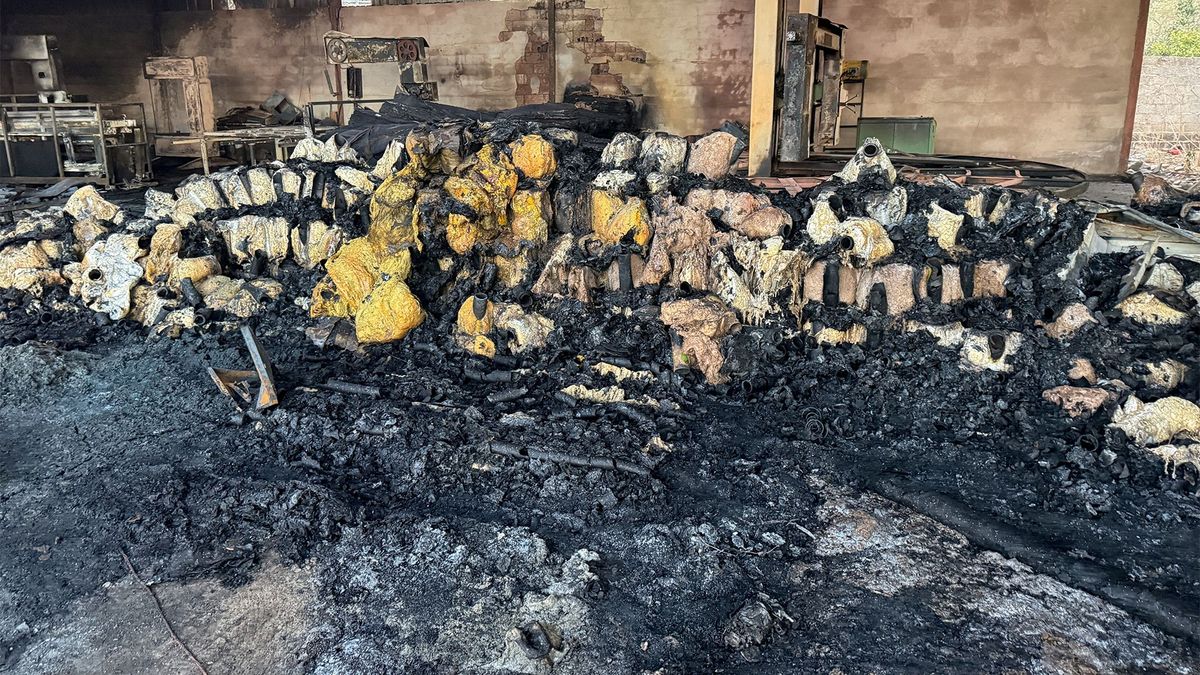
Yemeni government forces, with crucial backing from the Saudi Arabia-led coalition, have commenced a major combat operation against the Houthi movement, aiming to retake remaining territories held by the Iran-backed group. Reports indicate heavy damage in Sanaa, the Houthi-held capital, as the government declared this a 'battle for liberation'. This offensive marks a significant escalation in a conflict that has already ravaged Yemen for nearly a decade, threatening to plunge the nation deeper into violence and humanitarian catastrophe after a period of relative de-escalation.
The renewed offensive in Yemen is not merely an internal struggle; it is a direct manifestation of regional power dynamics, primarily the long-standing rivalry between Saudi Arabia and Iran. Both regional hegemons view Yemen as a critical battleground for influence and strategic depth, turning the nation into a proxy chessboard where local factions are empowered and exploited to serve broader geopolitical agendas.
For Saudi Arabia, the conflict in Yemen is framed as a matter of national security and regional stability. The rise of the Houthi movement along its southern border, perceived as an Iranian proxy, represents an unacceptable threat. Riyadh's objectives include restoring the internationally recognized Yemeni government, preventing a hostile, Iran-aligned entity from controlling key Yemeni ports and territory, and curbing Iran's regional influence. The cost of withdrawal, in Saudi eyes, is the potential for a permanent Houthi state on its border, equipped with missile and drone capabilities that have previously targeted Saudi cities. This intervention is also about projecting Saudi power and demonstrating its commitment to its allies in the Gulf, even as the war has proven costly in both financial and reputational terms.
Iran's involvement, while often denied in its direct military form, is undeniable in its support for the Houthis. For Tehran, Yemen offers an asymmetric means to challenge Saudi Arabia and its Western allies without direct confrontation. By providing political, logistical, and potentially military assistance to the Houthis, Iran ties down significant Saudi resources, diverts Riyadh's attention from other regional fronts, and demonstrates its capacity to project power across the Arabian Peninsula. This strategy aligns with Iran's broader doctrine of supporting non-state actors to create a 'ring of fire' around its adversaries, enhancing its leverage in any future regional negotiations.
The Houthi movement itself is a complex actor, driven by a blend of religious ideology, historical grievances, and a desire for political power. Originating from the Zaidi Shia minority, the Houthis capitalized on the collapse of state authority following the 2011 Arab Spring uprisings and the subsequent political vacuum. They view themselves as defenders against foreign intervention and corruption, and their control over Sanaa and other key areas is a testament to their organizational capacity and popular support in certain regions, particularly among the Zaidi community. For them, the 'liberation' offensive by the government is a continuation of an existential struggle against external aggression and internal collaborators.
The internationally recognized Yemeni government, currently operating from Aden, struggles with internal divisions and a heavy reliance on Saudi and Emirati support. While it claims legitimacy and seeks to restore its authority over all of Yemen, its effective control is limited. The government is often a coalition of various factions, some with their own regional agendas, making a unified national strategy difficult. Its continued existence and capacity to fight are almost entirely dependent on the financial and military backing of the Saudi-led coalition, which creates a dynamic where its actions are often aligned with Riyadh's broader regional interests rather than solely internal Yemeni priorities.
The renewed Yemen war escalation is not a distant geopolitical maneuver; it is a direct assault on the lives and livelihoods of millions of ordinary people. Yemen has already been declared the world's worst humanitarian crisis by the United Nations, and this new offensive promises to deepen the suffering of a population pushed to the brink.
For nearly a decade, Yemenis have endured relentless conflict, leading to widespread famine, disease, and the collapse of public services. This new offensive will inevitably lead to a surge in civilian casualties, both from direct combat and from the destruction of infrastructure. Sanaa, a densely populated urban center, is now a primary target, meaning ordinary families will once again face the terror of shelling, airstrikes, and street fighting. Displacement will skyrocket, forcing millions more from their homes into already overcrowded and undersupplied displacement camps, where conditions are dire and disease spreads rapidly.
The Yemeni economy has been decimated by the war. Factories, ports, roads, and markets have been destroyed or rendered inoperable. The reported heavy damage to a factory in Sanaa is a stark reminder of how critical infrastructure, which provides jobs and essential goods, becomes collateral damage. This destruction exacerbates food insecurity, as supply chains are disrupted, prices for basic commodities soar, and livelihoods vanish. With over 80% of the population already reliant on humanitarian aid, any further economic disruption pushes more families into starvation, making the difference between life and death a matter of access to food and medicine.
The conflict has stolen the future of an entire generation of Yemeni children. Years of interrupted education, constant trauma, and widespread malnutrition have left indelible scars. Renewed fighting will further disrupt schooling, expose children to increased violence, and make them more vulnerable to recruitment by armed groups. The psychological toll on children who have known nothing but war is immeasurable, creating a generation that will struggle with profound trauma, illiteracy, and a lack of opportunities, perpetuating a cycle of poverty and instability for decades to come.
The official narratives surrounding the Yemen war escalation often simplify a deeply complex conflict, omitting critical dimensions that reveal the true mechanics of power and the profound human cost. Governments and powerful actors frame their actions in terms of 'liberation' or 'legitimacy,' while downplaying the self-serving interests and the devastating consequences for ordinary people.
The declaration of a 'battle for liberation' by the Saudi-backed Yemeni government is a powerful rhetorical tool. It suggests a clear-cut objective: freeing the Yemeni people from an oppressive force. However, this framing often obscures the reality that such offensives rarely result in swift, decisive victories. Instead, they typically lead to protracted urban warfare, increased civilian suffering, and the further entrenchment of various armed factions. For the people of Sanaa, 'liberation' often means being caught between warring parties, facing bombardment from one side and reprisals from the other. It downplays the fact that the conflict is not simply between a 'good' government and a 'bad' rebel group, but involves a multitude of local actors with shifting loyalties and agendas, all vying for power within a fractured state.
The narrative frequently presented by international media and official statements tends to focus on the Houthi-government conflict as an internal Yemeni affair, with external 'support' from Saudi Arabia and Iran. This framing subtly downplays the extent to which the conflict is fundamentally a proxy war orchestrated and sustained by these regional powers. The reality is that without the consistent flow of arms, funds, and political backing from Riyadh and Tehran, the conflict would likely have taken a very different, and possibly less devastating, trajectory. The powerful actors are careful to maintain a degree of plausible deniability regarding their direct involvement, allowing them to exert influence without fully owning the humanitarian consequences.
While humanitarian organizations and the United Nations repeatedly highlight the crisis in Yemen, the actions of major global powers often contradict their stated concerns. Western nations, particularly the United States and European countries, continue to sell advanced weaponry to Saudi Arabia and its allies, effectively fueling the very conflict they claim to want to end. This economic incentive – the lucrative arms trade – often outweighs the moral imperative to pressure combatants towards a peaceful resolution. The untold story here is the quiet complicity of global powers, who, through their arms sales and selective diplomatic pressure, contribute to the perpetuation of the conflict while publicly lamenting its human cost. They prioritize strategic alliances and economic benefits over the lives of ordinary Yemenis.
Another critical untold story is the weaponization of humanitarian aid and the impact of blockades. All parties to the conflict have, at various times, been accused of obstructing aid delivery, using access to food and medicine as a bargaining chip. The Saudi-led coalition's naval and air blockade, ostensibly to prevent weapons from reaching the Houthis, has severely restricted the flow of essential goods, including food and medical supplies, into Yemen. While framed as a security measure, its disproportionate impact on the civilian population, leading to widespread starvation and disease, is often downplayed or justified as an unfortunate but necessary consequence of war. This turns the very basic needs of survival into instruments of war, punishing an entire population.
The renewed offensive in Yemen demands close scrutiny, as its trajectory will determine the immediate future for millions and the broader regional stability. Readers should focus on several key indicators to understand the evolving power dynamics and human impact.
First, observe the intensity and duration of the fighting in Sanaa and other Houthi-held urban centers. A prolonged siege or heavy urban combat will inevitably lead to a dramatic increase in civilian casualties and displacement, further straining already collapsed public services. The ability of government forces to make significant, sustainable gains will be critical, as will the Houthi response, which could involve intensified missile and drone attacks on Saudi territory or renewed maritime threats.
Second, pay close attention to the humanitarian response and aid access. Will the escalation lead to further blockades or restrictions on the delivery of food, medicine, and fuel? International aid organizations will struggle to reach affected populations, and any worsening of access will push more people into famine and disease. Watch for any calls from the United Nations or major NGOs for increased humanitarian corridors or ceasefires to allow aid delivery.
Third, monitor regional diplomatic efforts. While the fighting has resumed, there may be behind-the-scenes attempts by regional actors like Oman or international bodies to de-escalate tensions between Saudi Arabia and Iran, or to revive peace talks. Any signs of dialogue or mediation, however fragile, could offer a glimmer of hope amidst the renewed violence.
Finally, watch for international reactions and pressure. Will major global powers move beyond rhetorical condemnations to exert more concrete pressure on the warring parties, particularly regarding arms sales or sanctions? The extent to which the international community prioritizes human lives over geopolitical interests will be a crucial measure of its commitment to ending this devastating conflict.
The recent offensive by Saudi-backed Yemeni forces aims to retake Houthi-held territory, including the capital Sanaa. This escalation reflects a breakdown in previous de-escalation efforts and a renewed push by the internationally recognized government to assert control, fueled by regional rivalries.
The primary combatants are the internationally recognized Yemeni government, supported by a Saudi Arabia-led coalition, and the Houthi movement, which controls significant territory and receives support from Iran. Various other local militias and factions also play roles.
Renewed fighting in Yemen will exacerbate the world's worst humanitarian crisis. Civilians face increased risks of casualties, displacement, starvation, and disease, as vital infrastructure is destroyed and aid access becomes even more challenging in a country already devastated by years of conflict.
Source referenced: ALJAZEERA
This brief was synthesized by our Editorial Engine and reviewed by The Ground Narrative team.