TRENDING

Sunday, 4 October 2026
----------------------
23 Rabi' Al-Thani 1448 AH
Hundreds of residents have been forced onto the streets of Rome after authorities seized a long-standing squatted building. This action, following a fire and amidst a heatwave, highlights a broader government crackdown on self-managed social centers and exposes the hidden human costs of urban policy.
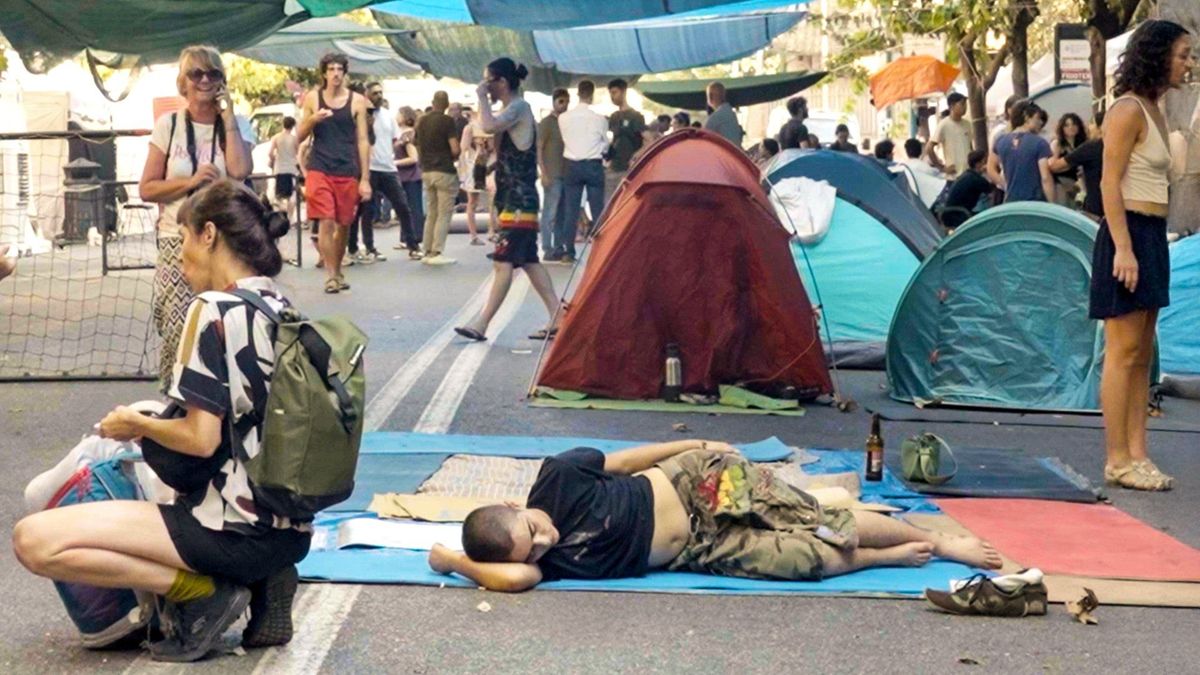
Around 300 residents of 'Spin Time Labs', one of Rome's largest and oldest squatted buildings, have been evicted and are now camping on the streets during a severe heatwave. The authorities seized the building following a fire, framing the move as part of a wider government initiative to reclaim occupied properties that have functioned as self-managed social centers since the 1990s.
This eviction is not an isolated incident but a clear demonstration of how state power reasserts control over urban spaces. The Italian government, like many across Europe, is driven by a political imperative to enforce property rights and present an image of 'law and order.' For political leaders, cracking down on perceived 'illegality' appeals to a segment of the electorate that prioritizes state authority and private ownership, often at the expense of social welfare. These squatted buildings, while technically illegal, have historically served as crucial havens for the marginalized, providing housing, community services, and cultural spaces where the formal state apparatus has often failed or withdrawn. The timing, following a fire, offers a convenient pretext for intervention, allowing authorities to cite safety concerns while advancing a broader agenda of urban gentrification and the suppression of alternative social models. The underlying power dynamic pits the state's desire for absolute control and market-driven urban development against the autonomous organization of communities filling critical social gaps.
The immediate human cost is borne by the 300 individuals now without shelter, exposed to Rome's summer heatwave. These are often vulnerable populations – migrants, low-income families, students, and the unemployed – who found stability and community within Spin Time Labs. Their eviction means the loss of not just a roof over their heads, but also the informal networks of support, solidarity, and access to basic services that these self-managed centers often provide. Beyond the immediate displacement, this action erodes the social fabric of the city, removing vital spaces for cultural exchange and political organizing that serve as a lifeline for those on the fringes. Their voices are largely absent from official statements, overshadowed by narratives of legality and urban renewal.
What governments and official statements consistently downplay or omit is the systemic failure that leads to such occupations in the first place. The narrative focuses on the 'illegality' of squatting, but rarely addresses the severe housing crisis in major Italian cities, the rising cost of living, and the inadequacy of public housing and social welfare programs. These self-managed centers emerged precisely because the state was not providing for its most vulnerable citizens. By framing the issue solely as a matter of law enforcement, authorities deflect attention from their own responsibility to ensure affordable housing and social safety nets. The fire, while a tragic event, becomes an opportunity to dismantle a long-standing alternative social model rather than a catalyst for addressing the root causes of urban precarity.
Observers should watch for the government's next moves regarding other squatted buildings across Italy; this eviction could set a precedent for further crackdowns. The response from civil society organizations and housing rights activists will also be critical in determining the political fallout and whether any alternative solutions are proposed for the displaced. Crucially, the long-term impact on Rome's urban landscape and the future of self-managed social centers will reveal whether this is merely an isolated enforcement action or part of a broader strategy to reshape the city's social and political geography, further marginalizing its most vulnerable residents.
Source referenced: ALJAZEERA
This brief was synthesized by our Editorial Engine and reviewed by The Ground Narrative team.