TRENDING

Monday, 5 October 2026
----------------------
24 Rabi' Al-Thani 1448 AH
Brazil's deeply polarized 2026 presidential election sees incumbent Lula da Silva face Flavio Bolsonaro, son of the imprisoned former president. This contest is not merely about two candidates, but about the nation's democratic future and its place in a shifting global order.
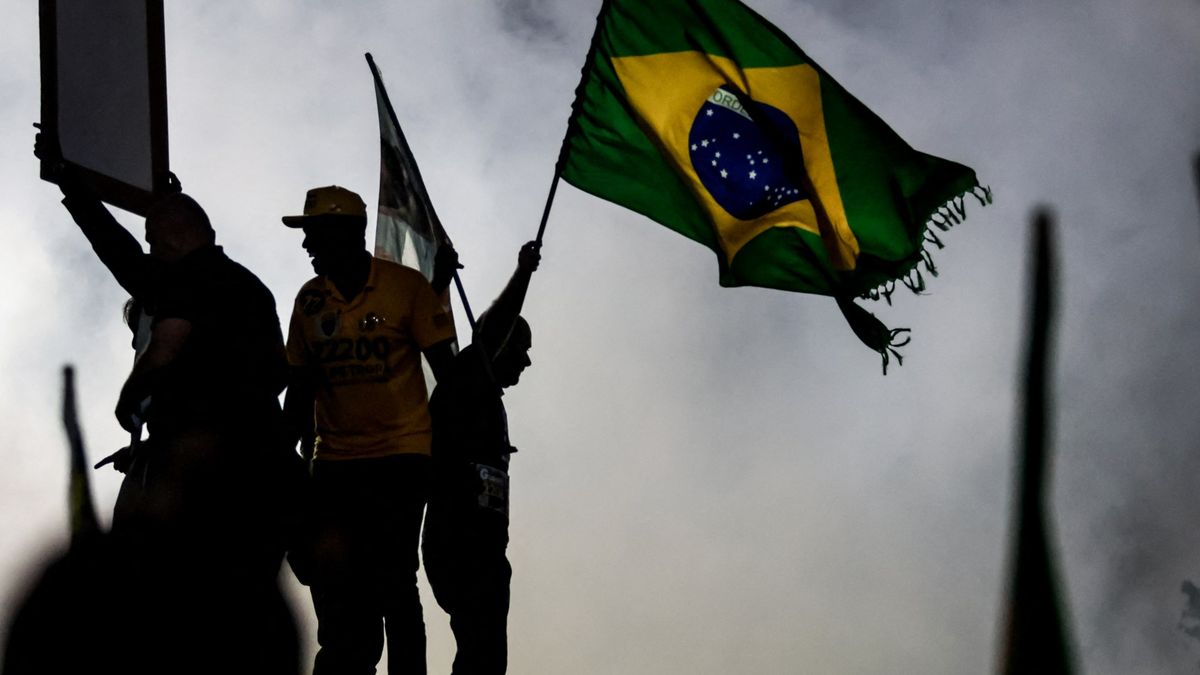
Brazil recently held a deeply polarized presidential election, pitting left-wing incumbent Luiz Inacio Lula da Silva against right-wing challenger Senator Flavio Bolsonaro, the eldest son of former President Jair Bolsonaro. With approximately 160 million registered voters eligible to cast ballots, the election also determined lawmakers, governors, and senators. Opinion polls leading up to the vote indicated a tight race, with Lula holding a marginal lead that narrowed significantly in the event of a second round. If no candidate secured more than 50 percent of the valid votes, the top two contenders were set to proceed to a run-off election on October 25.
The current election in Brazil is a stark reflection of a nation grappling with its past, present, and future, driven by deeply entrenched power structures and competing visions. On one side stands Lula da Silva, an 80-year-old veteran of the Workers' Party, seeking a fourth nonconsecutive term. His power base is built on a legacy of social programs designed to address profound inequality, appealing to the working class and those who remember his previous presidencies (2003-2010) as a period of economic growth and social mobility. Lula embodies a narrative of democratic consolidation since the end of the military dictatorship, positioning himself as a guardian of institutional norms and a proponent of a multilateral global order that often aligns with the Global South and China.
Conversely, Flavio Bolsonaro, 45, of the Liberal Party, represents a continuation of his family's hardline right-wing ideology. His platform emphasizes a tough stance on crime and insecurity, coupled with promises of lower taxes and a business-friendly environment. Crucially, Flavio Bolsonaro has pledged close collaboration with the United States under President Donald Trump, signaling a clear alignment with Washington's geopolitical agenda. The Bolsonaro family's power derives from a segment of the electorate that feels alienated by traditional politics, distrusts established institutions, and yearns for a strong hand to tackle perceived societal decay and economic stagnation. They argue that the democratic institutions erected since the dictatorship are
The main candidates are incumbent Luiz Inacio Lula da Silva of the Workers' Party and Senator Flavio Bolsonaro, son of former President Jair Bolsonaro, representing the Liberal Party.
The election is dominated by concerns over crime, insecurity, the high cost of living, and corruption. Voters are also weighing the candidates' differing approaches to social programs, economic policy, and international relations.
The election is influenced by the geopolitical competition between the US and China for dominance in Latin America. Donald Trump openly supports the Bolsonaro family, while Lula's past policies often aligned Brazil with China and the Global South.
Source referenced: ALJAZEERA
This brief was synthesized by our Editorial Engine and reviewed by The Ground Narrative team.


