TRENDING

Tuesday, 6 October 2026
----------------------
25 Rabi' Al-Thani 1448 AH
Iran has received a U.S. reply to its proposal to reopen the Strait of Hormuz, and Gulf shipping is beginning to recover. The negotiations reveal deep power calculations and a human toll that extends far beyond the negotiating table.
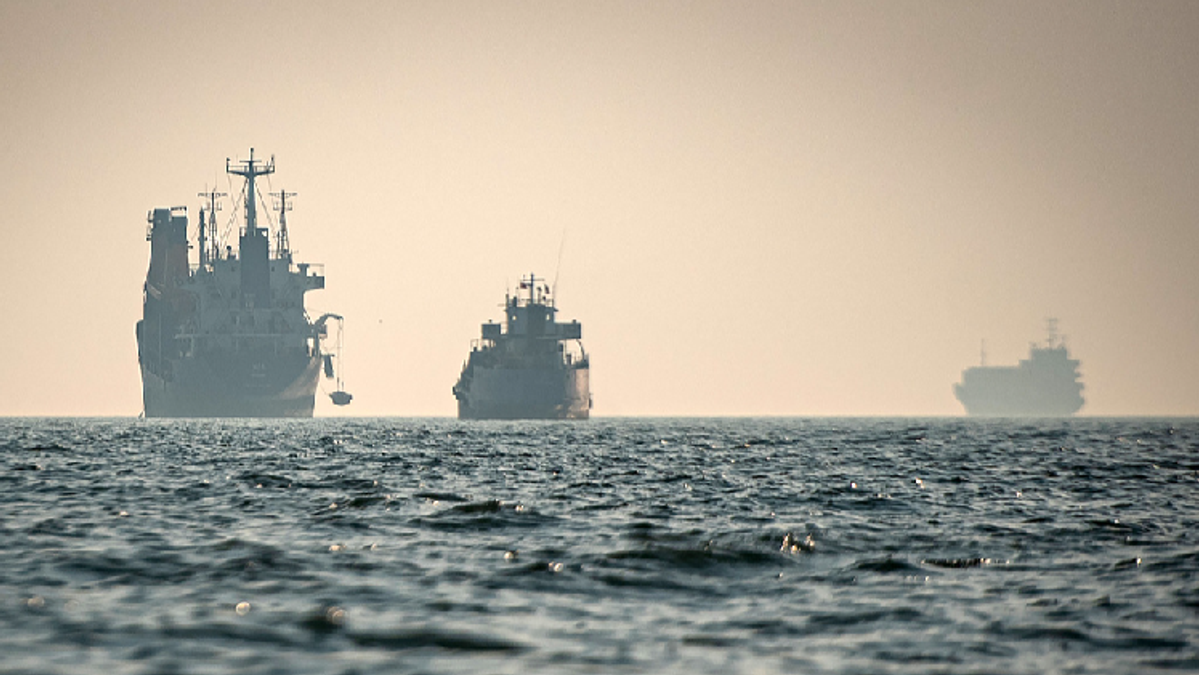
Iran announced on Wednesday that it had received a response from the United States to its latest proposal aimed at reviving the collapsed cease‑fire in the Gulf. The proposal, put forward by Tehran last week, would see Washington lift its naval blockade of Iranian ports in exchange for Iran reopening the Strait of Hormuz within seven days. While both sides appear to agree on the broad steps needed for a deal, they remain split on the sequencing of those steps. The diplomatic exchange follows eight months of conflict involving the U.S., Israel, and Iran, and comes as ship‑tracking data shows a noticeable rebound in crude‑oil movements through the strait.
The negotiations sit at the intersection of three powerful currents: regional security, global energy markets, and domestic politics.
- Strategic geography – The Strait of Hormuz is the world’s most vital oil conduit, funneling roughly a fifth of daily global oil supplies. Control over its flow translates directly into leverage over oil‑price volatility and, by extension, the economies of Saudi Arabia, the United Arab Emirates, Iraq, and Kuwait.
- U.S. electoral calculus – President Donald Trump faces mid‑term elections in five weeks. Public opinion polls show growing war fatigue and rising fuel prices, both of which threaten Republican prospects. A modest de‑escalation that restores shipping can be framed as a diplomatic win, while still allowing the administration to claim it has not “caved” to Tehran.
- Iranian strategic ambition – Tehran seeks not merely a temporary opening but an eventual concession that would grant it formal control over the strait’s navigation rules. Such a concession would cement Iran’s status as a gatekeeper of global energy flows, enhancing its bargaining power in any future regional settlement.
- Qatar’s mediation role – Doha has positioned itself as a neutral conduit, briefing Iranian Foreign Minister Abbas Araghchi on the U.S. response. Qatar benefits from the perception of being a diplomatic bridge, which bolsters its soft‑power cachet and offsets criticism for hosting the U.S.‑backed Al‑Udeid airbase.
- Alliance math – The United Kingdom Maritime Trade Operations continues to monitor incidents, such as the recent projectile strikes on two vessels. Britain’s involvement underscores the broader NATO interest in keeping the Gulf lanes open, even as the alliance grapples with divergent threat assessments of Iran versus Israel.
- Economic trade‑offs – Shipping data from Kpler indicates that September exports from the Gulf reached about 80 % of pre‑conflict levels, yet the shortfall of roughly 3.2 million barrels per day still depresses global oil prices and fuels inflationary pressures in consumer markets worldwide.
These forces create a delicate balance: the U.S. wants a quick de‑escalation to protect domestic political capital, Iran wants a sequenced roadmap that culminates in long‑term strait control, and regional oil exporters need certainty to plan production and revenue streams.
The abstract calculations of power translate into concrete hardships for several distinct groups.
Fishermen and small‑scale port workers in Bandar Abbas have watched their livelihoods stall as naval vessels and mines made the waters unsafe. The prolonged closure forced many to abandon seasonal fishing, leading to income loss that ripples through families dependent on a single harvest each year.
Even a modest disruption in Hormuz flow inflates gasoline prices in cities as far away as Miami and London. The recent spike in U.S. pump prices has eroded real wages for low‑income households, prompting protests in several states and adding pressure on the Trump administration to act.
Countries like Saudi Arabia and the UAE rely on a large expatriate workforce in the oil‑service sector. Shipping delays have forced some firms to cut overtime, lay off contract workers, and postpone infrastructure projects, threatening the economic stability of migrant families from South Asia and Africa.
The continued threat of projectile attacks on merchant vessels keeps naval crews on high alert, increasing fatigue and the risk of accidents. The IRGC’s messaging campaign urging U.S. voters to oust “Trump’s allies” also fuels a climate of intimidation for civilians living near military installations.
Official statements from Washington and Tehran emphasize a shared desire for “peaceful resolution,” but several layers remain under‑reported.
While the administration publicly frames the response as a step toward stability, internal memos reveal that senior advisers are wary of appearing soft on Iran ahead of the mid‑terms. The timing of the reply—just days before the election—suggests a calculated move to placate both hawkish legislators and a public weary of rising fuel costs.
The public proposal focuses on a seven‑day reopening, yet Tehran’s internal strategy documents, obtained by regional analysts, outline a phased approach that would eventually embed Iranian maritime courts in Hormuz governance. This deeper objective is largely omitted from diplomatic briefings.
Doha’s role as a mediator is highlighted, but its own security concerns are muted. Hosting the U.S.‑run Al‑Udeid base while courting Tehran places Qatar in a precarious position, especially as the UAE’s recent hosting of Israeli Prime Minister Benjamin Netanyahu draws Tehran’s ire and threatens to sour Qatar‑UAE relations.
The 26‑page letter urging Americans to vote out “Trump’s allies” is a rare instance of a foreign military organization directly targeting a rival nation’s electorate. Analysts note that the move aims to destabilize the U.S. political environment, thereby weakening the resolve of any future administration that might adopt a harder line against Tehran.
Oil traders have quietly adjusted futures contracts, betting that a partial reopening will temporarily lift prices before a full settlement re‑establishes the pre‑conflict baseline. This speculative activity, while legal, adds a layer of volatility that ordinary consumers feel but rarely see attributed to market maneuvers.
- Sequencing of steps – The next diplomatic round will likely focus on whether the U.S. lifts the blockade before Iran reopens the strait, or vice‑versa. The order will signal which side holds the upper hand.
- U.S. election outcomes – A shift in congressional control could reshape the administration’s willingness to negotiate deeper concessions, especially regarding long‑term strait governance.
- Israeli diplomatic moves – Netanyahu’s continued presence in the UAE may provoke Tehran to harden its stance, potentially derailing any compromise.
- Shipping data trends – Real‑time tracking from firms like Kpler will show whether the 80 % recovery sustains, declines, or spikes, offering an early warning of renewed tension.
- IRGC messaging – Watch for further outreach to foreign electorates; such campaigns can influence public opinion and, indirectly, policy decisions in distant capitals.
By monitoring these variables, readers can gauge whether the current lull is a prelude to a durable de‑escalation or merely a tactical pause before the next surge of pressure on the Strait of Hormuz.
The response signals a possible easing of the naval blockade, which could allow more vessels to pass the Strait of Hormuz. However, the exact sequencing of steps will determine how quickly shipments return to pre‑conflict levels.
Election pressure may push the Trump administration to seek a quick diplomatic win to appease voters, while a shift in Congress could either harden or soften the U.S. stance depending on the new majority's view of Iran.
Editor's Note: Analysis based on publicly available diplomatic statements and shipping data up to early October 2026.
Source referenced: CGTN
This brief was synthesized by our Editorial Engine and reviewed by The Ground Narrative team.