TRENDING

Sunday, 4 October 2026
----------------------
23 Rabi' Al-Thani 1448 AH
Israel's latest tender for 627 new housing units in the occupied West Bank settlement of Kochav Yaakov signals a continued strategy of territorial control. This expansion deepens the fragmentation of Palestinian land, raising the human cost and altering the prospects for a future state.
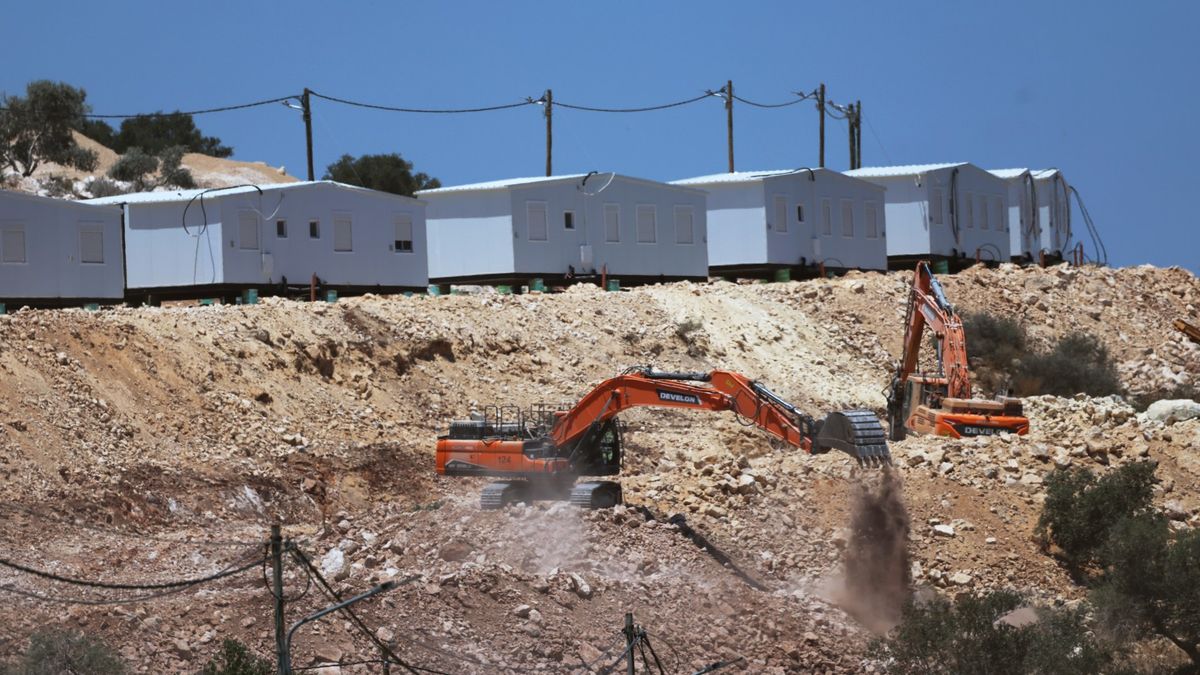
Israeli authorities have announced a tender for 627 new housing units in the Kochav Yaakov settlement, located in the occupied West Bank. This project, situated between northern Jerusalem and the Palestinian cities of Ramallah and al-Bireh, marks a significant step from planning to construction, as reported by the Palestinian Colonization and Wall Resistance Commission (CRRC). It is part of a broader pattern, with 12 illegal settlement tenders, totaling over 1,100 housing units, issued in the first half of 2026 alone, alongside new industrial zones and facilities.
This latest tender is not merely about providing housing; it is a calculated move in a long-term strategy of territorial control and demographic engineering. The Kochav Yaakov settlement's location is strategically critical, designed to deepen the separation between Jerusalem and its Palestinian surroundings, effectively fragmenting any potential contiguous Palestinian state. By expanding these settlements, Israel creates irreversible facts on the ground, making a future two-state solution increasingly difficult to implement. The investment extends beyond residential units to include economic infrastructure like industrial zones, offices, and tourism facilities, aiming to create self-sustaining Israeli enclaves that are deeply integrated into Israel's economy and infrastructure, further entrenching its presence. This strategy leverages physical construction as a tool of political and military power, asserting sovereignty over disputed territory despite widespread international condemnation, including from the UN Secretary-General and the International Court of Justice, which deem such settlements illegal under international law.
The immediate and long-term human cost of this expansion falls squarely on the Palestinian population. The construction on 253.7 dunams (approximately 63 acres) in the Ramallah and al-Bireh governorate means the loss of land for Palestinian agricultural use, urban development, and future growth. It exacerbates the fragmentation of Palestinian communities, making daily life more challenging due to increased checkpoints, restricted movement, and diminished access to resources. The surge in settlement expansion is often accompanied by an increase in settler violence, with Palestinian monitors recording over 11,000 attacks by Israeli forces and settlers across the West Bank since January 2026. For ordinary Palestinians, this constant encroachment erodes their sense of security, economic stability, and the fundamental hope for self-determination, trapping generations in a cycle of displacement and diminishing prospects.
What governments and official statements often downplay or omit is the profound, irreversible geopolitical objective behind these tenders. This isn't just about meeting housing demand for Israeli citizens; it's about systematically altering the demographic and geographic landscape of the West Bank to preclude the possibility of a viable, independent Palestinian state. The international community's repeated condemnations, while legally accurate, have largely failed to halt the expansion, implicitly signaling a lack of concrete consequences. This inaction allows Israel's domestic political calculus – often driven by the need to appease right-wing coalition partners and settler movements – to override international legal norms and diplomatic pressure. The true narrative being written on the ground is one of a slow, deliberate annexation by construction, making any future negotiation for a contiguous Palestinian state a near impossibility.
Moving forward, several critical dynamics bear watching. The pace of settlement expansion will indicate the Israeli government's commitment to this strategy, particularly in response to any shifts in regional or international diplomatic efforts. The nature of international reactions will also be key: will condemnations remain rhetorical, or will major powers, particularly the United States, consider more tangible forms of pressure? Any significant shift in US policy, beyond verbal disapproval, could alter Israel's calculations. Domestically, Palestinian responses, both from official bodies and grassroots movements, will continue to highlight the human cost and challenge the legitimacy of these actions. Finally, observe how continued expansion impacts regional normalization efforts between Israel and other Arab states; while some states may prioritize other strategic interests, the optics of ongoing settlement growth could complicate future agreements and fuel popular discontent across the Arab world.
Source referenced: ALJAZEERA
This brief was synthesized by our Editorial Engine and reviewed by The Ground Narrative team.