TRENDING

Sunday, 4 October 2026
----------------------
23 Rabi' Al-Thani 1448 AH
Ukrainian President Volodymyr Zelensky's visit to Serbia marks a significant diplomatic effort to garner international support amidst intensifying Russian strikes. Serbia's close ties with Moscow complicate this endeavor. As Zelensky seeks to bolster Ukraine's position, the human cost of the conflict continues to escalate.
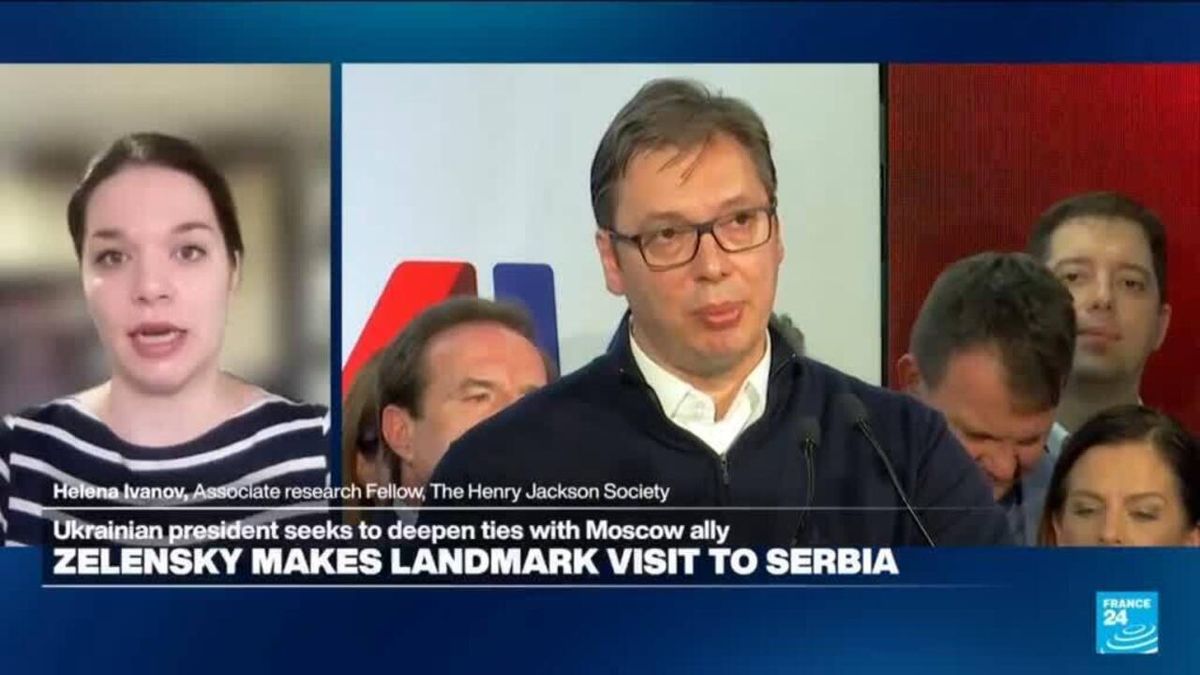
Ukrainian President Volodymyr Zelensky has made a landmark visit to Serbia, a country with strong historical and political ties to Russia. This visit comes at a critical time, as Russian strikes on Ukraine have intensified, prompting Zelensky to seek broader international support. His meeting with Serbian President Aleksandar Vučić is a notable attempt to navigate the complex geopolitical landscape of the region.
The visit underscores the delicate balance Serbia must maintain between its relationships with Russia and the West. Serbia's refusal to impose sanctions on Russia, despite pressure from the EU, highlights its strategic alignment with Moscow. However, Vučić's engagement with Zelensky suggests an effort to diversify Serbia's diplomatic outreach, potentially seeking to mitigate the risks of being overly reliant on Russian support. This balancing act is crucial for Serbia's political survival and economic stability, as it navigates the treacherous waters of great power competition.
The conflict in Ukraine has resulted in significant human suffering, with thousands displaced and a rising death toll. The people of Ukraine bear the brunt of the conflict, with their lives, livelihoods, and future hanging in the balance. Moreover, the economic repercussions of the war are being felt across the region, including in Serbia, where trade and economic relations with both Russia and Ukraine are critical. As the conflict escalates, the humanitarian crisis deepens, affecting not only Ukrainians but also those in neighboring countries who are impacted by the instability and economic disruption.
What is less visible in the public discourse is the extent to which powerful actors are using diplomatic visits and statements as part of a broader information war. Both Russia and Ukraine, along with their respective allies, are engaged in a battle for narrative supremacy, each seeking to frame the conflict in a way that supports their strategic objectives. The visit of Zelensky to Serbia, while significant, is also a part of this narrative battle, with each side seeking to influence public opinion and shape the diplomatic landscape to their advantage. The true intentions and motivations behind these diplomatic maneuvers are often downplayed or omitted in official statements, leaving the public to decipher the underlying power dynamics at play.
As the situation in Ukraine continues to evolve, several key factors will be worth watching. The response of the international community, particularly the EU and the US, to Zelensky's diplomatic efforts will be crucial. Additionally, how Serbia navigates its relationships with both Russia and Ukraine will have significant implications for regional stability. The humanitarian situation in Ukraine and the broader region will also require close monitoring, as the human cost of the conflict continues to mount. Finally, the information war aspect of the conflict, including how different actors seek to shape the narrative and influence public opinion, will remain a critical component of the geopolitical landscape.
Editor's Note: The analysis is based on publicly available information and may not reflect the full complexity of the diplomatic negotiations and strategic considerations at play.
Source referenced: FRANCE24
This brief was synthesized by our Editorial Engine and reviewed by The Ground Narrative team.