TRENDING

Monday, 5 October 2026
----------------------
24 Rabi' Al-Thani 1448 AH
A US congressional candidate, endorsed by Nancy Pelosi, has called for a full arms embargo on Israel, marking a notable departure from traditional party lines. This move highlights a growing internal struggle within the Democratic Party over US foreign policy in the Middle East.
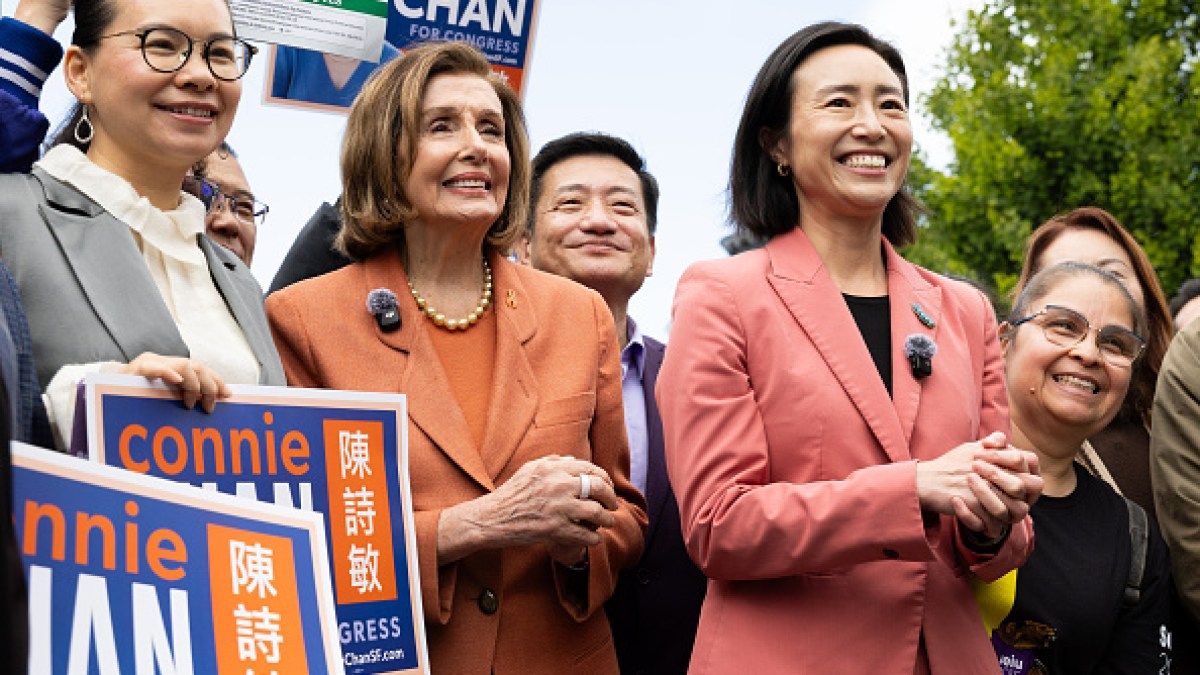
In a significant development within US domestic politics, Connie Chan, a candidate endorsed by former House Speaker Nancy Pelosi for California's 11th congressional district, has publicly called for a full arms embargo on the Israeli government. During a televised debate, Chan declared that if elected, her first act in Congress would be to vote to "end a genocide in Gaza and to end an apartheid state." This stance directly contradicts the long-standing pro-Israel position historically championed by Pelosi, signaling a profound shift in the political landscape of a key Democratic stronghold ahead of the November midterm elections.
The call for an arms embargo by a mainstream, Pelosi-backed candidate underscores a fundamental reordering of power dynamics within the Democratic Party and, by extension, US foreign policy. For decades, support for Israel has been a bipartisan cornerstone of American diplomacy, often framed as an unwavering commitment to a key ally in a volatile region. However, the sustained and devastating conflict in Gaza, coupled with increasing awareness of Israeli settlement expansion and human rights concerns in the West Bank, has fractured this consensus.
This shift is not merely rhetorical; it reflects a changing electoral calculus. Progressive voters, younger demographics, and a growing segment of the Democratic Party base are demanding a re-evaluation of US aid to Israel. Candidates like Chan and her opponent, Scott Wiener (who also described events in Gaza as genocide and opposes funding for offensive weapons), are responding to this internal pressure. In districts like California's 11th, which are reliably Democratic, candidates have more latitude to adopt positions that align with their progressive base, even if it means challenging established party figures like Pelosi.
Pelosi's endorsement of Chan, despite their divergent views on Israel, is itself a powerful signal. It suggests that even seasoned political strategists recognize the necessity of adapting to the evolving sentiment within the party, prioritizing party unity and succession over strict ideological alignment on this particular issue. The power of grassroots movements and sustained public advocacy has pushed the Overton window, making once-fringe positions on conditioning or ending aid to Israel increasingly mainstream.
Furthermore, the explicit use of terms like "genocide" and "apartheid state" by congressional candidates is a direct challenge to the official narratives perpetuated by both the US and Israeli governments. These terms carry significant legal and moral weight under international law, reframing the debate from a complex "conflict" to a matter of human rights violations and state accountability. This linguistic shift empowers advocates and weakens the traditional arguments for unconditional aid, forcing a public reckoning with the implications of US support.
The most immediate and devastating human cost of continued military support to Israel is borne by the Palestinian population in Gaza and the occupied West Bank. The ongoing conflict has resulted in unprecedented civilian casualties, widespread displacement, and the destruction of critical infrastructure, including hospitals, schools, and homes. The provision of US-manufactured weapons and military aid directly contributes to Israel's operational capacity, impacting the lives and livelihoods of millions of Palestinians who face daily violence, blockades, and the expansion of illegal settlements.
Beyond the direct victims of the conflict, the human cost extends to US taxpayers. Billions of dollars in military aid, including funding for systems like the Iron Dome, represent resources diverted from pressing domestic needs such as healthcare, education, infrastructure, or climate initiatives. While framed as essential for a key ally's security, this aid comes with an opportunity cost for American communities facing their own economic and social challenges.
Within the United States, the deepening divisions over Israel-Palestine exact a significant human toll in terms of social cohesion and political trust. Jewish communities in the US find themselves increasingly caught between their historical ties to Israel and growing criticism of its policies, leading to internal strife and external pressure. Similarly, Arab and Muslim American communities, along with human rights advocates, feel unheard and marginalized by a foreign policy that often appears to disregard their concerns and experiences. This polarization strains inter-community relations and makes constructive dialogue increasingly difficult.
The long-term human cost also includes the perpetuation of regional instability. Unconditional aid, critics argue, can embolden actions that further destabilize the Middle East, leading to cycles of violence and radicalization that impact future generations across the region. The human cost is not just in immediate casualties but in the sustained trauma, displacement, and lack of future prospects for millions.
Official statements from the US government and Israeli officials consistently downplay or omit several critical aspects of the relationship and the current crisis. The most striking untold story here is the paradox of Nancy Pelosi's endorsement. While Pelosi has been a staunch, long-time supporter of Israel, her endorsement of a candidate advocating for an arms embargo reveals the pragmatic, often cynical, nature of political power. The official narrative would suggest ideological alignment, but the reality is that maintaining party control and ensuring a smooth succession in a safe seat can override specific policy disagreements. This strategic calculation highlights the shifting ground that even establishment figures must navigate, often without public acknowledgment of the internal tensions.
Another downplayed aspect is the economic dimension of military aid. Beyond geopolitical strategy, there is a powerful industrial complex in the United States that benefits immensely from arms sales and military contracts with Israel. This creates a formidable lobbying force that actively works against any efforts to condition or restrict aid, regardless of human rights concerns. The financial incentives for maintaining the status quo are rarely discussed in public discourse, which tends to focus solely on security and alliance rhetoric.
Governments often omit the extent to which unconditional aid and consistent diplomatic shielding (such as vetoing UN resolutions) have eroded US leverage over Israel's actions. By consistently providing support without significant conditions, the US has diminished its ability to influence Israeli policy on issues like settlement expansion or the treatment of Palestinians. The current internal dissent within the Democratic Party makes this erosion of influence more visible, but official statements continue to frame the relationship as one of mutual influence and shared values, rather than one where the junior partner often dictates terms due to guaranteed backing.
This is significant because Nancy Pelosi has historically been a strong supporter of Israel, making her endorsement of a candidate with such a contrasting view a sign of deep internal divisions and shifting political priorities within the Democratic Party. It indicates a growing mainstream challenge to long-standing US foreign policy.
Proponents argue an embargo would pressure Israel to cease actions deemed human rights violations, protect Palestinian lives, and align US policy with international law. Opponents typically argue it would undermine Israel's security, destabilize the region, and weaken a key US ally, potentially empowering adversaries.
This shift could strain the traditional US-Israel alliance, potentially leading to increased scrutiny of military aid, diplomatic disagreements, and a less predictable relationship. It may also signal a future where US support for Israel is more conditional, reflecting changing values and priorities among American voters and policymakers.
Source referenced: ALJAZEERA
This brief was synthesized by our Editorial Engine and reviewed by The Ground Narrative team.


