TRENDING

Tuesday, 6 October 2026
----------------------
25 Rabi' Al-Thani 1448 AH
A seemingly innocuous marine delicacy has become a critical link in the global chain of transnational organized crime, connecting Asian consumer demand to Mexican drug cartels and devastating fragile ocean ecosystems.
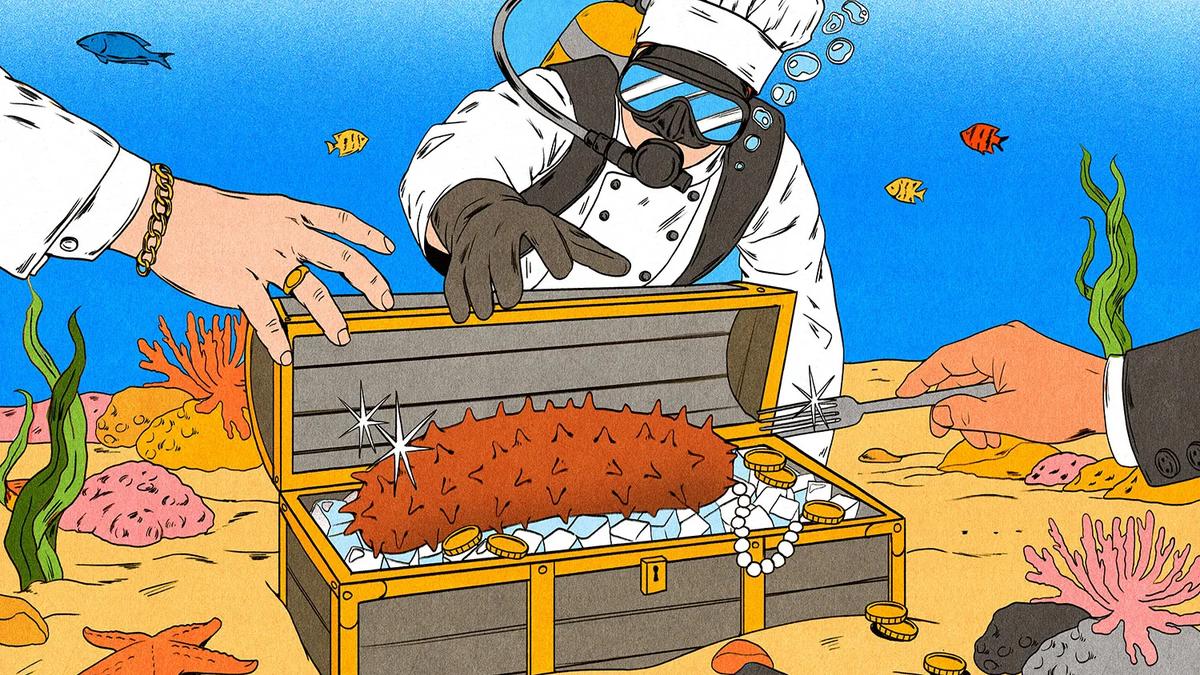
An obscure marine animal, the sea cucumber, has emerged as a surprisingly central commodity in a sprawling illicit trade network. Driven by high demand in Asia, where it is prized as a delicacy and status symbol, its harvesting has fueled overfishing and created a lucrative black market. This market has become intertwined with transnational organized crime, notably linking Chinese chemical manufacturers to Mexican drug cartels who accept sea cucumbers as payment for fentanyl precursor chemicals, bypassing traditional banking systems. The trade also exploits regulatory loopholes and economic desperation in coastal communities across Mexico, India, and Sri Lanka, leading to widespread environmental devastation and social destabilization.
At the heart of the illicit sea cucumber trade lies a potent convergence of economic incentives, cultural values, and the adaptive strategies of criminal organizations. The primary driver is the immense demand from China and other Asian markets, where dried sea cucumbers can fetch thousands of dollars per kilogram. This demand is rooted in centuries of culinary tradition and a perception of health benefits, including immune boosting and aphrodisiac qualities, which elevate the sea cucumber beyond mere food to a symbol of wealth and status.
This high value creates an irresistible draw for criminal networks. For Mexican drug cartels, particularly the Sinaloa Cartel and the Jalisco New Generation Cartel, sea cucumbers offer a dual advantage. First, they represent a highly liquid, non-traceable commodity that can be used as a form of payment, effectively circumventing international banking scrutiny for transactions involving fentanyl precursor chemicals from China. This financial agility allows cartels to diversify their revenue streams and insulate their operations from traditional anti-money laundering efforts. Second, the cartels leverage their existing infrastructure of violence and coercion to seize control of lucrative fishing grounds, displacing legitimate fishers through kidnappings, threats, and buyouts, thereby consolidating their power over local economies.
In other regions, such as India and Sri Lanka, the power mechanics revolve around regulatory arbitrage. India has a blanket ban on sea cucumber fishing, while Sri Lanka permits it. This disparity creates a perfect environment for smuggling, where sea cucumbers illegally poached from Indian waters are laundered through Sri Lanka's legal market before being exported to Asia. This highlights how fragmented national regulations, combined with porous maritime borders, empower criminal networks to exploit jurisdictional gaps and maintain a continuous supply chain.
The global reach of this trade is further amplified by the role of Chinese fishing fleets. These vessels often operate far from their territorial waters, acting as middlemen who offer high prices to local fishers in foreign regions. This creates a powerful incentive for overharvesting, as desperate local communities, often facing dwindling legal fishing opportunities, are drawn into the illicit economy. The sheer scale and coordination of these networks demonstrate a sophisticated, transnational criminal enterprise that seamlessly integrates demand, supply, and logistics across continents, outpacing the enforcement capabilities of individual nations.
The consequences of the illicit sea cucumber trade ripple far beyond the ocean floor, imposing severe human costs on vulnerable communities and threatening the ecological systems that sustain all life.
In places like Mexico's Yucatán Peninsula, once-thriving legal fisheries have been decimated by overfishing, pushing legitimate fishers into economic precarity. When cartels move in, they offer seemingly attractive prices for illegally harvested sea cucumbers, drawing desperate individuals into a dangerous web of crime. Fishers are often caught between the threat of cartel violence and the risk of arrest by authorities. Kidnappings, extortion, and intimidation become commonplace, eroding the social fabric of coastal towns and replacing traditional livelihoods with a culture of fear and illicit gain. The promise of quick money masks a deeper exploitation, as these individuals become cogs in a larger criminal machine, with little power or protection.
The most profound and far-reaching human cost is the severe damage inflicted upon marine ecosystems. Sea cucumbers are often called the
Source referenced: FOREIGNPOLICY
This brief was synthesized by our Editorial Engine and reviewed by The Ground Narrative team.


