TRENDING

Monday, 5 October 2026
----------------------
24 Rabi' Al-Thani 1448 AH
Tens of thousands have taken to the streets across Spain, angered by parliament's rejection of emergency housing relief measures. This widespread discontent highlights deep political divisions and the severe human cost of an increasingly unaffordable housing market.
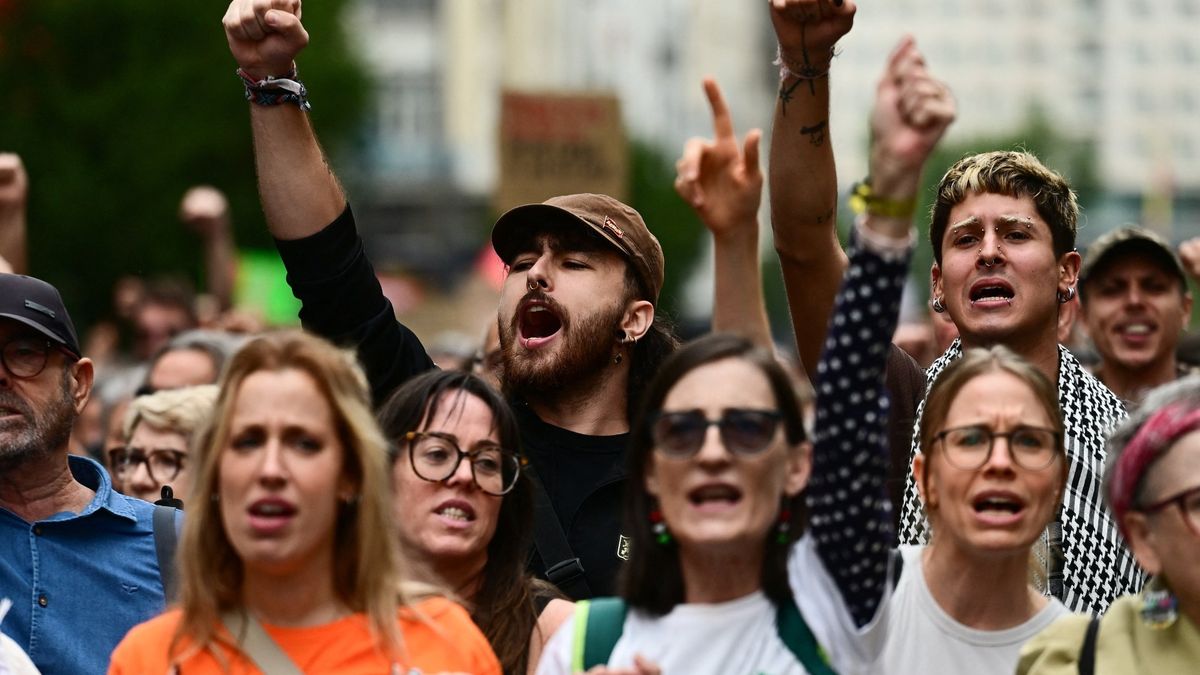
Across Spain, tens of thousands of citizens have mobilized in widespread protests, ignited by the parliament's rejection of two emergency housing decrees proposed by Prime Minister Pedro Sanchez's minority left-wing government. Demonstrations erupted in Madrid and approximately 50 other cities, with protestors demanding urgent political action to curb evictions and address the nation's escalating housing crisis. The immediate catalyst for this surge of public anger was the eviction of an 87-year-old pensioner, which galvanized a week of tent protests in central Madrid before spreading nationwide. In some instances, such as in Valencia, protests turned confrontational, with police deploying rubber bullets and tear gas against demonstrators.
The rejected measures, intended to provide relief to tenants, were voted down by a coalition of opposition parties: the right-wing Catalan separatist party Junts, the main opposition Popular Party (PP), and the far-right Vox party. This parliamentary defeat represents a significant blow to Sanchez's government, intensifying calls for early elections and underscoring the deep political fragmentation within the country as ordinary citizens grapple with the fundamental right to a stable home.
The current housing crisis in Spain is not merely an economic issue but a complex interplay of political survival, economic incentives, and the shifting sands of alliance math. Prime Minister Pedro Sanchez's minority coalition government, composed of his Socialist Party and the far-left Sumar, operates on a knife-edge, requiring constant negotiation and compromise to pass legislation. The rejection of these housing decrees exposes the inherent fragility of this arrangement and the immense leverage held by smaller parties.
The vote against the housing measures was a calculated move by the opposition. For the main opposition Popular Party (PP) and the far-right Vox, it was an opportunity to weaken Sanchez's government, portray it as ineffective, and push for early elections. Their objective is clear: to capitalize on public discontent and return to power. By aligning against a popular social measure, they aim to demonstrate the government's inability to govern, even if it means appearing to disregard the immediate needs of struggling tenants.
More nuanced, and arguably more cynical, was the vote by Junts, the Catalan separatist party. While often aligning with Sanchez on other issues to extract concessions for Catalonia's autonomy, their decision to vote with the right-wing bloc against housing reform is telling. Their stated reason—that the measures would
Tens of thousands are protesting after the Spanish parliament rejected emergency housing relief measures, exacerbating a crisis of unaffordable rents and evictions, particularly impacting vulnerable populations like the elderly and young families.
Prime Minister Pedro Sanchez's proposed housing decrees were rejected by a coalition of opposition parties, including the right-wing Catalan separatist party Junts, the main opposition Popular Party (PP), and the far-right Vox.
The crisis leads to widespread evictions, homelessness, economic instability for low-income families and young people, and a significant erosion of trust in political institutions, taking a severe toll on mental health and community stability.
Editor's Note: The analysis relies on reported political alignments and stated reasons for votes, acknowledging that underlying political maneuvering can be complex and involve unstated objectives.
Source referenced: ALJAZEERA
This brief was synthesized by our Editorial Engine and reviewed by The Ground Narrative team.


