TRENDING

Friday, 18 September 2026
----------------------
7 Rabi' Al-Thani 1448 AH
As Russian parliamentary elections conclude, a palpable fear spreads among citizens: President Putin may soon order a new, large-scale military mobilization for the war in Ukraine. This analysis explores the Kremlin's strategic need for manpower, the coercive digital infrastructure enabling a quiet draft, and the profound human cost borne by ordinary Russians.
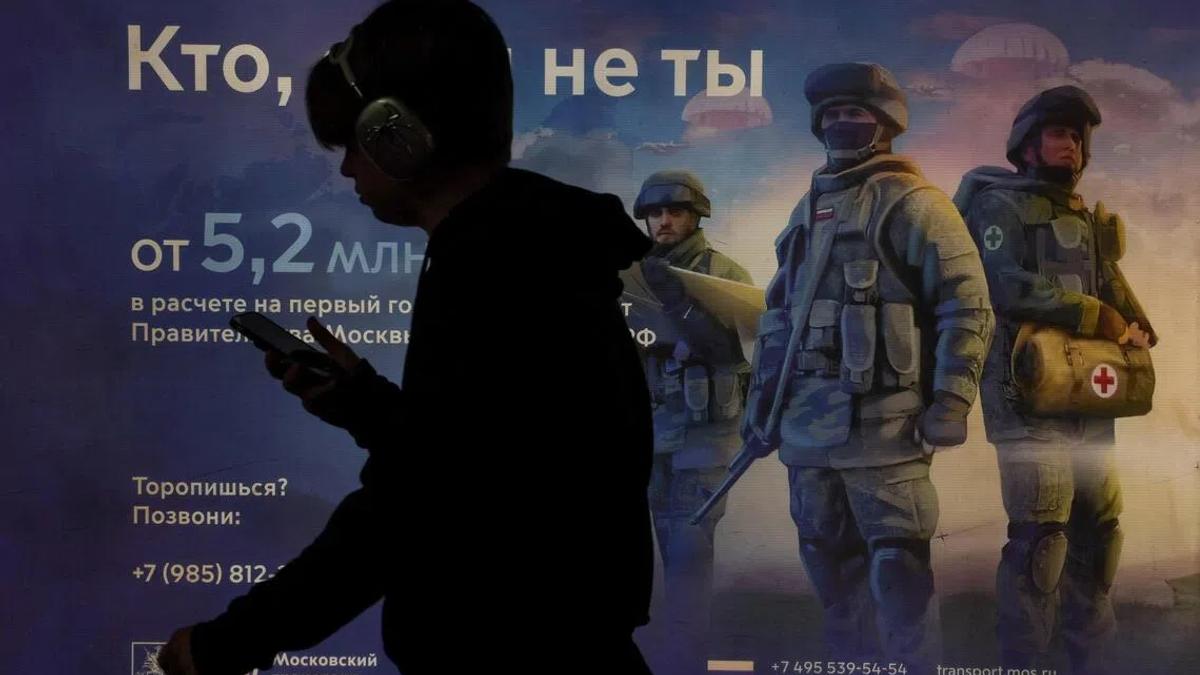
Russian parliamentary elections have just concluded, but beneath the veneer of official process, a deep apprehension grips many citizens. A widespread fear persists that President Vladimir Putin will order a significant, potentially quiet, new military mobilization for the war in Ukraine immediately after the vote. This apprehension stems from persistent rumors and intelligence suggesting Russia aims to draft hundreds of thousands more troops by late 2026, despite official denials, to address severe manpower shortages on the front lines.
President Putin's government faces a critical need for personnel. High casualties in Ukraine and dwindling volunteer numbers mean the current force of approximately 700,000 troops is insufficient to achieve stated objectives, particularly in the eastern Donetsk region. The Kremlin's strategy relies on securing territorial gains, which demands a constant replenishment of forces to offset the estimated 1,000 Russian soldiers killed weekly.
The electoral process itself is a meticulously managed tool of power consolidation. United Russia, Putin's party, is guaranteed to retain its majority in tightly controlled elections where genuine opposition is absent. Putin explicitly linked participation in the elections to supporting the war effort, framing the vote as a mandate for continued military action. This narrative serves to legitimize any subsequent military decisions, including mobilization.
Crucially, the Kremlin has developed a sophisticated digital infrastructure for conscription. Unlike the more chaotic 2022 mobilization, this new system can issue electronic summonses that are legally binding upon posting to an online portal, automatically imposing exit bans and denying access to public services for those who fail to report. This digital net significantly reduces avenues for evasion, centralizing control over the population's movement and civic life. Mobilization efforts are also likely to be strategically targeted; analysts suggest the Kremlin will focus on regions that demonstrate strong loyalty and administrative effectiveness during the elections, effectively rewarding political compliance with military obligation.
The primary cost of this looming mobilization falls squarely on ordinary Russian men and their families. The fear of an impending draft has already prompted some to seek ways to leave the country, mirroring the exodus seen in 2022. For those who cannot leave, the prospect of forced conscription into a brutal, protracted conflict with high casualty rates is a profound source of anxiety and despair. The economic burden is also significant; while recruitment bonuses are offered, these often come at the cost of lives and long-term economic stability for families. The loss of working-age men to the front lines depletes local economies and strains social support systems. The psychological toll on a society living under the shadow of perpetual war and potential conscription is immense, even for those not directly called up.
Official statements from the Kremlin consistently downplay the severity of Russia's manpower crisis and the true scale of its casualties. Putin's assertion that "people are coming forward voluntarily" directly contradicts reports of declining volunteer numbers and the need for aggressive advertising campaigns urging men to sign contracts to avoid conscription. The narrative of a "voluntary" war effort masks the increasing coercion embedded in the system. The digital conscription infrastructure, with its automatic penalties and exit bans, fundamentally shifts the power dynamic, making evasion far more difficult and punitive.
Furthermore, the Kremlin omits the strategic failures on the ground. Despite massive casualties—estimated at 33,000 per month for minimal territorial gains—Russia's territorial advances in Ukraine have been minimal in recent months. This indicates a severe disconnect between the human cost and the military objectives achieved. The official narrative focuses on "advances" while ignoring the unsustainable attrition rates. The lack of genuine political opposition or public discourse on these realities ensures that the official narrative remains unchallenged domestically.
The immediate aftermath of the parliamentary elections will be crucial. Observers will be looking for any signs of increased recruitment activity, particularly in regions identified as loyal. The activation and widespread use of the new digital conscription system will be a key indicator of the Kremlin's intent and capacity for a large-scale, quiet mobilization. The scale and nature of any new call-up will determine its impact on Russian society and the war effort. Will it be a "stealth" mobilization, gradually drawing in men, or a more overt, albeit digitally enforced, wave? The international community will also be watching for any shifts in Russia's military strategy in Ukraine, which would likely necessitate further manpower. The long-term societal implications of a sustained, coercive mobilization policy on Russia's demographics and internal stability remain a critical area of observation.
Source referenced: STRAITSTIMES
This brief was synthesized by our Editorial Engine and reviewed by The Ground Narrative team.


