TRENDING

Monday, 26 October 2026
----------------------
15 Jumada Al-Awwal 1448 AH
Thousands of citizens are protesting in Prague against proposed reforms to public media funding. Critics fear the government's plan to shift funding from license fees to state budget allocations will stifle press freedom and allow political control over news content.
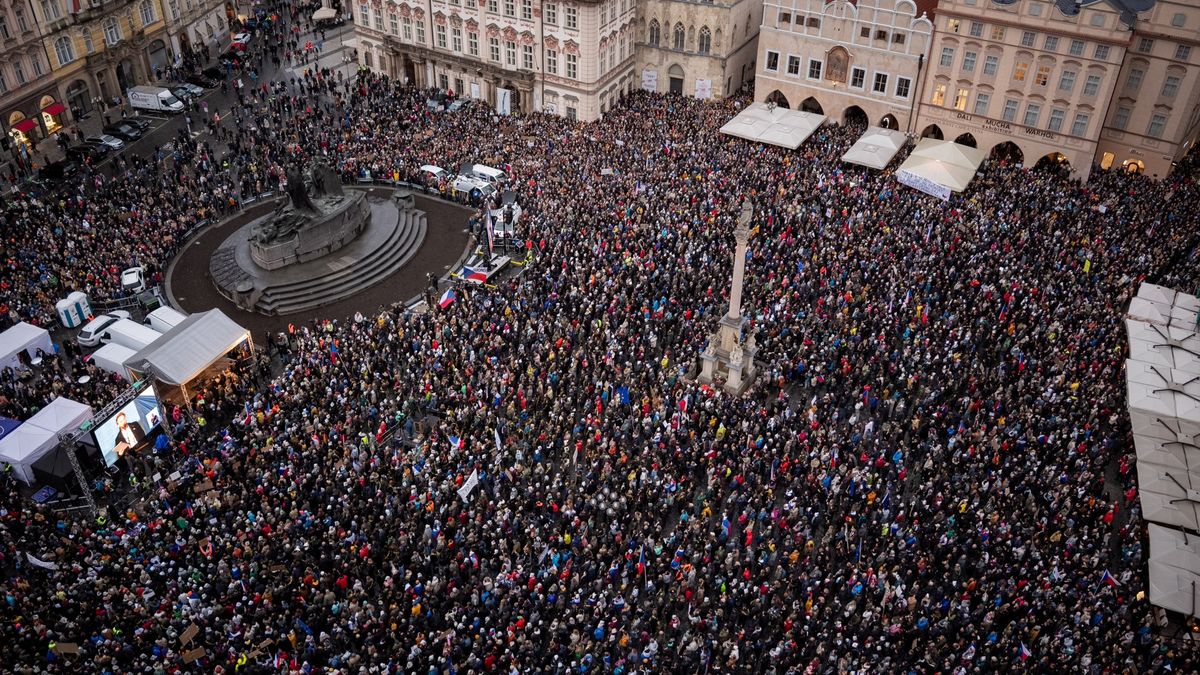
Thousands of citizens have taken to the streets of Prague, the capital of the Czech Republic, to protest against proposed reforms to the funding structure of the nation's public media. The government, led by Prime Minister Andrej Babis and his coalition, seeks to abolish the long-standing system of household license fees, replacing it with direct allocations from the state budget. This legislative push, fast-tracked through the lower house of parliament with limited opposition debate, also includes a potential 15 percent cut to public media funding, sparking widespread fears that the move is an attempt to exert political control over independent journalism.
Public media staff have announced plans for a strike, backed by a broad coalition of labor unions, universities, churches, and international media organizations. Protesters chant slogans reflecting their concern over the erosion of press freedom, drawing comparisons to similar actions by populist governments in neighboring Hungary and Slovakia.
The proposed overhaul of public media funding in the Czech Republic is a classic demonstration of how legislative and financial levers can be used to reshape the information landscape. At its core, this is a struggle for narrative control, with the governing coalition seeking to consolidate its influence over the stories the public consumes.
The Babis government's primary incentive is to gain greater sway over public discourse. By shifting funding from an independent, albeit mandatory, household fee to direct state budget allocations, the government immediately introduces a mechanism for leverage. Financial dependence often translates into editorial vulnerability. A 15 percent cut, proposed alongside this shift, serves as an additional pressure point, forcing public broadcasters to potentially compromise editorial independence for financial stability. This move is not merely about fiscal transparency, as the government claims, but about establishing a more direct line of influence over what is reported and how.
Historically, public media in post-communist states like the Czech Republic have often been viewed as crucial bulwarks against state propaganda, a legacy of the totalitarian regimes they replaced. The current government's actions, particularly the fast-tracking of the bill and limiting opposition debate, signal a clear intent to push through changes with minimal scrutiny, bypassing traditional democratic checks. This legislative maneuver is a tactical deployment of parliamentary majority to achieve a strategic objective: control over a significant segment of the national media.
The comparison to Hungarian Prime Minister Viktor Orban and Slovakia's Prime Minister Robert Fico is not accidental. Both leaders have systematically dismantled or co-opted independent media outlets, often through similar funding mechanisms or regulatory changes, to consolidate their power and promote their political agendas. Babis, with a history of media attacks and an agenda that includes reducing support for Ukraine, stands to benefit from a more compliant media environment that would be less critical of his policies and more amenable to his preferred narratives. The coalition's inclusion of far-right parties further suggests a unified front in pursuing an agenda that prioritizes nationalistic and often anti-establishment narratives, which a controlled public media could amplify.
However, the power mechanics are not entirely one-sided. The significant public protests, the planned strike by media professionals, and the backing from a diverse array of societal groups represent a counter-power. This collective resistance signals that a substantial portion of Czech society understands the stakes involved and is willing to mobilize to defend media independence. This societal pushback creates a political cost for the government, potentially forcing a re-evaluation or at least slowing down the legislative process, especially as the bill still needs to pass the upper house and faces a constitutional court challenge.
The proposed public media reforms in the Czech Republic, if enacted, carry a profound human cost, primarily borne by the ordinary citizens who rely on these institutions for unbiased information and by the journalists whose professional integrity is threatened.
The most significant cost is the erosion of an informed citizenry. When public media, traditionally tasked with providing balanced, in-depth reporting and serving as a check on power, becomes susceptible to political influence, the public's access to diverse and credible information diminishes. Citizens lose a crucial tool for understanding complex issues, scrutinizing government actions, and making informed decisions in a democracy. This can lead to increased political polarization, as people are fed curated narratives rather than comprehensive facts, making it harder to find common ground or hold leaders accountable. The ability to distinguish truth from propaganda becomes increasingly difficult, fostering cynicism and distrust in democratic institutions.
For the journalists, editors, and technical staff working within public radio and television, the human cost is immediate and personal. The threat of funding cuts and the specter of political control create an environment of fear and uncertainty. Journalists may face immense pressure to self-censor, to avoid topics critical of the government, or to frame stories in a way that aligns with the ruling coalition's agenda. This compromises their professional ethics and can lead to a decline in journalistic quality. Talented professionals may leave the public sector, seeking environments where their independence is respected, leading to a
Source referenced: ALJAZEERA
This brief was synthesized by our Editorial Engine and reviewed by The Ground Narrative team.


