TRENDING

Monday, 26 October 2026
----------------------
15 Jumada Al-Awwal 1448 AH
Serbia’s snap parliamentary vote recorded the highest turnout in decades as a student‑driven list sought to unseat long‑time leader Aleksandar Vucic. The election exposed deep power struggles, procedural flaws, and a population weary of corruption.
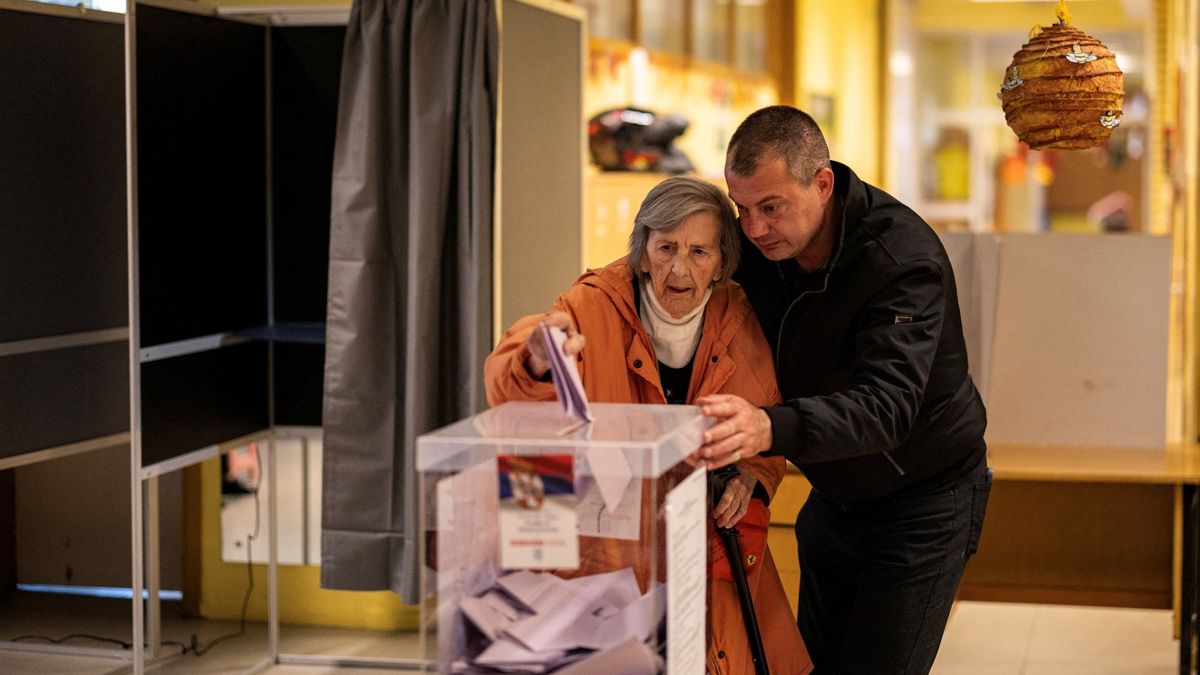
The snap parliamentary election held on 25 October 2026 saw Serbia record a 64.9 percent turnout, the highest since the breakup of Yugoslavia in 1992. Voters cast ballots for 250 seats across 18 competing lists, with the incumbent Aleksandar Vucic’s Serbian Progressive Party (SNS) defending its grip against a newly formed student‑backed coalition called the Student List – Students Win. Early reports indicated a tense atmosphere: police in riot helmets guarded the election commission headquarters, and observers from the Centre for Research, Transparency and Accountability documented intimidation at roughly a third of the 500 polling stations they monitored. By late afternoon, the Centre for Free Elections and Democracy logged over 260 irregularity reports, ranging from ballot photography to group voting. The final tally will determine whether the SNS can retain a majority of 126 seats needed to form a government.
The election pits entrenched party machinery against a loosely organized civic movement. The Serbian Progressive Party relies on a patronage network built over a decade of rule, leveraging state resources, media access, and a loyal voter base cultivated through promises of economic modernization and EU‑aligned reforms. By contrast, the Student List – Students Win emerged from anti‑corruption protests sparked by a tragic railway canopy collapse in Novi Sad in November 2024, which killed 16 people and ignited nationwide outrage over safety standards and opaque procurement. The student bloc fields candidates from medicine, education, and other professions, deliberately avoiding career politicians to signal a break from the status‑quo. Their strategy hinges on mobilising first‑time voters and those disillusioned by chronic clientelism. Internationally, European Union officials have signaled that any government perceived as backsliding on rule‑of‑law standards could face delayed accession talks, adding pressure on both sides to present a credible democratic process.
The stakes extend far beyond parliamentary arithmetic. Students who organized the protests have faced arrests, surveillance, and academic penalties, illustrating how dissent is still criminalised despite formal democratic institutions. Rural voters, traditionally supportive of the SNS due to state‑subsidised agriculture programs, now confront a choice between economic stability and a demand for transparent governance. The public sector workers—teachers, nurses, and civil servants—stand to lose promised wage hikes and pension boosts that Vucic pledged in exchange for electoral support. Meanwhile, families in Novi Sad still mourn the victims of the 2024 collapse, and many have yet to receive compensation or accountability, fueling a sense of injustice that fuels the student movement. The election’s procedural flaws—ballot secrecy breaches and intimidation—risk eroding confidence in the very mechanisms meant to protect citizens’ voices.
Official narratives from the government emphasize a smooth, high‑turnout election, downplaying the volume of irregularity reports and framing student activism as a fringe phenomenon. State‑aligned media have largely omitted the depth of the anti‑corruption grievances, instead spotlighting Vucic’s infrastructure projects and foreign‑policy successes. International observers, while noting procedural concerns, have been cautious in their language, avoiding direct condemnation to preserve diplomatic channels with Belgrade. What receives even less attention is the role of regional power brokers: Russian business interests linked to energy contracts and Chinese infrastructure loans have quietly lobbied for a stable, pro‑government outcome, fearing that a reformist coalition could renegotiate existing deals. The media silence on these external economic levers masks a layer of geopolitical bargaining that could shape Serbia’s policy direction for years.
The immediate focus will be on coalition talks: whether the SNS can cobble together a governing majority with smaller nationalist parties, or whether the student bloc can force a confidence‑vote that reshapes the parliamentary balance. Observers should monitor parliamentary coalition negotiations for signs of concessions on anti‑corruption legislation and media freedom. Regionally, any shift in Belgrade’s alignment could affect regional stability, especially in the context of Kosovo’s unresolved status and the Balkans’ delicate ethnic balances. Finally, the pace of EU accession discussions will reveal how much leverage Brussels is willing to exert over Belgrade’s internal reforms, a factor that could either empower the student movement’s agenda or reinforce the status‑quo if the EU opts for a pragmatic, stability‑first approach.
The incumbent Serbian Progressive Party led by Aleksandar Vucic faces the newly formed Student List – Students Win, a coalition of candidates from academia and civil society, along with several smaller nationalist and opposition parties.
Both the Centre for Research, Transparency and Accountability and the Centre for Free Elections and Democracy reported irregularities such as voter intimidation and ballot secrecy breaches, prompting calls for closer scrutiny by EU and OSCE monitors.
A reformist coalition could accelerate EU‑aligned judicial and media reforms, potentially unlocking stalled accession talks, but it also risks antagonising Russia and China, who have vested economic interests in a stable, pro‑government Serbia.
Source referenced: ALJAZEERA
This brief was synthesized by our Editorial Engine and reviewed by The Ground Narrative team.