TRENDING

Sunday, 25 October 2026
----------------------
14 Jumada Al-Awwal 1448 AH
Iran's authorities are rapidly expanding a nationwide civilian mobilization campaign, dubbed 'Janfada,' to arm and train citizens amidst fears of renewed conflict with the US and Israel. This initiative, led by the Basij militia and IRGC, aims to bolster state security while reinforcing revolutionary values.
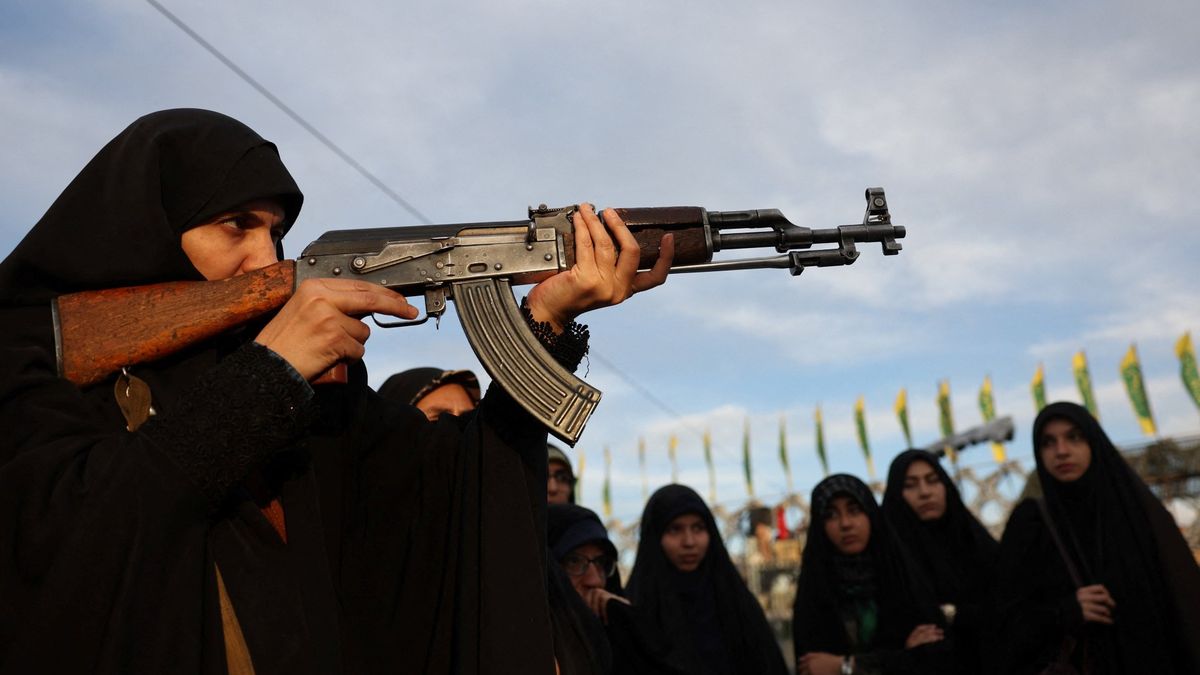
Iran's authorities have significantly escalated a nationwide civilian mobilization campaign known as Janfada, or "those who sacrifice their life." Launched in late March during heightened tensions with the United States and Israel, the initiative now spans across numerous cities and provinces, actively recruiting volunteer men and women of all ages, with a particular focus on youth. Representatives of the Basij militia of the Islamic Revolutionary Guard Corps (IRGC) and other state bodies are establishing street booths and training centers, offering instruction in weapons use and other equipment to defend the government and its "revolutionary" values. This expansion comes amid growing fears that fighting with the US and Israel could resume imminently, while also following a period of significant internal dissent.
The Janfada campaign is a multifaceted display of power, serving both as a deterrent against external threats and a mechanism for internal consolidation. At its core, it leverages the historical role of the Basij militia, a paramilitary volunteer force that has been instrumental in upholding the Islamic Republic since its inception. The Basij, under the command of the IRGC, has traditionally acted as the state's internal security arm, suppressing dissent and enforcing social norms, while also providing a reserve force for military operations.
The timing of this nationwide expansion is crucial. While framed as a response to potential conflict with the US and Israel, it also follows months of widespread anti-government protests that shook the country. The regime's narrative, which characterized these protests as a "coup" orchestrated by foreign adversaries, allows it to conflate internal dissent with external threats. By mobilizing civilians under the banner of national defense, the state seeks to reinforce a "siege mentality" among its loyalists. This strategy, as noted by observers, deepens the legitimacy the state already holds among its existing supporters, rather than broadening its appeal to the wider populace. It is a powerful ideological tool, designed to solidify belief in the revolution's mission and principles, portraying any opposition, internal or external, as an attack on the very fabric of the nation.
Economically, the campaign operates within a context of severe pressure. Nearly eight months of "attritional war," coupled with persistent US sanctions and a naval blockade, have taken a heavy toll on the Iranian economy, leading to widespread poverty and infrastructure damage. In this environment, the mobilization serves a dual purpose: it offers a sense of collective action and purpose, potentially diverting attention from economic woes, and it frames individual sacrifice (like consuming less fuel and electricity) as a patriotic duty necessary to ease the pressure of the "war." This narrative attempts to transform economic hardship into a shared national burden, to be endured for the sake of the revolution.
Furthermore, the campaign is a clear demonstration of the regime's capacity for social engineering. By utilizing public squares, organizing rallies, and even involving schools, the state is attempting to embed its ideology deeply within daily life. This constant visibility and active participation are designed to make the state's presence undeniable and to normalize the idea of armed civilian readiness. The goal is to create a visible, active base of support that can be deployed both defensively against external forces and, crucially, as a deterrent or direct force against any resurgence of internal opposition. It underscores the leadership's commitment to the "revolution as a bicycle" metaphor: constant pedaling (mobilization) is required to avoid a fall (loss of power or revolutionary momentum).
The expansion of Iran's civilian mobilization campaign carries profound human costs, impacting daily life, individual freedoms, and the psychological well-being of its citizens. For many, particularly those who participated in or sympathized with the recent nationwide protests, the campaign is perceived as an act of intimidation. Human rights groups have highlighted how such armed mobilization efforts, coming months after protests where thousands of civilians were killed, serve to suppress any lingering dissent through overt displays of state power and readiness to use force.
Residents in provinces like Gilan describe a pervasive presence of state-run stations, where organizers teach people to load live bullets, arm pistols, and fire assault rifles. This normalization of weapons and military training in public spaces, sometimes accompanied by revolutionary tunes and chants, creates an atmosphere of heightened tension and anxiety. The reported incidents of residents objecting to noise and street blockages, escalating into brawls in places like Rasht, illustrate how this pervasive state presence disrupts community life and generates friction. The caution issued to residents in Karaj about impending "explosions and loud noises" from Janfada exercises further underscores the encroachment of military activities into civilian areas, eroding any sense of normalcy or peace.
Beyond the psychological toll, the campaign intersects directly with the severe economic hardship faced by ordinary Iranians. The "attritional war," sanctions, and naval blockade have made Iranians significantly poorer, destroying civilian infrastructure and limiting access to essential resources. Against this backdrop, the government's call for registrants to "help ease the pressure" by consuming less fuel, electricity, and other resources places an additional burden on a population already struggling to meet basic needs. This framing of deprivation as a patriotic act of "self-sacrifice" attempts to co-opt individual suffering into a collective revolutionary effort, shifting responsibility from state policy to citizen compliance.
Perhaps one of the most alarming aspects of the Janfada campaign is its deliberate focus on children. The Education Minister Alireza Kazemi's announcement that the Basij militia is registering "student Janfadas" and planning ceremonies involving children in the coming weeks signals a concerted effort to indoctrinate the next generation. Involving children in military training and ideological mobilization not only exposes them to violence and propaganda at a formative age but also risks normalizing conflict and obedience to the state above all else. This can have long-lasting psychological and societal consequences, shaping their worldview and potentially stifling critical thinking and independent thought.
The campaign, while ostensibly about national defense, also serves to further erode civil liberties. The government's rejection of findings by an independent United Nations fact-finding mission, which stated that authorities committed crimes against humanity during the crackdown on protests, demonstrates a clear disregard for international standards of human rights. By framing all dissent as foreign-orchestrated "coups" and mobilizing a civilian force against "domestic and foreign threats," the regime creates a broad justification for suppressing any form of opposition, tightening its grip on power and limiting the space for public expression and assembly.
What governments, corporations, and official statements often downplay or omit in the context of Iran's Janfada campaign is the profound internal insecurity driving its expansion, rather than solely external threats. While the fear of renewed conflict with the US and Israel is a convenient and potent rallying cry, the timing and nature of this mobilization suggest a deeper, more urgent need to consolidate power and suppress domestic dissent that flared dramatically just months prior.
The campaign's launch and rapid expansion directly follow a period of unprecedented nationwide protests, which the government violently suppressed. The official narrative that these protests were a "coup" orchestrated by foreign powers serves to delegitimize genuine grievances and justify a robust internal security response. The Janfada initiative, by arming and training civilians to defend "revolutionary values," effectively creates a loyalist civilian militia that can be deployed against any future internal unrest. This is the unspoken, yet primary, function of such a broad mobilization: to project an image of popular unity and strength that can deter or crush domestic opposition, thereby securing the regime's hold on power.
Official statements claim an astonishing 33 million Iranians have signed up for the campaign, representing more than a third of the country's population. This figure is highly suspect, especially when contrasted with independent analyses that accessed the campaign website's source code, revealing fewer than four million registrations. The ease of registration, requiring only a phone number and no national identification, further suggests that the numbers are inflated, designed to project an image of overwhelming public endorsement. This manufactured display of support is crucial for a regime facing a legitimacy crisis, attempting to convince both its own populace and the international community that it enjoys broad popular backing, even as it struggles to truly win over the majority.
The decision to pour significant resources into a nationwide civilian mobilization, including weapons training, public events, and the establishment of numerous training stations, raises critical questions about resource allocation. Iran is grappling with an "attritional war," naval blockades, and crippling international sanctions that have made its citizens poorer and damaged infrastructure. In this context, diverting funds and manpower towards a large-scale ideological and military mobilization, rather than addressing pressing economic and social needs, reveals the regime's priorities. The "untold story" here is that political survival and ideological purity are deemed more critical than alleviating the immediate suffering of the population, highlighting the regime's calculation that a strong, visible, and loyalist base is essential for its continued existence, even at the expense of broader public welfare.
Finally, the campaign blurs the lines between national defense and internal control. While the stated goal is to prepare citizens for "domestic and foreign threats," the emphasis on "revolutionary values" and the involvement of the Basij – historically a tool for internal suppression – indicates that "domestic threats" are broadly defined to include any challenge to the existing order. The training, which includes live bullet exercises, instills a readiness for armed confrontation within the civilian population, creating a climate where the use of force against perceived enemies, internal or external, becomes normalized. This subtle but critical shift in public discourse and training prepares society not just for external war, but for the ongoing ideological and political battle within its own borders.
As Iran's Janfada campaign entrenches itself further into the fabric of daily life, several key dynamics bear close observation. The most immediate concern is whether the heightened rhetoric and training will lead to an actual escalation of military confrontation with the United States and Israel. Any significant incident could quickly transform the theoretical readiness of the Janfada volunteers into a real, devastating conflict, with immense human cost.
Internally, watch for how the campaign impacts the fragile balance of dissent and control. While intended to suppress opposition, the pervasive presence of armed training and ideological messaging could inadvertently fuel resentment among those already disenfranchised, potentially leading to new forms of resistance or further social friction. The regime's ability to maintain the illusion of widespread support, despite evident discrepancies in registration numbers, will be a critical indicator of its internal stability.
Pay close attention to the long-term societal effects of involving children and youth in military mobilization. The indoctrination of "student Janfadas" could shape a generation, but it could also create a deep societal divide, fostering a population either fiercely loyal or deeply cynical. The psychological and developmental impacts on these children will be significant.
Finally, monitor the economic situation. The call for citizens to consume less amidst an "attritional war" and sanctions places immense pressure on households. Should economic conditions worsen, the regime's ability to sustain the Janfada campaign's ideological appeal, and prevent widespread discontent from boiling over, will be severely tested. The interplay between external pressures, internal control, and the daily struggles of ordinary Iranians will define the next chapter of this unfolding narrative.
Source referenced: ALJAZEERA
This brief was synthesized by our Editorial Engine and reviewed by The Ground Narrative team.