TRENDING

Sunday, 25 October 2026
----------------------
14 Jumada Al-Awwal 1448 AH
Artificial intelligence is rapidly integrating into global finance, promising unprecedented efficiency but also raising fundamental questions about data privacy, accountability, and who truly controls the world's money flows.
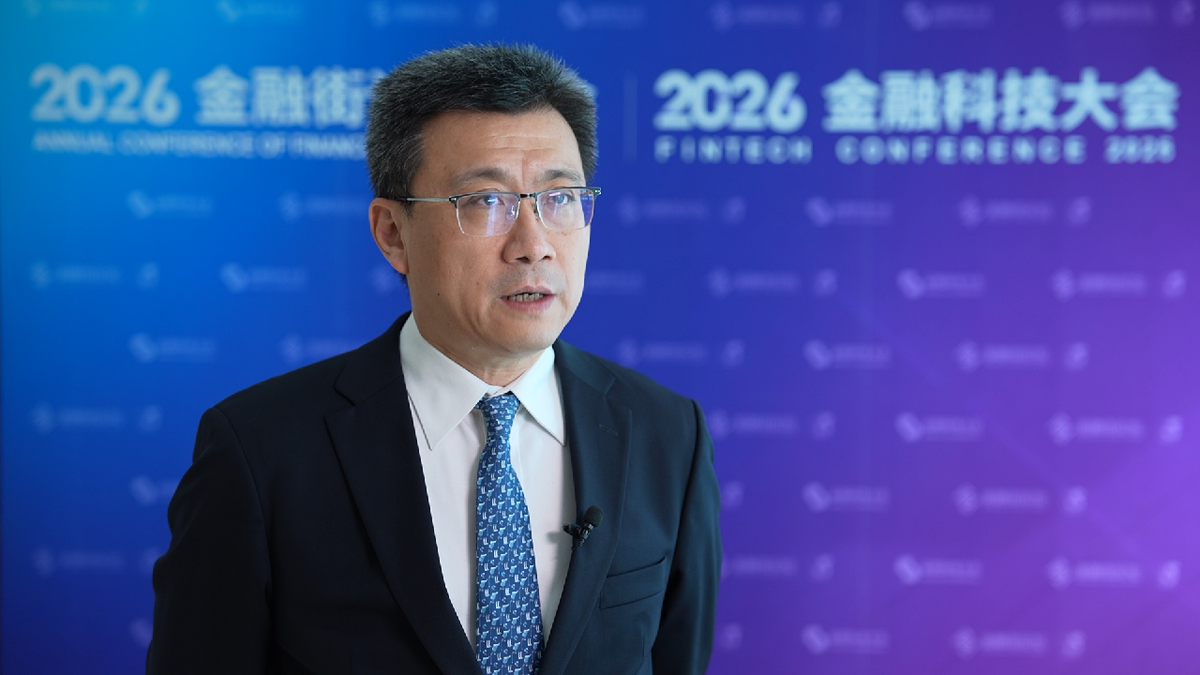
At the 2026 Financial Street Forum, the integration of artificial intelligence (AI) into the financial sector took center stage. Zhang Ke, executive chairman of the Beijing Frontier Institute of Regulation and Supervision Technology, highlighted AI as the engine of the fifth industrial revolution, primarily valued for its efficiency gains. However, he cautioned against the inherent challenges stemming from AI's reliance on historical data and existing patterns. Zhang specifically pointed to two critical risks: the erosion of data privacy and the ambiguity of accountability when AI algorithms make high-stakes financial decisions. He advocated for a global, cooperative approach to governance, proposing an international "AI Accord" to establish order and structure, drawing parallels to agreements like the Paris Agreement on climate change.
The rapid ascent of AI in finance is fundamentally a story about the concentration and redistribution of power. The promise of unparalleled efficiency, touted by experts like Zhang Ke, translates directly into significant competitive advantages for those who can harness it. Financial institutions and nations that lead in AI development and deployment stand to gain immense influence over global capital flows, market dynamics, and economic stability. This isn't merely about faster trading or better analytics; it's about shaping the very architecture of the global financial system.
At its core, AI thrives on data. The ability to collect, process, and leverage vast quantities of financial and personal data becomes a new form of currency and control. Nations like China, with its extensive digital infrastructure and centralized data policies, are strategically positioned to develop and deploy AI models at scale. The call for an "AI Accord" by a Chinese expert, while framed as a global cooperative effort, can also be viewed through the lens of geopolitical competition. Establishing international norms and regulations for AI governance is a critical battleground. The nation or bloc that successfully shapes these rules will exert significant influence over how AI is developed, deployed, and regulated worldwide, potentially embedding their own values and systems into the global standard. This is a subtle but potent play for normative power, ensuring that future financial innovation aligns with their strategic interests.
Furthermore, the integration of AI shifts power dynamics within financial institutions themselves. Decision-making, traditionally the domain of human experts, is increasingly augmented or even delegated to algorithms. This creates a new elite class of AI developers, data scientists, and engineers whose understanding of these complex systems becomes indispensable. The reliance on AI models can also create a dependency, where the human capacity to understand and intervene in financial crises becomes diminished, potentially leading to systemic vulnerabilities. The tension between the innovative agility of private tech and finance giants and the regulatory imperative of states further complicates this landscape, as governments struggle to keep pace with technological advancements that are reshaping markets at unprecedented speeds.
While AI promises efficiency and growth for financial institutions, the human cost of this transformation is often borne by ordinary citizens, workers, and smaller market participants who have little say in its development or deployment.
The most immediate and pervasive cost is the erosion of data privacy. As AI models become more sophisticated, they require ever-larger datasets to train and operate effectively. This means collecting and analyzing an unprecedented amount of personal financial information, transaction histories, spending habits, and even behavioral data. While framed as necessary for personalized services or fraud detection, this constant data flow creates a detailed digital footprint of every individual's economic life. The risk is not just unauthorized access, but the potential for this data to be used for profiling, algorithmic discrimination, or even subtle manipulation. Individuals lose control over their own financial narrative, as their economic identity is increasingly defined by algorithms they cannot see or influence.
The efficiency gains lauded by AI proponents often translate directly into job losses for human workers. Roles in financial analysis, trading, customer service, compliance, and even complex advisory functions are increasingly vulnerable to automation. While some new jobs in AI development and oversight may emerge, they are unlikely to offset the scale of displacement, particularly for middle-skill workers. This creates significant economic insecurity, exacerbating existing inequalities and requiring massive societal adjustments in retraining and social safety nets. The promise of a more efficient financial system comes at the expense of human livelihoods, leaving many to question their place in an increasingly automated economy.
AI models are trained on historical data, which inherently reflects past societal biases and inequalities. If historical lending practices were discriminatory, an AI trained on that data will likely perpetuate, or even amplify, those biases in credit scoring, loan approvals, or investment recommendations. This can lead to financial exclusion for certain demographic groups, making it harder for them to access capital, build wealth, or participate fully in the economy. The opacity of many AI algorithms makes it difficult to identify and correct these biases, effectively automating and institutionalizing discrimination on a vast scale, often without human intent or even awareness.
The speed and interconnectedness of AI-driven financial systems introduce new forms of systemic risk. Algorithmic trading, for instance, can lead to
Source referenced: CGTN
This brief was synthesized by our Editorial Engine and reviewed by The Ground Narrative team.