TRENDING

Sunday, 25 October 2026
----------------------
14 Jumada Al-Awwal 1448 AH
Israel heads to the polls under the shadow of the Gaza war, facing a deeply fractured political landscape where Palestinian-led parties could hold the balance of power. This election is a critical test of political survival and national direction.
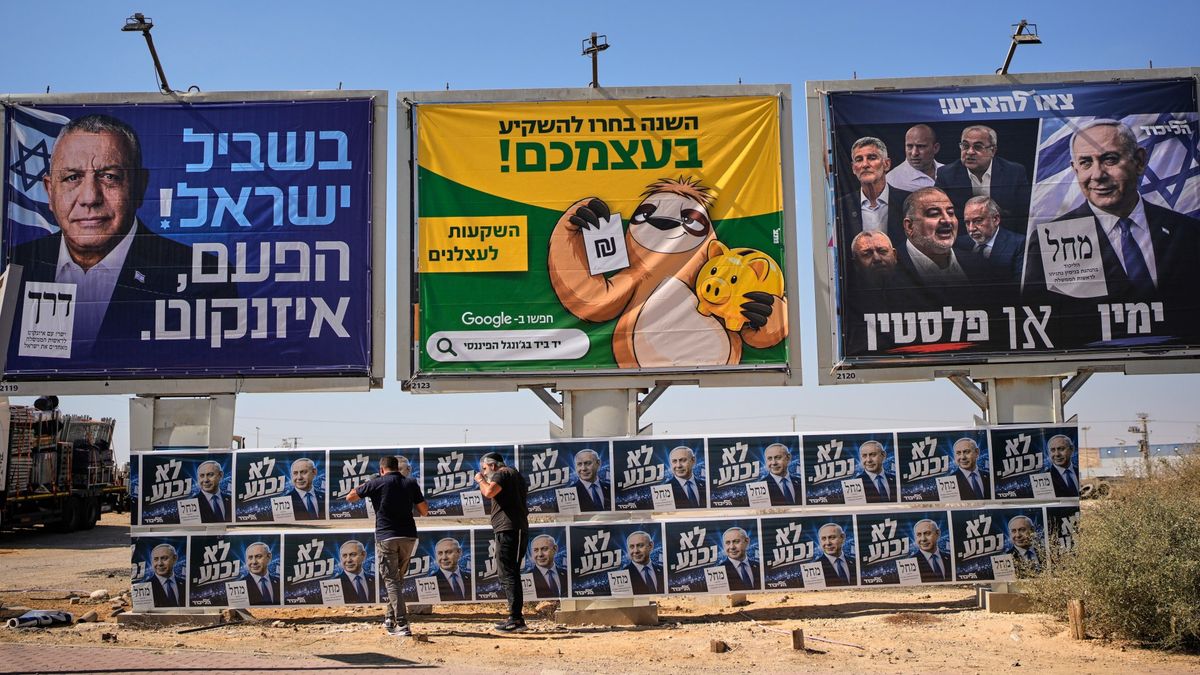
Israel is preparing for a pivotal general election on October 27, 2026, to determine the composition of its 120-seat Knesset. This vote marks the first national election since the October 7, 2023 attacks and Israel's subsequent war on Gaza, which has expanded into a wider regional conflict. Opinion polls indicate a tight contest between Prime Minister Benjamin Netanyahu's right-wing religious-nationalist bloc and a diverse opposition alliance, with neither side projected to secure an outright majority. Crucially, Palestinian-led parties, representing about 20 percent of Israel's population, are poised to emerge as potential kingmakers, holding significant leverage in the formation of the next government.
Israel's political system, based on proportional representation, inherently necessitates coalition governments. No single party has ever won an outright majority of 61 seats in the Knesset, making post-election negotiations for alliances a fundamental aspect of power-sharing. This structural reality means that even a slight lead in opinion polls does not guarantee a path to governance, as the ability to assemble a stable coalition is paramount.
Benjamin Netanyahu's enduring political power stems from his consistent ability to unite a bloc of right-wing and ultra-Orthodox parties, including Likud, Itamar Ben-Gvir's Jewish Power, and Bezalel Smotrich's Religious Zionism, alongside parties like Shas and United Torah Judaism. His political survival hinges on maintaining this cohesion and potentially attracting new partners, or even supporting an alternative leader from his own camp if a direct path to the premiership proves too challenging. His long tenure has also been marked by a strategy of reinforcing a strong, nationalist, and security-focused agenda, which resonates with a significant portion of the Israeli electorate, especially in times of conflict.
The opposition alliance, comprising parties like Yashar (led by Gadi Eisenkot), the Democrats, Yisrael Beytenu, and the Together alliance (featuring Naftali Bennett and Yair Lapid), is largely united by a common goal: to unseat Netanyahu. Their stated aim is to "preserve and strengthen Israel as a Jewish and democratic state." However, this broad objective often masks internal ideological differences and a lack of a single, undisputed leader, which can complicate coalition formation. Their challenge lies in translating anti-Netanyahu sentiment into a cohesive governing platform that can bridge their own divides while also navigating the complex demands of potential minority partners.
The most significant power dynamic in this election cycle involves the Palestinian-led parties – Ra'am (United Arab List), led by Mansour Abbas, and the Joint List (comprising Hadash, Ta'al, and Balad factions). Projected to win around 13 seats, these parties hold the potential to be decisive kingmakers. Ra'am's historic participation in Naftali Bennett's coalition in 2021 demonstrated a pragmatic willingness to engage in government for the benefit of its constituents, focusing on issues like combating violent crime in Palestinian communities and addressing discriminatory policies. The Joint List, while more ideologically aligned with Palestinian statehood and broader rights, has also signaled a readiness to provide external parliamentary support – a "safety net" – to an anti-Netanyahu coalition without necessarily joining it, in exchange for specific conditions. However, the willingness of mainstream Israeli opposition leaders, such as Eisenkot, to formally ally with Palestinian-led parties remains a significant political hurdle, often ruled out due to perceived ideological incompatibility and the political cost of such an alliance within the Israeli Jewish electorate.
The ongoing war in Gaza casts a long shadow over these power mechanics. It has likely hardened nationalist sentiments within the Israeli electorate, potentially making any overtures to Palestinian-led parties even more politically risky for mainstream Israeli parties. The conflict also elevates security concerns, which tend to favor more hawkish leaders and policies, potentially bolstering Netanyahu's bloc despite public dissatisfaction with his handling of the war. The historical precedent of political instability, with Israel holding five elections between 2019 and 2022, underscores the fragility of its coalition politics and the constant struggle to form stable governments, often leading to prolonged periods of caretaker administrations.
The profound human cost of Israel's perpetual political instability and the enduring conflict falls disproportionately on ordinary citizens, particularly Palestinians both within Israel and in the occupied territories.
For Palestinians in Gaza, the outcome of this election directly impacts the trajectory of the ongoing war and the prospects for reconstruction and recovery. A hardline government, potentially led by Netanyahu and bolstered by ultranationalist factions, is likely to continue aggressive military operations, maintain the blockade, and resist any meaningful steps towards a political resolution. This means prolonged suffering, continued displacement, and a deepening humanitarian crisis for a population already devastated by conflict. In the West Bank, a right-wing government would likely accelerate settlement expansion, increase military incursions, and further entrench the occupation, leading to more land confiscations, home demolitions, and restrictions on movement. Even a more centrist Israeli government, while potentially offering rhetorical moderation, has historically shown little willingness to fundamentally alter the status quo of occupation, meaning the daily realities of life under military rule for Palestinians would largely persist.
Palestinian citizens of Israel, who constitute about 20 percent of the population, face a unique set of challenges. Despite their citizenship, they endure systemic discrimination in areas such as housing, employment, and public services. Their communities are often plagued by high rates of violent crime, an issue that Ra'am leader Mansour Abbas has prioritized. The political leverage they gain in coalition negotiations, while significant, is often transactional and precarious. When their parties are excluded from government, their concerns are marginalized. When they are included, they face immense pressure to temper their demands regarding Palestinian statehood or broader human rights, often in exchange for tangible but limited improvements in their communities. The constant political rhetoric from mainstream Israeli parties that questions their loyalty or rejects their inclusion in government reinforces their status as second-class citizens, undermining their sense of belonging and equal participation in the state.
Israeli citizens, too, bear a heavy cost. The cycle of political instability, marked by frequent elections and short-lived governments, creates a climate of uncertainty, diverting national resources and attention from pressing domestic issues like economic inequality, healthcare, and education. The prolonged war in Gaza and the wider regional conflict impose significant economic burdens, draining state coffers and impacting the livelihoods of many. Beyond the financial cost, there is a profound psychological toll: the constant threat of violence, the trauma of war, and the deep societal divisions exacerbated by political polarization. The rise of extremist voices within the political mainstream further erodes social cohesion, making it harder to find common ground on critical national challenges and fostering an environment of fear and mistrust among different segments of Israeli society.
What often goes unsaid or is deliberately downplayed by powerful actors in Israel and the international community is the fundamental tension at the heart of Israeli politics, particularly as it relates to its Palestinian citizens and the occupied territories. The narrative of Israel as a "Jewish and democratic state" is frequently invoked by both Netanyahu's bloc and the opposition, yet its practical application often involves a systemic exclusion that undermines the democratic aspirations of a significant portion of its population.
These elections are the first since the October 7, 2023 attacks and the subsequent war in Gaza, making them a referendum on the nation's leadership and strategic direction. They occur amidst deep political divisions and the potential for Palestinian-led parties to determine the next government.
Israel's proportional representation system means no single party typically wins a majority, necessitating complex coalition governments. This often leads to fragile alliances, frequent collapses, and repeated elections, as seen with five elections between 2019 and 2022.
Palestinian-led parties, like Ra'am and the Joint List, are projected to win enough seats to be kingmakers. Their 13 projected seats could be crucial for either Benjamin Netanyahu's bloc or the opposition to form a governing majority, giving them significant leverage over coalition demands.
Editor's Note: Analysis is based on the provided raw intelligence and general geopolitical context regarding Israeli politics and the conflict. Projections and outcomes are inherently uncertain until the actual election.
Source referenced: ALJAZEERA
This brief was synthesized by our Editorial Engine and reviewed by The Ground Narrative team.