TRENDING

Sunday, 25 October 2026
----------------------
14 Jumada Al-Awwal 1448 AH
A localized ceasefire in the occupied Ukrainian town of Oleshky, reportedly brokered by Melania Trump, has drawn praise from Donald Trump during US midterm elections. This unusual diplomatic intervention raises questions about power, political messaging, and the true cost of temporary peace.
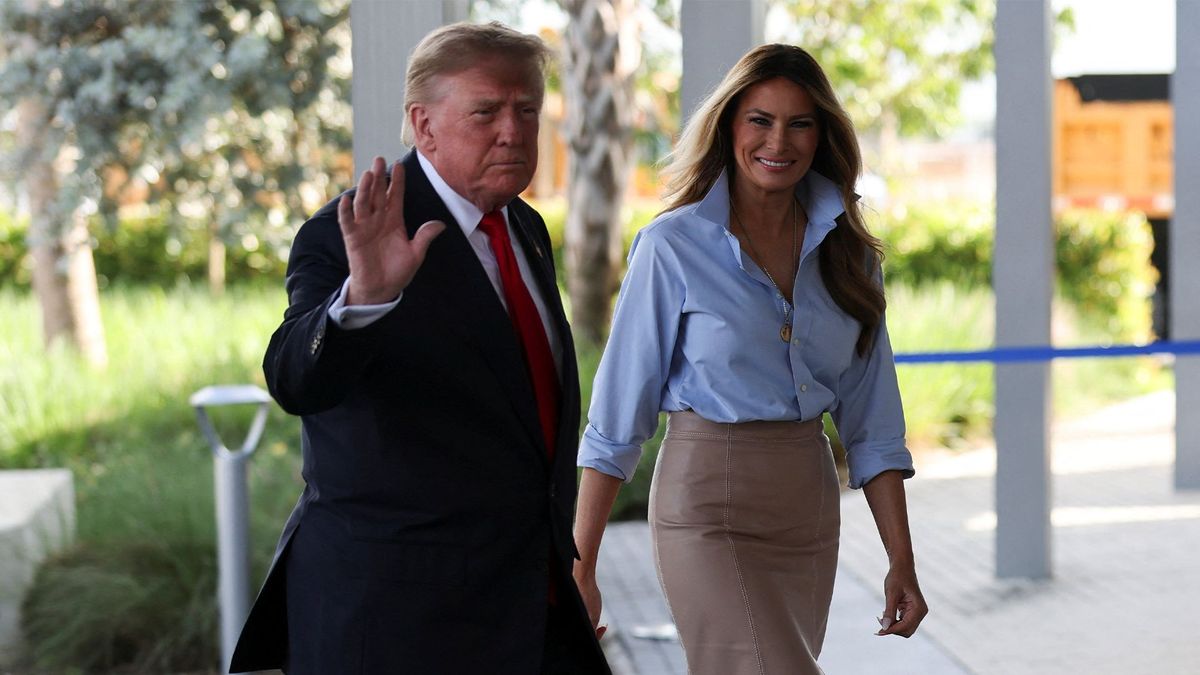
On October 24, 2026, news emerged of a localized ceasefire between Russian and Ukrainian forces in the town of Oleshky, located in Ukraine's occupied Kherson Oblast. This development gained significant attention not for the ceasefire itself, but for the reported involvement of former US First Lady Melania Trump in its negotiation. Speaking during the US midterm elections, Donald Trump publicly lauded his wife's diplomatic efforts, claiming she was 'better than our professionals' and crediting her with the breakthrough. The event highlighted a highly unusual instance of non-traditional diplomatic engagement in a live conflict zone, particularly one involving a high-profile figure outside of official state channels, and its timing during a critical US election cycle added layers of political intrigue.
The localized ceasefire in Oleshky is less about a genuine shift towards broader peace and more about a complex interplay of power, political leverage, and strategic positioning by various actors. Each party involved, from the Trump camp to Russia and Ukraine, stands to gain or lose from this unconventional arrangement, revealing the underlying incentives that drive such decisions.
For Donald Trump, praising Melania's alleged role in the Oleshky ceasefire serves multiple domestic political purposes. Occurring during the crucial US midterm elections, it allowed him to project an image of effective, unconventional diplomacy and peace-making, potentially contrasting with the incumbent administration's approach to the Russia-Ukraine conflict. By highlighting a personal success outside traditional government channels, Trump reinforces his narrative of being an outsider capable of achieving results where professional diplomats might fail. This move can energize his political base, signal a potential future foreign policy direction should he return to power, and even subtly undermine the credibility of established foreign policy institutions and personnel. The phrase 'better than our professionals' is a direct challenge to the very structure of diplomatic engagement, suggesting that personal influence can supersede institutional expertise.
Russia's agreement to a localized ceasefire in an occupied territory like Oleshky is unlikely to be a purely humanitarian gesture. Instead, it aligns with several strategic objectives. Firstly, it offers a propaganda victory, allowing Moscow to present itself as open to dialogue and peace, deflecting international criticism for its ongoing aggression. Engaging with a non-traditional US envoy, particularly one associated with Donald Trump, could also be a calculated move to test potential diplomatic pathways outside of the current Biden administration's framework. This could be seen as an attempt to sow discord within the US foreign policy establishment or to signal a willingness to engage with a future Trump presidency on its own terms. Furthermore, a localized ceasefire in an occupied zone can serve tactical military purposes, allowing Russian forces to consolidate control, regroup, or re-fortify positions without immediate military pressure in that specific area. It can also be used to manage the local population, facilitate the delivery of
A localized ceasefire is a temporary agreement to halt military hostilities in a specific, limited geographical area. Unlike a broader peace treaty, it does not resolve the underlying conflict or address issues of sovereignty, but aims to provide immediate relief or serve tactical purposes for the involved parties.
Her alleged involvement is significant because it represents an unusual instance of non-traditional diplomacy by a high-profile figure outside official government channels. It raises questions about the legitimacy and effectiveness of such interventions, and its timing during US midterm elections adds a layer of political messaging for Donald Trump.
For Ukraine, agreeing to such a ceasefire, even for humanitarian reasons, risks inadvertently legitimizing Russia's occupation of the territory. It could also create a precedent for piecemeal negotiations that undermine Ukraine's broader claim to sovereignty and potentially be exploited by Russia for tactical advantages or propaganda.
Editor's Note: Analysis extrapolates from brief raw intelligence, drawing on general knowledge of the Russia-Ukraine conflict, US political dynamics, and the nature of localized ceasefires in occupied territories, as per TGN's analytical requirements.
Source referenced: ALJAZEERA
This brief was synthesized by our Editorial Engine and reviewed by The Ground Narrative team.