TRENDING

Sunday, 25 October 2026
----------------------
14 Jumada Al-Awwal 1448 AH
Thousands of citizens have taken to the streets of Paris for a second consecutive weekend, met by a massive deployment of French police and strict bans on demonstrations in central areas. This analysis unpacks the state's response, the underlying power dynamics, and the human toll of a nation grappling with public dissent.
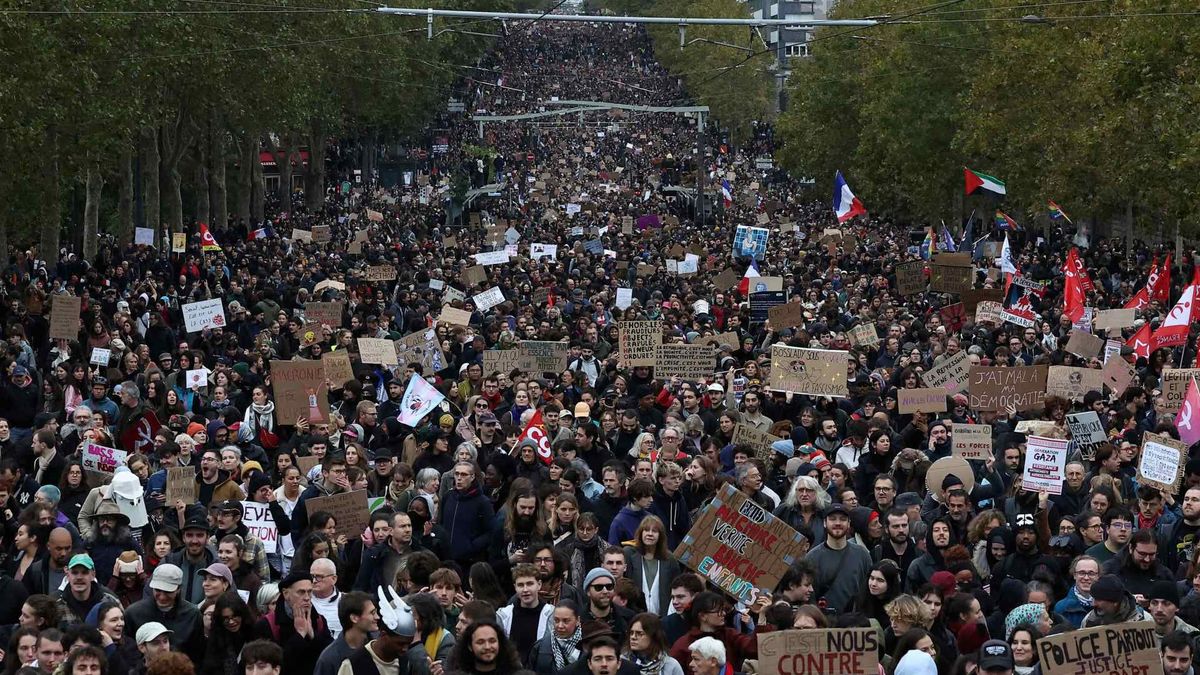
For a second consecutive weekend, thousands of protesters have converged on the streets of Paris, challenging public order and the authority of the French state. In response, French authorities have implemented a significant crackdown, deploying an estimated 70,000 police officers across France and issuing bans on demonstrations in central areas of the capital. This robust state reaction follows instances of violence reported during the previous weekend's protests, signaling a firm resolve by the government to control public assembly and prevent further unrest.
The deployment of 70,000 police officers across France and the imposition of bans on central Parisian demonstrations are not merely reactive measures; they are a clear demonstration of the state's inherent power and its strategic calculus. The French government, like any sovereign entity, prioritizes the maintenance of public order and the projection of stability. Uncontrolled, prolonged protests can destabilize a government, deter investment, and erode public confidence, both domestically and internationally. For the current administration, allowing persistent unrest could be perceived as a sign of weakness, inviting further challenges to its legitimacy and policy agenda.
Historically, France has a strong tradition of centralized state power and a robust, often forceful, approach to managing public dissent. This isn't a new phenomenon but rather a recurring pattern in the nation's political landscape, from the student uprisings of 1968 to the more recent Yellow Vest movement and protests against pension reforms. The state's incentive is clear: to assert its monopoly on force, ensure the functionality of its institutions, and protect economic activity from prolonged disruption. The sheer scale of the police deployment underscores the government's assessment of the threat level, indicating a belief that the protests, if left unchecked, could escalate beyond manageable levels.
Furthermore, the legal framework in France grants authorities considerable power to restrict public assembly, particularly when there are concerns about public safety or potential violence. By banning demonstrations in specific areas, the state aims to channel dissent into less disruptive zones or to preemptively dismantle organized opposition. This tactic serves a dual purpose: it physically limits the visibility and impact of protests, and it sends a strong psychological message to potential participants about the risks involved in defying state directives. The government's actions are thus a calculated exercise in power, designed to restore order and reassert control over the public narrative, often by framing the issue as one of law enforcement rather than political grievance.
While governments focus on maintaining order and stability, the human cost of such extensive state intervention is borne primarily by ordinary citizens. For the protesters themselves, the immediate risks are tangible: potential injury from clashes with police, arrest, and the long-term consequences of a criminal record. Beyond the physical dangers, there is the psychological toll of facing a heavily armed and organized state apparatus, which can lead to feelings of disempowerment and alienation. The right to peaceful assembly, a cornerstone of democratic societies, is significantly curtailed when central areas are declared off-limits and thousands of officers are deployed, creating a chilling effect on legitimate dissent.
Beyond the direct participants, the wider populace also pays a price. Businesses, particularly in the affected urban centers, suffer from closures, reduced foot traffic, and potential damage. Small and medium-sized enterprises, often operating on thin margins, can be severely impacted by even a single weekend of disruption, leading to lost revenue and, in some cases, permanent closure. The broader economy can also feel the ripple effects through decreased tourism, investor uncertainty, and a general sense of instability that discourages economic activity. For the average Parisian, daily life is interrupted by blocked streets, altered public transport routes, and an omnipresent sense of tension, transforming familiar urban spaces into zones of potential conflict.
The repeated use of large-scale police deployments and protest bans can also erode the social fabric and civic space. When the state consistently meets dissent with force, it can foster deep divisions within society, polarizing citizens into those who support the government's actions and those who feel their voices are being suppressed. This dynamic can undermine trust in democratic institutions and lead to a perception that the government is unresponsive to the needs and grievances of its people. The very act of demonstrating, a fundamental expression of democratic participation, becomes fraught with risk, potentially leading to a decline in civic engagement and a sense of disenfranchisement among segments of the population. The state's pursuit of order, while necessary, can inadvertently come at the expense of a vibrant, participatory democracy where citizens feel safe to voice their concerns without fear of heavy-handed repression.
What governments and official statements often downplay or omit in situations like the Paris protests are the deep-seated grievances that fuel such widespread dissent. The narrative typically focuses on
While the specific triggers are often complex, recent protests in Paris typically stem from grievances over government policies, economic inequality, social justice issues, or perceived democratic deficits. The current demonstrations follow violence from previous gatherings.
French authorities have responded with a significant show of force, deploying 70,000 police officers across the country. They have also banned demonstrations in central Paris areas, citing concerns over public order and previous violence.
Editor's Note: The specific causes of the protest are inferred based on common themes in French social movements, as the raw intelligence did not specify them.
Source referenced: ALJAZEERA
This brief was synthesized by our Editorial Engine and reviewed by The Ground Narrative team.