TRENDING

Sunday, 25 October 2026
----------------------
14 Jumada Al-Awwal 1448 AH
Thousands of citizens have taken to the streets of Albania's capital, Tirana, clashing with police over surging living costs, underfunded education, and pervasive corruption. The unrest highlights deep-seated frustration with the nation's political class.
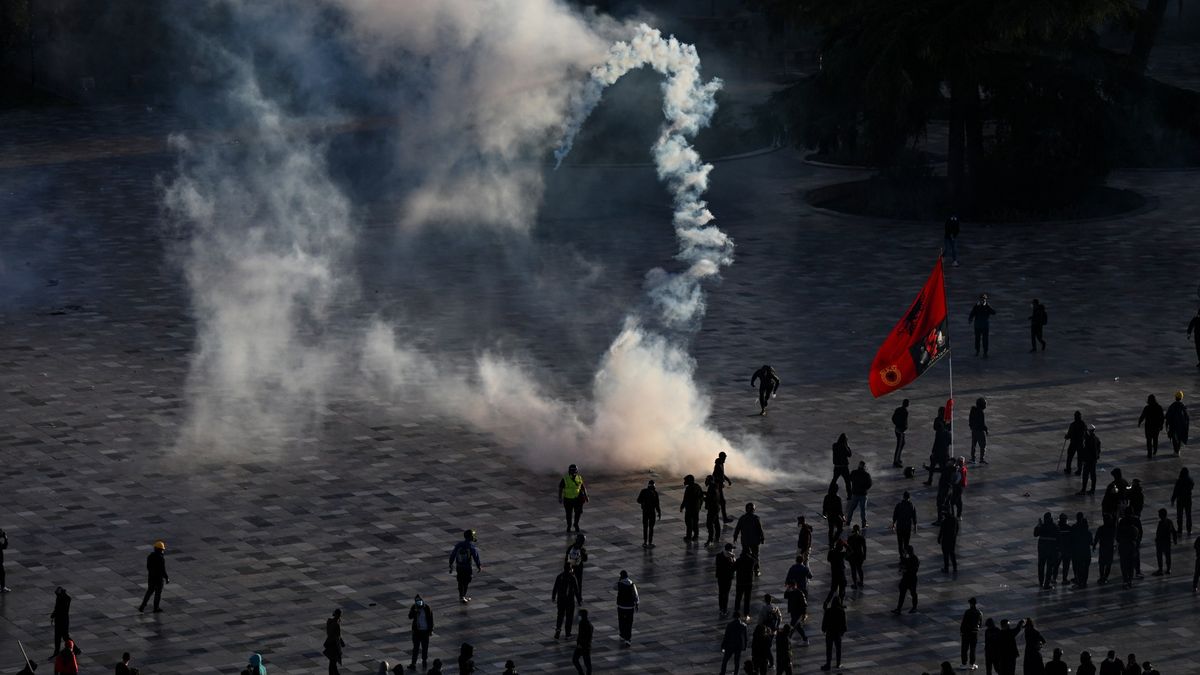
On October 24, 2026, Albania's capital, Tirana, witnessed a significant escalation of anti-government protests. Thousands of citizens gathered, clashing with riot police who deployed tear gas, water cannons, and rubber bullets to disperse the crowds. The demonstrations, which saw several government buildings attacked, led to dozens of arrests and left over 300 protesters and police injured. The primary demands from the streets are for better support for education and the immediate resignation of Socialist Prime Minister Edi Rama.
The Ministry of Education has become a focal point, with some protesters throwing stones and setting bins alight near the building. The unrest is part of a broader wave of discontent that began in mid-October, initially sparked by poor conditions in schools and the rising cost of living across the small Balkan nation. These ongoing protests follow intermittent anti-government demonstrations since May, which were triggered by news of a luxury hotel project linked to former United States President Donald Trump's family. Prime Minister Rama has publicly blamed "foreign actors," specifically naming Russia and Iran, for driving online misinformation and inciting violence. In a symbolic gesture for dialogue, red cushions were laid outside government headquarters, only to be set on fire by protesters, signaling a profound rejection of the government's overtures. The public's anger extends beyond the ruling party, with some demonstrators also holding signs critical of opposition leader Sali Berisha, indicating a widespread disillusionment with the entire political establishment.
Albania's current wave of unrest is not an isolated incident but rather a symptom of deep-seated structural issues within its political and economic landscape. At its core, the protests reflect a profound distrust in institutions and a political class perceived as self-serving and disconnected from the struggles of ordinary citizens. Prime Minister Edi Rama's Socialist Party has held power for a considerable period, and with prolonged incumbency often come accusations of cronyism, corruption, and a consolidation of influence that stifles genuine democratic accountability.
The country's aspirations for European Union membership serve as a powerful external incentive for reforms, particularly concerning the rule of law and anti-corruption measures. However, progress has been slow, and the persistent protests highlight the gap between official rhetoric and lived reality. Albania's economic model, heavily reliant on remittances from its diaspora, tourism, and foreign investment, makes it particularly vulnerable to global economic shocks. The current cost of living crisis, while a global phenomenon, is exacerbated in Albania by domestic policies, inadequate social safety nets, and the pervasive perception that corruption siphons off resources that should benefit the public.
The underfunding of education, a key grievance, directly impacts the future prospects of Albanian youth and perpetuates cycles of inequality. It speaks to a broader failure to invest in human capital, which is critical for long-term national development. Prime Minister Rama's immediate response – blaming "foreign actors" like Russia and Iran – is a classic deflection tactic. By externalizing the source of discontent, governments often seek to delegitimize domestic dissent and avoid accountability for internal governance failures. This narrative also strategically aligns with broader Western geopolitical concerns, potentially seeking to garner international sympathy or support from NATO allies, of which Albania is a member.
The luxury hotel project linked to Donald Trump's family, which initially fueled earlier protests, serves as a potent symbol of elite capture and perceived preferential treatment. Such projects, often shrouded in opacity, starkly contrast with the daily struggles of citizens, fueling anger over corruption and the perceived impunity of the powerful. The fact that protesters also target opposition leader Sali Berisha underscores a widespread disillusionment with the entire political spectrum, suggesting that citizens see both government and opposition as part of the problem, rather than offering viable alternatives.
The most immediate and tangible human cost of the current unrest falls squarely on ordinary Albanian families. They are grappling with a relentless surge in the cost of living, where inflation erodes purchasing power, and stagnant wages fail to keep pace with rising prices for essentials like food, fuel, and housing. For many, the struggle to make ends meet is a daily reality, forcing difficult choices between basic necessities. This economic pressure cooker is particularly acute for students and young professionals, who face not only inadequate educational infrastructure but also limited job prospects upon graduation, often leading to a sense of hopelessness.
The physical toll of the clashes is also significant. Hundreds of protesters and police have been injured, some severely, requiring medical attention and enduring lasting physical and psychological trauma. Beyond the immediate injuries, the repeated confrontations and the government's response deepen a pervasive erosion of public trust in democratic institutions. When citizens feel their grievances are met with tear gas and accusations rather than genuine dialogue and solutions, faith in the political process dwindles.
For Albania's youth, the disillusionment is particularly profound. Many young Albanians see a future devoid of opportunity in their home country, driven by rampant corruption and a perceived lack of meritocracy. This leads to a continuous and accelerating brain drain, as the nation's brightest and most ambitious seek better lives and opportunities abroad. This exodus depletes Albania's human capital, hindering long-term development and perpetuating a cycle of underdevelopment and political stagnation.
The protests also cast a shadow over Albania's international standing. Persistent reports of corruption, coupled with images of violent clashes, damage the country's image on the global stage, potentially deterring foreign investment and tourism – vital sectors for its economy. Crucially, the ongoing issues with the rule of law and corruption are major hurdles for Albania's path to European Union membership. The protests serve as a stark reminder to Brussels that fundamental reforms are still desperately needed, potentially delaying or complicating its accession process. The use of force against protesters, combined with accusations of foreign interference, also raises concerns among international observers about the state of democratic freedoms in the country.
The official narratives surrounding the Albanian protests often focus on immediate grievances like the cost of living or specific corruption scandals. However, the deeper, often untold story is that the current unrest is the culmination of decades of unfulfilled promises and systemic failures since the fall of communism in the early 1990s. Albania's post-communist transition, while formally democratic, has been marred by a revolving door of political elites who, regardless of party affiliation, have been widely accused of enriching themselves and their cronies while the general population struggles. This has created a pervasive sense that the political system is rigged, leaving citizens feeling voiceless and without genuine representation. The fact that protesters are equally critical of both Prime Minister Rama and opposition leader Berisha underscores this profound disillusionment with the entire political class, rather than just one party.
Prime Minister Rama's swift accusation of "foreign actors" like Russia and Iran being behind the protests is a strategically convenient narrative that serves to deflect attention from domestic governance failures. While external influence operations are a reality in the contemporary geopolitical landscape, attributing widespread, organic public discontent solely to foreign interference is a tactic often employed by governments to delegitimize legitimate grievances. It allows the ruling elite to avoid introspection and accountability for their own policies and perceived corruption. This narrative also plays into broader Western geopolitical anxieties, potentially seeking to garner solidarity and tacit approval from NATO and EU partners by framing the unrest as an external threat rather than an internal crisis of legitimacy.
A critical, yet often downplayed, human cost of Albania's protracted struggles is the ongoing and accelerating exodus of its young, educated, and most dynamic citizens. The lack of genuine economic opportunity, coupled with rampant corruption, a perceived lack of meritocracy, and a sense of political stagnation, drives many Albanians to seek better lives abroad. This brain drain is not just an economic loss; it represents a depletion of the nation's future human capital, its entrepreneurial spirit, and its potential for innovation. Governments often frame emigration as a personal choice or a natural phenomenon, but they rarely acknowledge the extent to which their own governance failures contribute to this mass departure, perpetuating a cycle of underdevelopment and making it harder for the country to break free from its challenges.
As Albania's streets continue to simmer, several key indicators will reveal the trajectory of this unrest and its potential long-term consequences. First, observe the sustained nature of the protests. Will the diverse groups, including students, professors, artists, and opposition factions, maintain their momentum and unity, or will the movement fragment and dissipate under pressure? The level of organization and coordination will be crucial in determining its endurance.
Second, the government's response will be critical. Will Prime Minister Rama offer genuine concessions and implement meaningful reforms to address the core grievances of corruption and the cost of living, or will his administration resort to further repression and continue to deflect blame onto external actors? The burning of the "dialogue" cushions by protesters suggests a deep-seated mistrust that will be difficult to overcome with mere symbolic gestures.
Third, monitor the reaction from the European Union. As an EU candidate country, Albania's stability and adherence to democratic principles are under scrutiny. Will Brussels exert significant pressure on Tirana for genuine reforms and accountability, or will it prioritize regional stability over the immediate democratic aspirations of the Albanian people? The EU accession process remains a powerful, albeit often slow, leverage point.
Finally, keep an eye on Albania's economic indicators. A worsening economic situation, marked by persistent inflation, high unemployment, and declining foreign investment, could further fuel public discontent and potentially reignite or intensify protests. The interplay between economic hardship and political disillusionment will continue to shape the narrative in the months to come. The ability of the fragmented opposition to unite and present a credible alternative to the current political establishment will also be a factor in how the public perceives its choices moving forward.
Protesters in Albania are demonstrating against the rising cost of living, inadequate support for education, and widespread government corruption. The unrest also targets the perceived disconnect and self-enrichment of the entire political class.
The Albanian government has responded with police force, deploying tear gas and water cannons against demonstrators. Prime Minister Edi Rama has also blamed 'foreign actors' like Russia and Iran for inciting the violence and spreading misinformation.
The ongoing protests and concerns over corruption and the rule of law complicate Albania's path to European Union membership. Persistent instability and a lack of democratic accountability are significant hurdles for its accession process.
Editor's Note: N/A
Source referenced: ALJAZEERA
This brief was synthesized by our Editorial Engine and reviewed by The Ground Narrative team.