TRENDING

Saturday, 24 October 2026
----------------------
13 Jumada Al-Awwal 1448 AH
A US littoral combat ship recently sailed into waters claimed by China in the South China Sea, drawing a swift condemnation from Beijing. This incident highlights the escalating naval standoff in one of the world's most contested maritime regions.
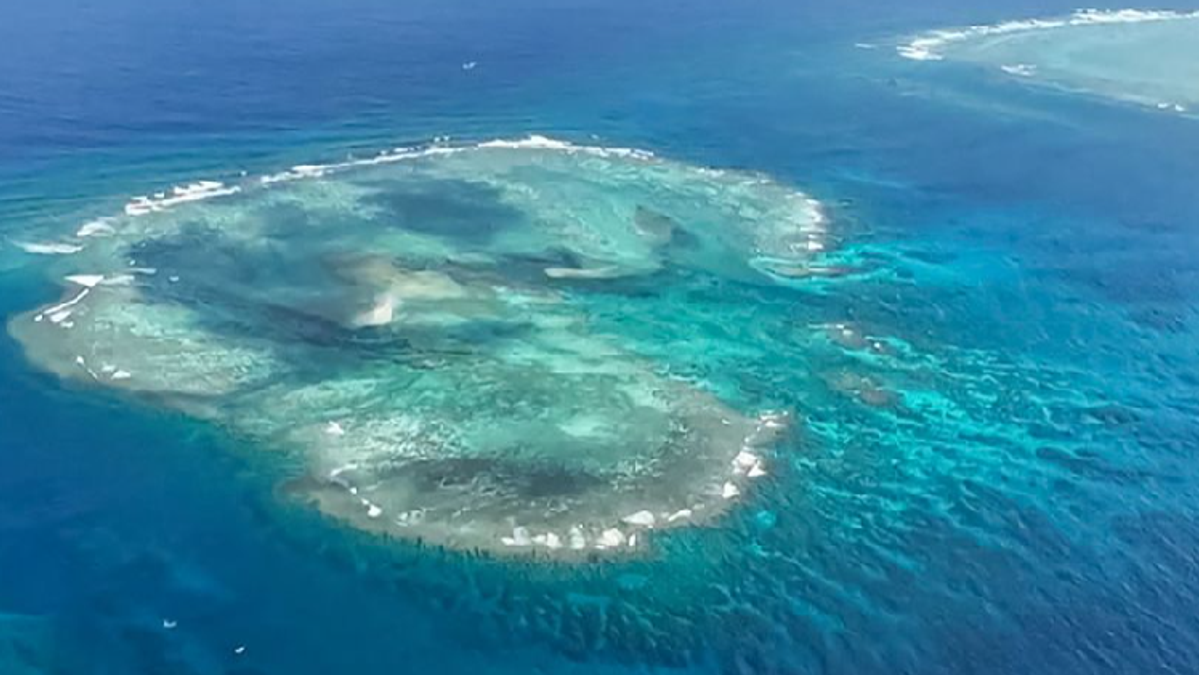
On October 20, 2026, the Chinese People's Liberation Army (PLA) reported that the US littoral combat ship USS Charleston had "illegally intruded" into waters adjacent to Xianbin Jiao, also known as Sabina Shoal, a feature within China's Nansha Qundao (Spratly Islands). According to the PLA Southern Theater Command (STC) spokesperson, the US vessel entered without prior approval from the Chinese government. In response, the PLA STC Navy dispatched forces to track and monitor the USS Charleston, asserting that China holds "indisputable sovereignty" over the Nansha Qundao and its surrounding waters. Beijing condemned the US action as an infringement on its sovereign rights, a threat to maritime security, and detrimental to regional peace and stability, demanding an immediate cessation of such activities.
The incident at Sabina Shoal is not an isolated event but a carefully orchestrated move in a protracted struggle for control over the South China Sea, a region critical for global trade, energy security, and military projection. At its core, this is a contest between China's assertion of historical sovereignty and the United States' commitment to what it terms "freedom of navigation" and a "rules-based international order." Both narratives, while seemingly principled, serve distinct national interests and geopolitical ambitions.
China's position is rooted in its expansive "nine-dash line" claim, which encompasses roughly 90% of the South China Sea, including features like the Spratly Islands (Nansha Qundao). For the Chinese Communist Party, asserting control over these waters is deeply intertwined with national pride, historical grievances, and domestic legitimacy. The PLA Navy's actions, such as tracking the USS Charleston, are intended to demonstrate capability, deter further incursions, and signal resolve to a domestic audience and regional rivals. The strategic value for China is immense: securing vital shipping lanes for energy imports and exports, extending its defensive perimeter, and projecting power further into the Pacific, challenging the United States' long-standing naval dominance.
The United States, in contrast, frames its actions, particularly Freedom of Navigation Operations (FONOPs), as upholding international law, specifically the United Nations Convention on the Law of the Sea (UNCLOS), which guarantees the right of innocent passage and freedom of navigation through international waters. While the US itself has not ratified UNCLOS, it selectively adheres to its principles to counter what it perceives as excessive maritime claims by China. The USS Charleston's presence near Sabina Shoal is a deliberate challenge to China's assertion of sovereignty over features that, under international law, may not generate territorial seas. These operations serve multiple purposes for Washington: they signal to regional allies like the Philippines, Vietnam, and Malaysia that the US remains committed to their security and to maintaining a balance of power in the Indo-Pacific. They also test China's resolve and capabilities, gathering intelligence on its response times and naval deployments. For the US, maintaining open sea lanes is crucial for global trade and its ability to project military power globally, especially against a rising peer competitor.
The
Sabina Shoal, or Xianbin Jiao, is a low-tide elevation within the Spratly Islands (Nansha Qundao) in the South China Sea. It is claimed by China as part of its sovereign territory, while other nations, notably the Philippines, also have claims or interests in its adjacent waters. Its strategic location makes it a flashpoint for maritime disputes.
Freedom of Navigation Operations (FONOPs) are conducted by the US Navy to challenge what it considers excessive maritime claims by other nations. These operations assert the right of innocent passage and freedom of navigation through international waters, aiming to uphold international law and prevent the militarization of global commons.
The main actors are China, which claims vast swathes of the sea, and the United States, which conducts FONOPs. Other claimants include Vietnam, the Philippines, Malaysia, Brunei, and Taiwan, all of whom have overlapping territorial claims and economic interests in the region.
Editor's Note: Analysis based on public statements and established geopolitical patterns in the South China Sea.
Source referenced: CGTN
This brief was synthesized by our Editorial Engine and reviewed by The Ground Narrative team.