TRENDING

Saturday, 24 October 2026
----------------------
13 Jumada Al-Awwal 1448 AH
Recent UNICEF reports highlight the tragic killing of at least 12 children in Sudan, victims of a brutal conflict now in its third year. This analysis delves into the underlying power dynamics and the profound human cost of a war often overlooked.
In recent days, at least 12 children have reportedly been killed in separate attacks across Sudan, according to a report from UNICEF. Nine children, aged between five and ten, died on October 17 in an attack on a camp for displaced families east of Sanakit in West Kordofan state. Just two days later, on October 19, an armed drone strike in a residential area of Khartoum killed three more children, aged two to six, along with their father. These incidents underscore the relentless violence endured by civilians, particularly the young, in a conflict that has now raged for over three years.
The conflict in Sudan is fundamentally a brutal power struggle between two military factions: the Sudanese Armed Forces (SAF), led by General Abdel Fattah al-Burhan, and the Rapid Support Forces (RSF), commanded by General Mohamed Hamdan Dagalo, widely known as Hemedti. This war erupted in April 2023, following a breakdown in negotiations over integrating the RSF into the regular army and a broader dispute over the future of Sudan's political transition after the 2019 overthrow of long-time dictator Omar al-Bashir. Both generals, once allies in a military coup that derailed a civilian-led transition, are now locked in an existential battle for ultimate control of the state.
The incentives driving this conflict are multifaceted. For al-Burhan and Hemedti, victory means not only political dominance but also control over Sudan's vast natural resources, particularly its lucrative gold mines, which have historically been a significant source of funding for the RSF. The strategic location of Sudan on the Red Sea also adds a geopolitical dimension, attracting the interest of external powers. Observers point to various regional and international actors providing support to both sides, directly or indirectly, through arms, intelligence, or financial aid. Egypt, for instance, has historically maintained close ties with the SAF, while the United Arab Emirates and elements linked to Russia's Wagner Group have been widely reported to support the RSF, drawn by resource access and strategic influence. This external involvement provides both factions with the means to sustain their war efforts, prolonging the conflict and making a decisive military victory for either side increasingly elusive.
The military doctrines at play prioritize territorial gain and the weakening of the enemy, often with little regard for civilian protection. The use of armed drones, as seen in the Khartoum attack, indicates a reliance on modern, often externally supplied, military technology that allows for strikes deep within urban areas. This indiscriminate approach, coupled with ground assaults and artillery barrages, creates a pervasive environment of fear and insecurity for ordinary citizens. The lack of a unified international front to impose a lasting ceasefire or a credible peace process allows these power dynamics to persist, trapping millions in a cycle of violence and displacement. For the generals, their political survival and vast economic interests are inextricably linked to the continuation of the war, making any genuine commitment to peace a distant prospect unless external pressures or internal dynamics shift dramatically.
The relentless power struggle between the SAF and RSF has inflicted an unimaginable human cost, with Sudan's children bearing the heaviest burden. The reported deaths of 12 children in West Kordofan and Khartoum are not isolated tragedies but symptomatic of a broader catastrophe unfolding across the nation.
Millions of Sudanese have been forced from their homes, creating one of the world's largest displacement crises. Over eight million people have been displaced, either internally or as refugees in neighboring countries. Families flee with little more than the clothes on their backs, often facing perilous journeys and arriving in overcrowded, underserviced camps. The attack on the displaced families' camp in Sanakit highlights the brutal reality that even those seeking refuge are not safe. These displaced populations face chronic shortages of food, clean water, shelter, and medical care, making them highly vulnerable to disease and further violence. The psychological toll of repeated displacement, loss of livelihoods, and the constant threat of attack is immense, particularly for children who witness unimaginable horrors and live in perpetual fear.
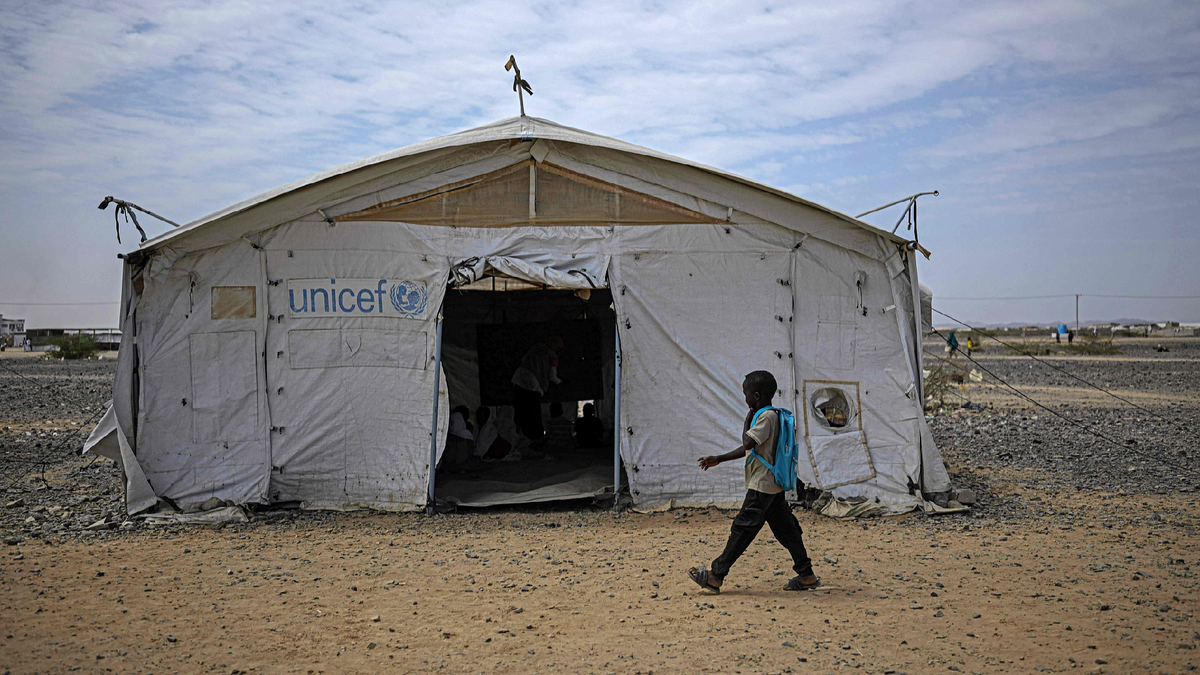
The conflict is systematically dismantling the future of an entire generation. With schools destroyed, occupied by armed groups, or simply too dangerous to attend, millions of children have been out of formal education for years. The image of a tent serving as a temporary classroom in Port Sudan, as depicted in the raw intelligence, underscores the desperate efforts to maintain some semblance of learning amidst chaos, yet these are often inadequate and precarious. Beyond education, children are suffering from severe malnutrition due to widespread food insecurity, a direct consequence of disrupted agriculture, broken supply chains, and economic collapse. Healthcare systems have crumbled, with hospitals destroyed or non-functional, and medical staff fleeing. This leaves children vulnerable to preventable diseases and without access to critical care, leading to soaring mortality rates for infants and young children. The long-term physical and mental health consequences of this trauma, deprivation, and lack of development will resonate for decades, creating a deeply scarred society.
The broader economy of Sudan has been utterly devastated. Infrastructure, including vital roads, bridges, and utilities, has been destroyed. Businesses have been looted or shuttered, leading to mass unemployment. The formal economy has largely collapsed, replaced by a war economy driven by illicit trade and resource exploitation. Ordinary Sudanese citizens have seen their savings vanish, their homes destroyed, and their ability to earn a living evaporate. The destruction of agricultural land and livestock has pushed vast swathes of the population to the brink of famine. This economic ruin ensures that even if the fighting were to cease tomorrow, the recovery would be a monumental, generational challenge, further entrenching poverty and instability for millions of families.
While the immediate tragedies of Sudan's conflict are frequently reported, several critical aspects are consistently downplayed or omitted by powerful actors, both internal and external, shaping a narrative that obscures the full scope of the crisis and the responsibilities of those involved.
One of the most significant untold stories is the relative inaction and fragmented response from the international community. Despite the scale of the humanitarian catastrophe, Sudan often struggles to maintain global attention, frequently overshadowed by other geopolitical flashpoints. Major world powers, including the United States, European Union, and China, have issued condemnations and calls for peace, but a concerted, unified, and sustained diplomatic effort backed by meaningful leverage has largely been absent. This allows the warring factions to continue their fight with a perceived sense of impunity. The lack of robust sanctions, effective arms embargoes, or a unified front to pressure external patrons means that the conflict can fester, with the world watching from a distance, offering insufficient aid while the underlying power dynamics remain unchallenged.
The extent to which the conflict is fueled by the illicit exploitation of Sudan's natural resources, particularly gold, is often downplayed by the warring parties and their external backers. The RSF, in particular, has deep roots in controlling many of Sudan's gold mines, providing them with a self-sustaining revenue stream independent of the state. This shadow economy of resource extraction and illicit trade not only funds the war but also incentivizes its continuation. External actors who benefit from these resource flows have a vested interest in the instability, as it allows them to operate outside conventional regulatory frameworks. Governments and corporations involved in these supply chains rarely acknowledge their indirect role in perpetuating the violence, instead focusing on official aid or diplomatic statements.
The current conflict bears chilling resemblances to the genocide in Darfur two decades ago, yet the historical context of impunity is often omitted from contemporary discussions. The RSF evolved from the notorious Janjaweed militias, which were responsible for widespread atrocities in Darfur. The failure of the international community to hold perpetrators fully accountable for those past crimes has created a precedent of impunity that emboldens current actors. Both the SAF and RSF have been accused of committing war crimes, including targeting civilians, sexual violence, and ethnic cleansing, particularly in Darfur and Khartoum. However, official statements from the warring parties consistently deny these allegations, portraying themselves as protectors of the Sudanese people, while the systematic nature of the violence against specific ethnic groups or communities is often framed as collateral damage rather than deliberate strategy.
Both the SAF and RSF frequently issue statements claiming to uphold international humanitarian law and protect civilians, even as their actions directly contradict these assertions. These claims serve as a façade, allowing them to maintain a degree of international legitimacy while continuing their brutal tactics. International organizations, in their efforts to deliver aid, are often forced to negotiate with these same actors, inadvertently granting them a platform. What is often downplayed is the deliberate obstruction of humanitarian aid by both sides, using access to food and medicine as a weapon of war, further exacerbating the suffering of the population, especially in besieged areas.
The situation in Sudan remains highly volatile, with several critical indicators to monitor for any shifts in the trajectory of this devastating conflict.
Firstly, observe the humanitarian crisis indicators. The coming months will be crucial for assessing the extent of food insecurity, particularly as planting seasons are missed and supply chains remain disrupted. Any significant increase in famine warnings, disease outbreaks, or mass displacement will signal a further deterioration of the situation, demanding a more robust international response. The capacity of humanitarian organizations to access affected populations will be a key metric.
Secondly, pay close attention to military dynamics and territorial control. Will either the SAF or the RSF manage to achieve a decisive breakthrough, or will the conflict settle into a prolonged stalemate? The use of advanced weaponry, such as drones, and the ability of either side to capture or hold key cities and infrastructure, will indicate shifts in military advantage. Any major offensive or counter-offensive could lead to increased civilian casualties and further displacement.
Thirdly, scrutinize the role of external actors. Will the external patrons of the SAF and RSF continue to provide the resources needed to sustain the war, or will their strategic interests shift? Any signs of reduced external support, perhaps due to international pressure or changing regional priorities, could significantly alter the balance of power and potentially open avenues for de-escalation. Conversely, increased external intervention could further entrench the conflict.
Finally, watch for any genuine diplomatic initiatives. While numerous peace talks have failed, sustained, high-level diplomatic engagement from regional and international bodies is essential. Look for signs of a unified international front emerging, perhaps through the African Union or the United Nations, that can exert meaningful pressure on both warring parties to commit to a lasting ceasefire and a credible political process. The emergence of strong, unified civilian voices within Sudan advocating for peace and accountability will also be a critical, albeit challenging, development to monitor. Without such shifts, the tragic human cost, particularly for Sudan's children, is set to continue unabated.
The conflict primarily stems from a power struggle between the Sudanese Armed Forces (SAF) and the Rapid Support Forces (RSF), led by rival generals, following a military coup and failed democratic transition. Both sides are vying for control of the state and its resources.
The two main factions are the Sudanese Armed Forces (SAF) led by General Abdel Fattah al-Burhan, and the Rapid Support Forces (RSF) led by General Mohamed Hamdan Dagalo, also known as Hemedti. Various regional and international powers also support these factions.
The conflict has resulted in widespread civilian casualties, massive displacement, a collapsing healthcare system, disrupted education, and severe food insecurity. Children are particularly vulnerable, facing violence, trauma, and a loss of future prospects.
Editor's Note: Analysis relies on provided intelligence and widely reported geopolitical context of the Sudan conflict. Specific external actors are framed as 'observers point to' or 'widely reported' where not explicitly in the raw intelligence.
Source referenced: CGTN
This brief was synthesized by our Editorial Engine and reviewed by The Ground Narrative team.