TRENDING

Saturday, 24 October 2026
----------------------
13 Jumada Al-Awwal 1448 AH
Two former FBI officials have been charged with lying to Congress regarding their unit's involvement in the 2020 Hunter Biden laptop probe, igniting a fierce debate over the timing of the charges just weeks before crucial midterm elections.
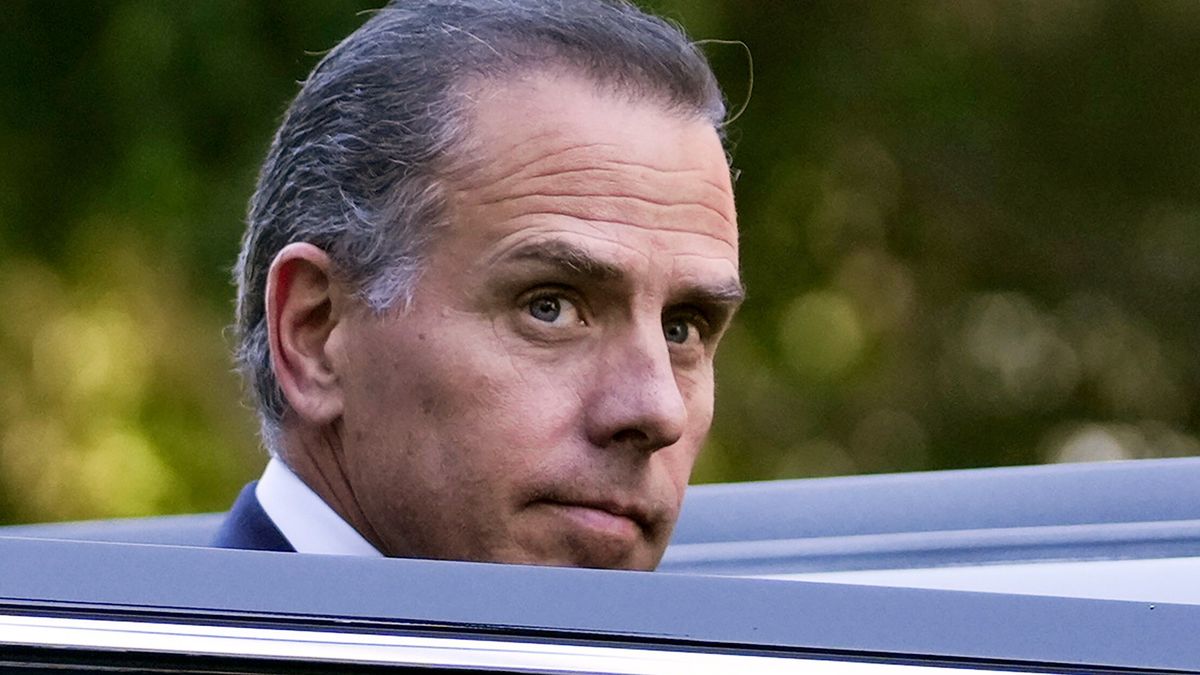
Two former senior agents of the Federal Bureau of Investigation (FBI), Nikki Floris and Bradley Benavides, have been charged with lying to Congress. The charges stem from their alleged misrepresentations regarding the involvement of their unit, the Foreign Intelligence Task Force (FITF), in the 2020 investigation into a laptop belonging to Hunter Biden, son of former President Joe Biden. The timing of these charges, just weeks before critical US midterm elections, has ignited a political firestorm, with accusations from both sides of weaponizing the justice system for electoral gain.
The charges against Floris and Benavides reveal a complex interplay of institutional power, political maneuvering, and the erosion of traditional norms within the US justice system. At its core, this event highlights how the machinery of law enforcement and oversight can be leveraged by competing political factions, often blurring the lines between legitimate investigation and partisan warfare.
The Department of Justice (DOJ), traditionally seen as an independent arbiter of law, holds immense power through its ability to investigate and prosecute. Historically, the DOJ has sought to avoid overt investigative acts that could be perceived as influencing an election, particularly in the immediate lead-up to a vote. This norm is designed to safeguard the integrity of both the justice system and the democratic process. However, the current charges, coupled with other high-profile actions against Democratic figures like Representative Ilhan Omar and Senator L Louise Lucas, suggest a departure from this established practice. This shift indicates a willingness by the current DOJ leadership to undertake politically sensitive actions close to an election, a move that can be interpreted as either a commitment to prosecuting alleged wrongdoing irrespective of political timing, or as a calculated political intervention.
Congress, through its oversight powers, plays a critical role in holding executive agencies accountable. The testimony given by Floris and Benavides was a direct result of congressional inquiries, primarily driven by Republican efforts to investigate the handling of the Hunter Biden laptop. For Republicans, these charges validate their long-standing narrative that the FBI, particularly during the Biden administration, was politically biased and engaged in cover-ups. The Foreign Intelligence Task Force (FITF), which Floris and Benavides oversaw, was originally established by Donald Trump during his first term to counter foreign interference in US elections. Yet, under the subsequent Biden administration, it became a target of Republican scrutiny, accused of being a tool to suppress information damaging to the Biden family. The disbandment of the FITF when Trump took office for a second time in January 2025 further underscores the deep partisan divide over its perceived role and legitimacy.
The Executive Branch, particularly the presidency, exerts significant influence over the DOJ and FBI through appointments and policy directives. The current Trump FBI Director, Kash Patel, has openly pledged to investigate the agency's conduct throughout the Biden presidency, framing the charges against Floris and Benavides as a necessary step to uphold the rule of law. This stance, while presented as a commitment to accountability, is widely viewed by critics as a clear politicization of the FBI, transforming it into an instrument for settling political scores rather than an impartial investigative body. The very existence of the Hunter Biden laptop saga, initially reported by the New York Post based on information from Trump lawyer Rudy Giuliani, and the subsequent warnings by former intelligence officials about potential Russian disinformation, highlight how information, even if later verified, can be weaponized in a highly charged political environment.
Ultimately, the power mechanics at play reveal a system under immense strain. The incentives for political actors are clear: for Republicans, it's about maintaining control of Congress and reinforcing a narrative of institutional corruption; for Democrats, it's about defending their party and accusing the DOJ of partisan targeting. The FBI, an institution designed to be apolitical, finds itself caught in the crossfire, its credibility and operational independence increasingly challenged by the demands of a hyper-partisan political landscape.
When the institutions designed to uphold justice and national security become battlegrounds for political power, the human cost extends far beyond the individuals directly implicated. The current charges against former FBI officials in the Hunter Biden laptop probe exact a heavy toll on public trust, individual lives, and the very fabric of democratic governance.
The most significant human cost is the continued erosion of public trust in foundational institutions like the FBI and the DOJ. For ordinary citizens, the constant accusations of political bias, cover-ups, and weaponization from both sides make it increasingly difficult to discern truth from partisan rhetoric. When the impartiality of law enforcement is repeatedly questioned, faith in the rule of law diminishes. This skepticism can lead to disengagement, cynicism, and a weakening of the social contract, making it harder for these institutions to perform their essential functions effectively, whether it's investigating crime or protecting national security.
For individuals like Nikki Floris and Bradley Benavides, who served for decades in the FBI, the charges represent a profound personal and professional crisis. Their careers, built on public service, are now defined by accusations of lying to Congress. Regardless of the legal outcome, the process itself—the public scrutiny, the legal fees, the potential damage to their reputations—is a severe punishment. This creates a chilling effect across the public service. When civil servants perceive that their professional actions, even those taken in good faith, can be retroactively scrutinized and weaponized by future administrations or political opponents, it fosters an environment of fear and caution. This fear can deter talented individuals from entering public service or encourage existing officials to prioritize self-preservation over courageous, impartial action, ultimately degrading the quality and independence of government agencies.
For the electorate, the politicization of such probes creates significant disillusionment. Voters are bombarded with politically charged narratives that often obscure substantive policy debates. Instead of focusing on issues that directly impact their lives—the economy, healthcare, education, foreign policy—they are drawn into complex, often salacious, legal and political dramas. This distraction can lead to voter apathy or, conversely, to decisions based on emotionally charged, incomplete, or biased information. The constant cycle of scandal and accusation makes it harder for citizens to make informed choices, undermining the quality of democratic participation.
Finally, the human cost manifests in the gradual weakening of democratic norms. The historical precedent of the DOJ avoiding pre-election interventions was not arbitrary; it was a safeguard against the perception and reality of political interference in elections. When this norm is breached, it sets a dangerous precedent. Future administrations may feel emboldened to use the justice system as a political tool, leading to a tit-for-tat cycle of investigations and prosecutions that further destabilizes the political landscape. This ultimately impacts every citizen, as the stability and fairness of their governance system are compromised.
Beneath the surface of official statements and partisan accusations, a more profound and often unacknowledged story unfolds—one of institutional decay, the shifting nature of accountability, and the long-term implications for democratic governance. What governments, political parties, and even the media often downplay or omit are the systemic consequences of weaponizing the justice system for political ends.
While the immediate focus is on the guilt or innocence of the former FBI officials, the larger untold story is the silent, incremental erosion of institutional integrity. The FBI and DOJ are pillars of the rule of law, designed to operate above the partisan fray. Yet, repeated accusations of bias, whether founded or not, and the strategic timing of charges, chip away at their perceived neutrality. This isn't just about a few individuals; it's about the systemic damage to the public's faith in the institutions themselves. When the public views law enforcement as an extension of political power, rather than an impartial arbiter, the very foundation of a functioning democracy begins to crack. Powerful actors rarely acknowledge the cumulative damage of these events, preferring to frame each incident as an isolated case of necessary accountability or partisan overreach, rather than part of a broader pattern of institutional weakening.
The charges against Floris and Benavides arose from their testimony to Congress. While congressional oversight is a vital check on executive power, the untold story often lies in its transformation from genuine accountability into a tool for partisan warfare. Was the inquiry into the FITF and the Hunter Biden laptop primarily driven by a desire to uncover truth and ensure proper government functioning, or was it a strategic maneuver to generate negative headlines and embarrass political opponents? The distinction is crucial. When oversight becomes a means to an end—to score political points or influence elections—it distorts the legislative process and further politicizes the agencies under scrutiny. The powerful rarely admit that their oversight efforts might be less about public service and more about political advantage, preferring to cloak their actions in the rhetoric of transparency and accountability.
The DOJ's decision to file charges so close to a major election, despite historical norms against such actions, sets a dangerous precedent. The untold story here is not just about this election, but about every election to come. If the timing of legal actions becomes a legitimate strategic consideration for influencing electoral outcomes, then future administrations, regardless of party, will be tempted to use the justice system as a political weapon. This creates a cycle where the legal system is perpetually intertwined with electoral cycles, making it nearly impossible for the public to trust the motivations behind any high-profile investigation. Governments and political operatives will always downplay the long-term implications of such precedents, focusing instead on the immediate justification for their actions.
Finally, the original context of the Hunter Biden laptop saga—which included warnings from former intelligence officials that it bore the hallmarks of a Russian disinformation campaign—is often lost in the domestic political squabble. The Foreign Intelligence Task Force (FITF) was designed to counter foreign interference. Yet, its involvement in this domestic political controversy, and the subsequent accusations of bias, effectively obfuscate the very real threat of foreign actors attempting to meddle in US elections. By turning a potential national security concern into a purely partisan issue, powerful domestic actors inadvertently serve the interests of foreign adversaries who seek to sow discord and undermine democratic processes. The focus on domestic political gain often comes at the expense of a clear-eyed assessment of external threats, a narrative that is conveniently omitted or downplayed by those benefiting from the internal divisions.
The fallout from these charges will continue to reverberate through the US political landscape, offering several critical indicators of the health and direction of American democracy.
First, closely observe the midterm election results. The timing of these charges is undeniably strategic, and their impact on voter sentiment, particularly in swing districts, will be a key measure of their political effectiveness. A significant shift in power could embolden the party that benefits to pursue further investigations, potentially leading to a deeper entanglement of legal and political processes.
Second, the legal proceedings against Floris and Benavides will provide crucial insights. The evidence presented, the arguments made by both the prosecution and defense, and ultimately the jury's verdict, will either reinforce or challenge the narrative of politicization. Watch for any revelations about the internal workings of the FBI and DOJ during the 2020 period, as these could shed light on the extent of political pressure or institutional integrity at the time.
Third, pay attention to the future actions of the Department of Justice. Will this series of politically sensitive investigations close to an election become a new norm, or will the DOJ revert to its historical practice of avoiding such timing? This will be a critical barometer of the institution's independence and its willingness to resist partisan pressures. Any further high-profile charges against political figures, especially those from the opposing party, will signal a continued shift in DOJ policy.
Fourth, monitor the public's perception of the FBI and DOJ. Opinion polls and public discourse will indicate whether trust in these institutions continues to decline or if they can regain a semblance of impartiality. A sustained loss of public confidence could have long-term implications for law enforcement's ability to effectively function and maintain social order.
Finally, observe the rhetoric and actions of congressional committees. Expect continued and potentially intensified congressional investigations into the FBI and DOJ, particularly if there's a shift in power dynamics in Congress. These inquiries will likely continue to probe the handling of politically sensitive cases, further embedding law enforcement agencies into partisan battles. The degree to which these investigations seek genuine accountability versus political leverage will be a telling sign of the state of American governance.
Source referenced: ALJAZEERA
This brief was synthesized by our Editorial Engine and reviewed by The Ground Narrative team.


