TRENDING

Friday, 23 October 2026
----------------------
12 Jumada Al-Awwal 1448 AH
A resurgent Ebola outbreak in the Democratic Republic of the Congo is now spreading across Africa, marking the most geographically widespread epidemic on record. This crisis exposes deep-seated power imbalances and the devastating human cost of chronic instability.
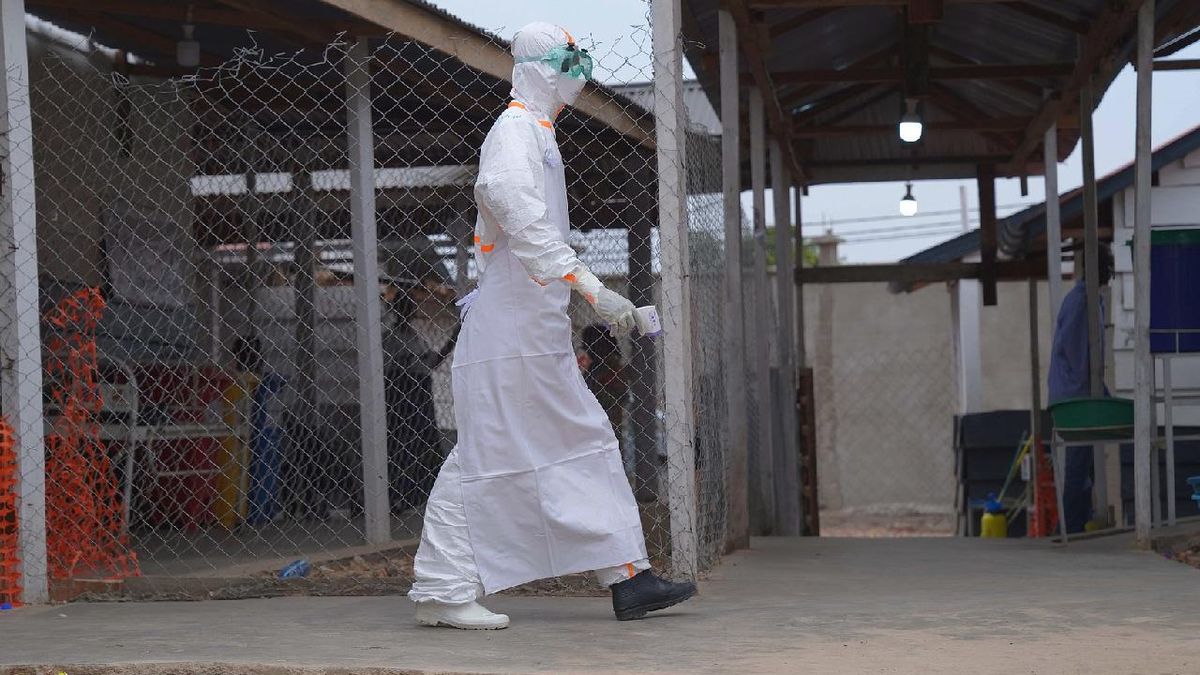
The Ebola outbreak in the Democratic Republic of the Congo (DRC) has surged again after a brief decline, prompting the World Health Organization (WHO) to issue urgent warnings about its cross-border spread. The virus has now reached Kenya and Nigeria, with the Africa Centers for Disease Control and Prevention (Africa CDC) declaring it the most geographically widespread Ebola epidemic on record. This renewed intensity has already claimed over 4,600 lives in the DRC alone, further complicated by escalating insecurity, mass population displacement, and restricted humanitarian access in the country's conflict-ridden regions.
The current Ebola crisis is not merely a public health emergency; it is a stark illustration of how systemic power imbalances, state fragility, and global neglect converge to amplify human suffering. The DRC, a nation perpetually rich in resources but poor in governance, finds itself at the epicenter of a health disaster fueled by decades of internal conflict and external exploitation.
At the heart of the problem is the DRC's severely weakened state capacity. Decades of civil war, political instability, and pervasive corruption have systematically dismantled its public health infrastructure. Hospitals lack basic supplies, trained personnel are scarce, and access to remote, conflict-affected areas is often impossible. This institutional void means that even with international assistance, the state struggles to implement effective surveillance, contact tracing, and vaccination programs. The power to protect its citizens from a deadly virus is fundamentally compromised, leaving communities vulnerable.
Globally, the architecture of health governance, primarily represented by the WHO, holds significant advisory power but limited executive authority. The WHO can issue warnings, coordinate responses, and mobilize resources, but the ultimate power to act decisively rests with national governments. In the context of the DRC and its neighbors, this often translates to a reactive rather than proactive approach, where political survival and economic stability can overshadow immediate public health imperatives. The warnings from the WHO and Africa CDC highlight the severity, but their ability to compel action in sovereign states, especially those grappling with internal strife, is inherently constrained.
The cross-border spread of Ebola underscores the porous nature of national boundaries, particularly in regions with high mobility and informal economies. The movement of people, whether for trade, seeking refuge from conflict, or simply migrating, creates pathways for the virus that formal border controls struggle to contain. This reality challenges the traditional state-centric model of disease containment and exposes the limitations of national health security in an interconnected world. The power to control borders, a fundamental aspect of state sovereignty, is rendered less effective against a microscopic adversary.
Furthermore, the DRC's vast mineral wealth—cobalt, coltan, diamonds—plays an insidious role. This abundance has historically fueled internal conflicts, as various armed groups and external actors vie for control over lucrative mining operations. The profits from these resources rarely translate into public services like healthcare; instead, they often fund militias and perpetuate cycles of violence. Foreign powers and multinational corporations, driven by the demand for these critical minerals, often benefit from the instability, indirectly contributing to the conditions that make Ebola outbreaks so devastating. The power of global markets and resource extraction creates a perverse incentive structure where stability and public welfare are secondary to profit.
Finally, the power dynamics around vaccine and treatment access are critical. While effective Ebola vaccines exist, their equitable distribution in insecure and remote areas is a monumental challenge. Who decides where vaccines go first? How are they protected and administered in active conflict zones? The funding for these efforts often comes from external donors, creating a dependency that can dictate the terms and priorities of the response, rather than empowering local health systems to lead. This power dynamic can lead to a focus on immediate crisis management over long-term capacity building, perpetuating a cycle of emergency interventions.
The human cost of this widening Ebola crisis is immeasurable, extending far beyond the grim statistics of confirmed cases and deaths. It is a burden disproportionately borne by the most vulnerable populations, whose lives are already precarious due to conflict, poverty, and systemic neglect.
Each of the 4,646 deaths in the DRC represents an individual life cut short, a family shattered, and a community grieving. The fear of contagion creates an environment of suspicion and isolation, tearing at the social fabric. Survivors often face long-term health complications and profound psychological trauma. Healthcare workers, the frontline heroes, operate under immense pressure, risking their own lives with inadequate resources and protection, leading to burnout and further strain on already fragile health systems. The economic fallout is immediate and severe, as quarantines and movement restrictions cripple local markets, disrupt trade, and destroy livelihoods, particularly for those in the informal sector who have no safety nets. Farmers cannot sell their produce, small businesses close, and daily wage earners lose their only source of income, pushing more families into extreme poverty.
The escalating insecurity in the DRC's eastern provinces is a primary driver of the humanitarian catastrophe. Millions have been displaced from their homes, forced into overcrowded camps or temporary settlements with limited access to clean water, sanitation, and food. These conditions are a perfect breeding ground for disease. For these displaced populations, Ebola is just one more threat in a daily struggle for survival, layered upon violence, hunger, and exposure to other preventable diseases. The constant movement of people fleeing conflict also makes contact tracing and containment efforts incredibly difficult, allowing the virus to spread undetected across vast distances and national borders. The human cost here is a perpetual state of fear and instability, where the simple act of existing becomes a profound struggle.
Beyond the immediate health crisis, the Ebola outbreak inflicts deep wounds on local and regional economies. Travel restrictions, whether official or self-imposed due to fear, choke off vital trade routes and disrupt supply chains. This leads to food shortages, price hikes, and a general collapse of economic activity. Communities that rely on cross-border trade for their sustenance and livelihoods are particularly devastated. The long-term impact includes decreased foreign investment, a decline in tourism, and a general reluctance for economic engagement, further entrenching poverty and hindering any prospects for sustainable development. The cycle of poverty and disease becomes self-reinforcing, with each outbreak setting back years of fragile progress.
Beyond the physical and economic toll, Ebola leaves deep psychological and social scars. Survivors and their families often face intense stigma and discrimination, leading to social ostracization and mental health challenges. Communities affected by the virus can be branded, leading to isolation and a breakdown of trust. This stigma can also deter people from seeking early treatment, out of fear of being identified or separated from their families, thereby exacerbating the spread of the disease. The erosion of trust in public health messages and government institutions, fueled by past failures and misinformation, further complicates efforts to build resilient communities capable of responding to future health threats.
While official reports from organizations like the WHO and Africa CDC provide crucial data and warnings, they often present a sanitized narrative that downplays or omits the deeper, systemic issues fueling the Ebola crisis. The true story lies in the confluence of historical exploitation, global health inequities, and the politics of emergency response.
The term
Source referenced: CGTN
This brief was synthesized by our Editorial Engine and reviewed by The Ground Narrative team.