TRENDING

Friday, 23 October 2026
----------------------
12 Jumada Al-Awwal 1448 AH
South Korea has extended an invitation for military talks with North Korea, aiming to de-escalate tensions along their heavily fortified border. The offer comes as Pyongyang intensifies military activity and rejects dialogue, leaving millions in limbo.
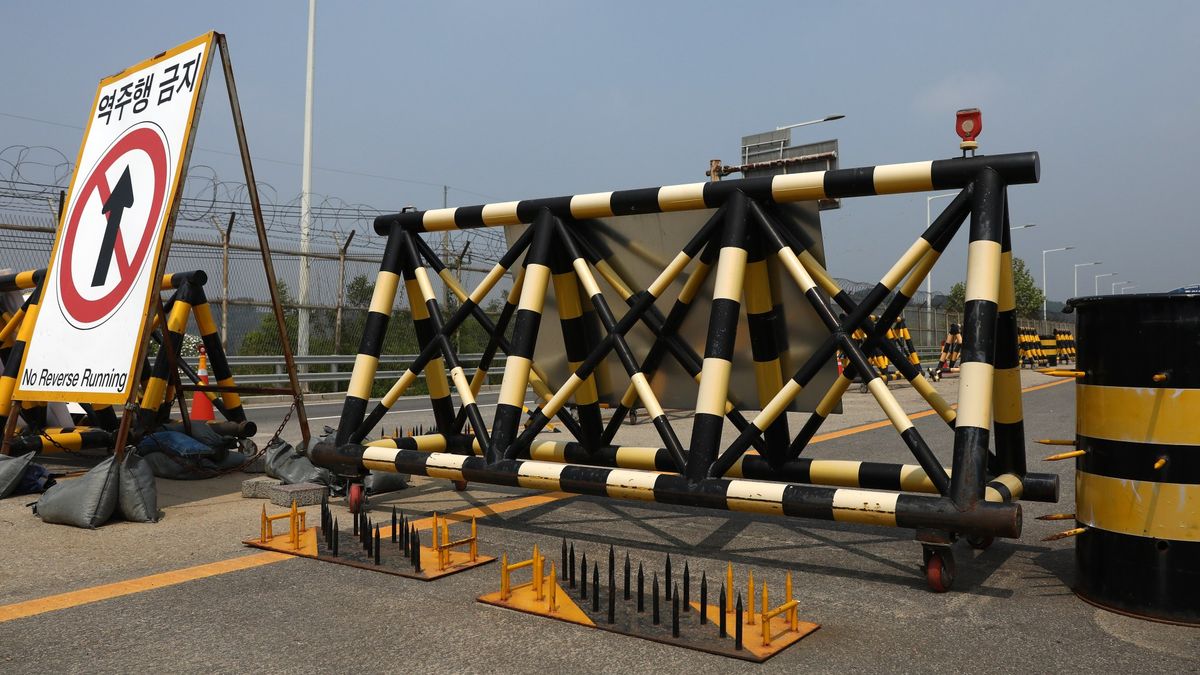
South Korea has formally proposed military talks with North Korea, seeking to restore communication channels and prevent accidental clashes along their shared, heavily fortified border. The invitation, extended by Seoul's deputy minister for national defence policy, Kim Hong-cheol, suggested discussions on confirming the precise location of the Military Demarcation Line (MDL) and de-escalating the recent surge in military activity. This overture follows a period of escalating tensions, marked by Pyongyang's deployment of new military units, the laying of landmines, and the construction of new fortifications within the Demilitarized Zone (DMZ). Notably, North Korea's powerful leader, Kim Jong Un's sister, Kim Yo Jong, has publicly dismissed Seoul's calls for dialogue as a "farce," indicating a firm rejection of the proposal.
South Korea's invitation for talks is not merely a diplomatic gesture; it's a strategic move born from a complex calculus of risk and necessity. For Seoul, the immediate incentive is de-escalation. The recent landmine incident, injuring three South Korean soldiers, highlighted the perilous nature of the DMZ and the high potential for miscalculation. By proposing talks, South Korea aims to re-establish a basic framework for managing the border, reducing the likelihood of incidents spiraling into wider conflict. This also serves Seoul's international image as a responsible actor committed to peace, aligning with its long-standing policy of seeking dialogue, even amidst provocations. The inclusion of the United States-led United Nations Command in potential three-way talks underscores South Korea's reliance on its alliance with the United States for security, while also signaling a desire for multilateral endorsement of any de-escalation efforts.
North Korea's outright rejection, articulated by Kim Yo Jong, reveals a different set of power dynamics. For Pyongyang, heightened tensions along the border serve several internal and external purposes. Domestically, a perceived external threat allows the Kim regime to consolidate power, rally its population, and justify the immense resources poured into its military and nuclear programs. Externally, North Korea often uses brinkmanship to extract concessions, whether in the form of sanctions relief, diplomatic recognition, or a weakening of the US-South Korea alliance. By rejecting dialogue, Pyongyang signals its unwillingness to engage on Seoul's terms, preferring to dictate the pace and nature of engagement, if any. This hardline stance is consistent with Kim Jong Un's strategy of prioritizing military strength and self-reliance, viewing dialogue as a tool for leverage rather than genuine reconciliation. The construction of new fortifications and the movement of military units are not just defensive measures; they are deliberate acts of assertion, redefining the operational boundaries within the DMZ and testing South Korean and US resolve.
The Demilitarized Zone (DMZ), despite its name, is one of the most heavily militarized borders in the world. It is a physical manifestation of the unresolved conflict, a constant reminder of the armistice, not peace, that ended the Korean War. For both Koreas, the DMZ is not just a line on a map but a strategic chessboard. South Korea seeks to maintain the status quo, ensuring the stability of its economic heartland, which lies perilously close to the border. North Korea, conversely, often uses the DMZ as a pressure point, a place to demonstrate its capabilities and project strength. The precise location of the Military Demarcation Line (MDL), which Seoul wants to "mutually confirm," is critical because even minor encroachments or ambiguities can be exploited for political gain or become flashpoints for conflict. The current escalation, therefore, is a contest of wills over who controls the narrative and the physical reality of this crucial buffer zone.
The Korean Peninsula has long been a proxy battleground for larger geopolitical struggles, with China and the United States casting long shadows. China, as North Korea's primary economic lifeline and strategic buffer against US influence, plays a delicate balancing act. While Beijing officially supports stability, it also benefits from a degree of tension that keeps Pyongyang dependent and prevents a unified, US-aligned Korea on its border. The recent opening of the New Yalu River Bridge between China and North Korea, even if its immediate trade impact is debated, signifies Beijing's continued, albeit cautious, engagement. The United States, through its robust alliance with South Korea and its military presence, acts as a deterrent to North Korean aggression. However, this also means that any major escalation on the peninsula inevitably draws Washington into the fray, making the DMZ tensions a concern for global security, not just regional stability.
While headlines focus on military maneuvers and diplomatic rejections, the most profound consequences of this escalating tension are borne by ordinary people. The constant state of alert, the threat of conflict, and the diversion of resources away from public welfare are deeply felt across the peninsula.
For the communities living near the Demilitarized Zone in South Korea, the recent military build-up and landmine incidents are not abstract news items but a palpable threat. Farmers, fishermen, and small business owners in border towns like Paju or Cheorwon live with the daily reality of artillery drills, propaganda broadcasts, and the ever-present risk of accidental or deliberate clashes. The psychological toll of living in a perpetual state of readiness, where a misstep by either side could ignite a conflict, is immense. Property values fluctuate with every flare-up, and investment in these regions remains constrained, limiting economic opportunities for residents who often feel like pawns in a larger geopolitical game.
Both South and North Korea bear significant economic costs due to the unresolved conflict. South Korea, a global economic powerhouse, must maintain a robust military, diverting substantial portions of its national budget to defense expenditures that could otherwise be invested in social welfare, infrastructure, or innovation. For North Korea, the economic burden is catastrophic. Its "military-first" policy, or *Songun*, prioritizes defense spending above all else, exacerbating chronic food shortages, underdevelopment, and a lack of basic services for its population. The construction of new fortifications and the movement of military units, as reported, represent further drains on an already impoverished nation's resources, directly impacting the availability of food, medicine, and consumer goods for ordinary North Koreans.
The human cost extends beyond immediate security concerns to the enduring tragedy of families separated by the Korean War. Millions of Koreans have relatives on the other side of the DMZ, many of whom have not seen or communicated with each other for over seven decades. The breakdown of dialogue and the hardening of the border mean that hopes for family reunions, already rare and highly politicized, dwindle further. For an aging generation of separated families, time is running out, and each diplomatic freeze or military escalation represents another nail in the coffin of their hopes for a final embrace. This human dimension, often overlooked in strategic analyses, is a poignant reminder of the personal devastation wrought by geopolitical stalemate.
Behind the official statements and diplomatic maneuvers, several critical narratives are often downplayed or omitted by the powerful actors involved, obscuring the full picture for the public.
While Pyongyang projects an image of unyielding strength, its heightened external belligerence often masks severe internal vulnerabilities. Reports of food insecurity, economic stagnation, and the ongoing struggle to manage the impact of international sanctions suggest a regime under considerable domestic pressure. The dramatic increase in border fortifications and military posturing can be interpreted as a strategic diversion – a way to galvanize internal support, suppress dissent, and distract the population from internal hardships by focusing on an external "enemy." Governments and analysts often focus on North Korea's military capabilities, but understanding the regime's internal stability and its desperate need to maintain control is crucial to interpreting its actions. The "climax of the farce" comment by Kim Yo Jong might be less about genuine disdain for talks and more about a calculated rejection designed to project an image of self-sufficiency and defiance to her own people.
South Korea's consistent calls for dialogue, while commendable, often obscure the fundamental imbalance of power and leverage. Seoul has few direct tools to compel Pyongyang to the negotiating table without the active involvement of the United States and China. Its offers of humanitarian aid or economic cooperation have often been rejected or accepted only on North Korea's terms. This leaves South Korea in a reactive position, constantly responding to Pyongyang's provocations rather than proactively shaping the security environment. The public narrative often frames Seoul as a proactive peacemaker, but the reality is that its options are severely constrained by North Korea's isolationist policies and its nuclear deterrent, which fundamentally alters the power dynamic.
The DMZ is a unique ecological corridor, a de facto nature reserve where wildlife has thrived in the absence of human development for decades. However, the continuous militarization, including the laying of landmines, the construction of barbed-wire fences, and the creation of tactical roads and anti-tank walls, has a devastating environmental impact. These activities fragment habitats, disrupt migration patterns, and introduce pollutants into a fragile ecosystem. This ecological cost is rarely mentioned in official statements, which prioritize national security above environmental preservation. The long-term consequences for biodiversity and the natural heritage of the peninsula are significant, yet largely unacknowledged in the immediate political discourse.
China's role in the Korean Peninsula is often simplified to either a supporter or a reluctant enforcer of sanctions. The untold story is Beijing's strategic ambiguity, which allows it to maintain influence over Pyongyang while avoiding full responsibility for its actions. While China may express concern over stability, its primary interest is preventing the collapse of the North Korean regime (which could lead to a refugee crisis and a US-aligned unified Korea on its border) and maintaining a buffer state. This means Beijing often tolerates North Korean provocations up to a certain point, providing just enough economic lifeline to prevent collapse but not enough to significantly alter Pyongyang's behavior. This nuanced position is rarely articulated by Beijing or fully explored by other nations, leaving the public with an incomplete understanding of China's profound influence on the peninsula's dynamics.
The immediate future of the Korean Peninsula hinges on Pyongyang's next moves. Will North Korea double down on its rejection of dialogue with further military provocations, such as missile tests or more aggressive border actions? Or will it, at some point, signal a willingness to engage, perhaps through a back channel or on its own terms? Watch for any subtle shifts in Pyongyang's propaganda, as well as the timing and nature of any future military exercises by South Korea and the United States. The response from China will also be crucial; any changes in its economic support or diplomatic posture towards North Korea could signal a significant shift. Ultimately, the cycle of tension and rejection is likely to continue until a powerful actor, or a confluence of internal and external pressures, compels a genuine re-evaluation of strategies on the peninsula.
South Korea is proposing talks to de-escalate rising tensions along the border, particularly after recent incidents like landmine explosions. The goal is to restore communication channels and prevent accidental clashes from escalating into broader conflict, aligning with Seoul's policy of seeking peace.
North Korea's rejection is consistent with its hardline stance, using heightened tensions to consolidate internal power and potentially extract concessions from the international community. Pyongyang often prefers to dictate the terms of engagement and leverage its military strength for strategic advantage.
The human costs include the psychological toll on border communities, the diversion of resources from public welfare to military spending, and the fading hopes of millions of families separated by the Korean War for reunion. The constant threat of conflict impacts daily life and economic stability for ordinary citizens.
Source referenced: ALJAZEERA
This brief was synthesized by our Editorial Engine and reviewed by The Ground Narrative team.