TRENDING

Saturday, 24 October 2026
----------------------
13 Jumada Al-Awwal 1448 AH
In the immediate aftermath of World War II, Hollywood directors filmed amidst the devastation of German cities, crafting 'rubble movies' that reflected the profound dilemmas facing America and the world. These films, though not always classics, offered a raw look at the human cost of war and the complex power dynamics shaping a new international order.
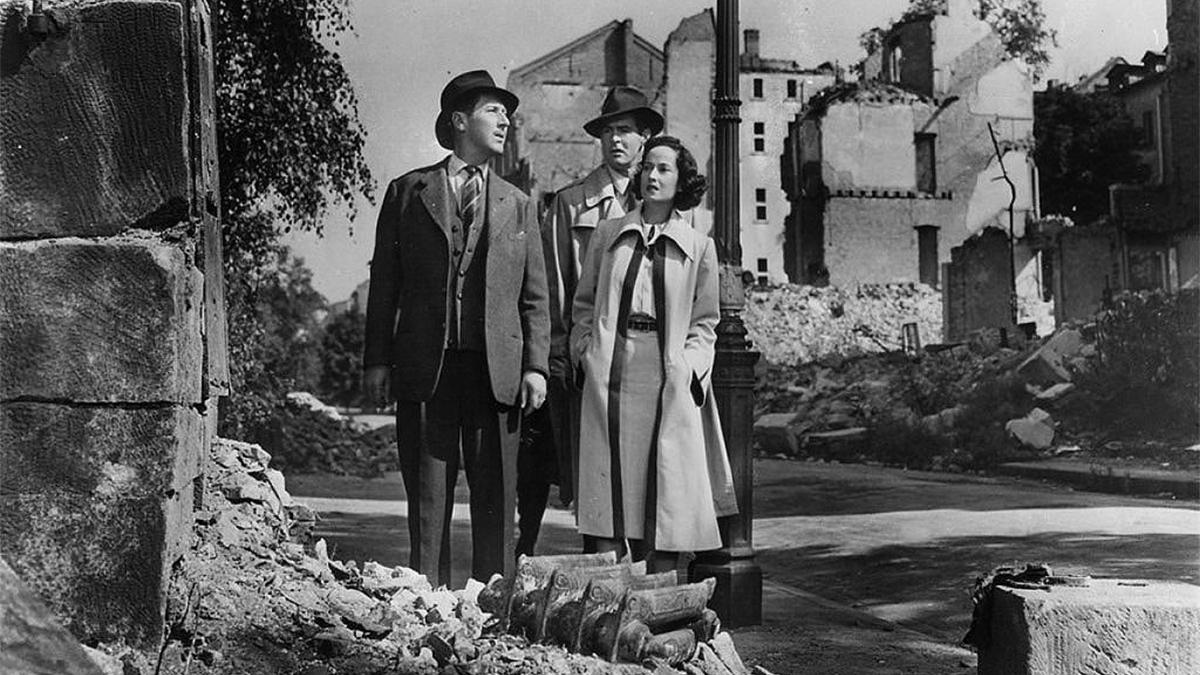
Between 1947 and 1949, as Europe lay in ruins, a unique genre of cinema emerged from Hollywood: the 'rubble movie'. Directors like Jacques Tourneur, Billy Wilder, and Fred Zinnemann traveled to Germany to film on location amidst the bombed-out cities of Berlin, Frankfurt, and Nuremberg. These films, including *Berlin Express*, *A Foreign Affair*, and *The Search*, were not merely entertainment; they were a direct engagement with the physical and moral devastation of post-World War II Europe, serving as a cinematic exploration of the challenges involved in rebuilding a continent and defining a new global order.
These productions captured the raw reality of a defeated nation, using the actual wreckage of war-torn cities as their backdrop. They dramatized the complex issues of denazification, the struggle for survival, the trauma of displacement, and the nascent ideological clashes that would soon define the Cold War. Through these narratives, American filmmakers attempted to interpret the profound moral and political dilemmas facing a newly dominant United States as it grappled with its role in shaping the future of the world.
The creation of the 'rubble movies' was deeply intertwined with the shifting global power landscape. The United States emerged from World War II as the undisputed economic and military hegemon, but faced a profound dilemma: retreat into isolationism or entangle itself in the monumental task of rebuilding Europe. These films served as a cultural front in this strategic debate, reflecting the anxieties and aspirations of American policymakers and the public alike.
At the core of the power mechanics was the US's imperative to prevent a resurgence of fascism while simultaneously navigating the emerging threat of communism. Films like Tourneur’s *Berlin Express* explicitly dramatized the dread of a 'renascent Fascism,' with agents of a Nazi underground attempting to thwart international unity. Yet, even as it portrayed the Soviets as a 'friendly wartime ally,' the film subtly underscored the growing suspicion that would soon define the Cold War. This narrative tension highlights the delicate balance Washington sought to strike: fostering a stable, democratic Europe that would also serve as a bulwark against Soviet influence.
Hollywood, itself a powerful cultural institution, played a crucial role in shaping the American public's understanding of these complex issues. These films were not just stories; they were instruments of soft power, attempting to reconcile American ideals of democracy and freedom with the harsh realities of a morally compromised and physically devastated Europe. The decision to film on location in the ruins was a deliberate act, lending authenticity to the narratives while also implicitly asserting American presence and influence in the occupied territories. The very act of making these films, often with the cooperation of military authorities, underscored the US's dominant position in defining the post-war narrative and guiding the direction of European reconstruction. The drive to establish a new global settlement, characterized by guaranteed rights, mutual trade, and prosperity, was fueled not solely by idealism, but by a pragmatic mix of guilt over past inaction, hard-faced realism about geopolitical threats, and a deep-seated fear of another global catastrophe.
While the 'rubble movies' grappled with grand geopolitical strategies, their most enduring legacy lies in their unflinching portrayal of the human cost of war. The devastation was not just architectural; it was deeply personal, affecting millions of ordinary citizens across Germany and Europe.
German civilians bore the brunt of the physical destruction, living in a landscape of rubble where basic necessities were scarce. Billy Wilder’s *A Foreign Affair* vividly captures this moral ruin, depicting a society where survival instincts had stripped away conventional morality. Characters like Erika von Schlütow, a former consort of a Nazi general, are shown bartering for mattresses on the black market, embodying the cynical pragmatism born of desperation. The film illustrates how the daily struggle for existence in the ruins led to a widespread moral degradation, where self-preservation became the singular driving force. This environment also had a corrosive effect on US soldiers, many of whom engaged in fraternization that challenged the moral authority of the occupying forces.
Perhaps the most poignant human cost was borne by the millions of displaced persons and orphaned children. Fred Zinnemann’s *The Search* focuses on the harrowing experiences of these children, many of whom had survived concentration camps and lost their families and even their own identities. The film portrays a 9-year-old Czech boy, Karel Malik, who has forgotten his name and family, traumatized to the point of muteness. His fear of uniformed officials and ambulances, remnants of his experience with gas chambers, underscores the profound psychological scars left by the Holocaust and the war. The film highlights the destruction of the most basic human bonds – trust, family, and kindness – and the monumental, often futile, efforts to reunite fragmented families across a continent scarred by conflict.
Even the victorious American soldiers were not immune to the psychological toll. The films hint at the disillusionment and moral compromises faced by those tasked with 'denazifying' a population while simultaneously navigating the moral ambiguities of occupation. The widespread fraternization, initially forbidden, reflected a breakdown of discipline and a blurring of lines between occupier and occupied, adding another layer to the complex human cost of the post-war era.
What the 'rubble movies' and official narratives of the time often downplayed or omitted were the deeper, more uncomfortable truths about the post-war world. Powerful actors, including governments and even Hollywood studios, had their own agendas, shaping the story to fit evolving geopolitical realities.
One of the most significant untold stories was the rapid shift in focus from genuine denazification to the emerging threat of the Soviet Union. While films like *Berlin Express* still portrayed the Soviets as allies, the underlying anxieties about communism were already palpable. As Orson Welles observed from the 1945 San Francisco conference, the 'phony fear of Communism' was already 'smoke-screening the real menace of renascent Fascism.' This suggests that the US establishment quickly prioritized containing Soviet expansion over a thorough reckoning with German war guilt. The narrative of preventing a fascist resurgence, while genuine, also served as a convenient cover for establishing a pro-Western, capitalist Germany as a bulwark against the East.
Another uncomfortable truth often glossed over was the profound depth of German complicity in the atrocities of the Nazi regime. While films like *A Foreign Affair* acknowledged the moral ruin, they often framed it as a consequence of war and invasion, rather than a direct outcome of widespread ideological adherence to Nazism. The immense difficulty of 'denazifying' a population that had either actively participated or passively supported the regime was immense, and official pronouncements often downplayed the scale of this challenge. The immediate need for stability and reconstruction often overshadowed the slower, more painful process of national introspection and accountability.
While the creation of the post-war international order was undoubtedly driven by a desire for peace and human rights, it was also deeply rooted in American self-interest. The 'idealism' of guaranteed rights and mutual trade was inextricably linked to the goal of establishing a global economic system favorable to US capitalism and securing American geopolitical influence. The Marshall Plan, for instance, was presented as humanitarian aid but was also a strategic investment to prevent economic collapse that could fuel communist movements. The films, while often empathetic, subtly reinforced the idea of American leadership as benevolent and necessary, framing US intervention as a moral imperative rather than a strategic calculation.
Even filmmakers committed to honesty faced limitations. Zinnemann, for example, consciously omitted the worst horrors he heard from child survivors, believing US audiences 'would not be able to stomach it.' This self-censorship, whether imposed by studios or self-directed, meant that the full, unvarnished truth of the war's atrocities was often too brutal for public consumption, leading to a sanitized version of history that, while impactful, was incomplete. The pulling of *A Foreign Affair* from US cinemas due to government pressure further illustrates how even artistic attempts at honesty could be suppressed if they challenged official narratives or presented too bleak a picture of American moral authority.
The 'rubble movies' of the late 1940s offer a powerful lens through which to view the foundational anxieties and power struggles that shaped the international order we inhabit today. As the original source notes, that post-war settlement is now 'coming under ever heavier bombardment,' making the lessons of that era acutely relevant.
Watch for the continued fragility of international institutions like the United Nations and the various human rights conventions that emerged from the post-war consensus. Their effectiveness is constantly tested by new geopolitical crises, from the war in Ukraine to conflicts in the Middle East, and by the resurgence of nationalist and protectionist sentiments in many parts of the world. The original motivations of idealism, guilt, and fear that forged these institutions are being re-evaluated in a multi-polar world where US hegemony is increasingly challenged.
Observe how powerful nations, including the United States, China, and Russia, continue to craft and control narratives about global events. Just as Hollywood shaped perceptions in the 1940s, today's media and information ecosystems are battlegrounds for defining reality. Pay attention to what governments and corporations choose to emphasize, and more importantly, what they choose to downplay or omit, especially concerning the human costs of conflict and economic policy.
Finally, keep an eye on the enduring struggle between global cooperation and national self-interest. The dilemma faced by America in the 1940s – whether to entangle itself or retreat – is a perennial one, manifesting in debates about trade, climate change, and collective security. The human desire for peace and stability, so vividly portrayed in the 'rubble movies,' remains a powerful force, but it is constantly challenged by the mechanics of power, which often prioritize strategic advantage over universal well-being. The ruins of Germany taught the world about the catastrophic consequences of unchecked power; understanding those lessons is critical as new global orders are contested and forged today.
The 'rubble movies' were a series of Hollywood films made in post-WWII Germany between 1947-1949, shot amidst the actual ruins of cities like Berlin and Frankfurt. They were significant because they dramatized the dilemmas facing the United States as it grappled with rebuilding Europe, denazification, and establishing a new global order, reflecting anxieties about fascism and the emerging Cold War.
These films vividly portrayed the physical and moral devastation wrought by the war on German civilians, including their struggle for survival, the moral compromises forced by scarcity, and the trauma of displacement and loss experienced by children. They also touched upon the moral degradation faced by occupying soldiers and the broader psychological toll on a society grappling with collective guilt.
The films addressed the urgent need to prevent a resurgence of fascism in Germany, the complex process of denazification, and the burgeoning ideological conflict between the Western powers and the Soviet Union. They explored America's role in shaping a new global settlement based on international cooperation, human rights, and economic stability, while navigating the practical challenges of occupation and reconstruction.
Source referenced: FOREIGNPOLICY
This brief was synthesized by our Editorial Engine and reviewed by The Ground Narrative team.


