TRENDING

Saturday, 24 October 2026
----------------------
13 Jumada Al-Awwal 1448 AH
North Korean leader Kim Jong Un's recent visit to China via a newly opened bridge highlights a significant deepening of economic ties. This development, delayed for over a decade, reveals complex power dynamics and raises questions about its true impact.
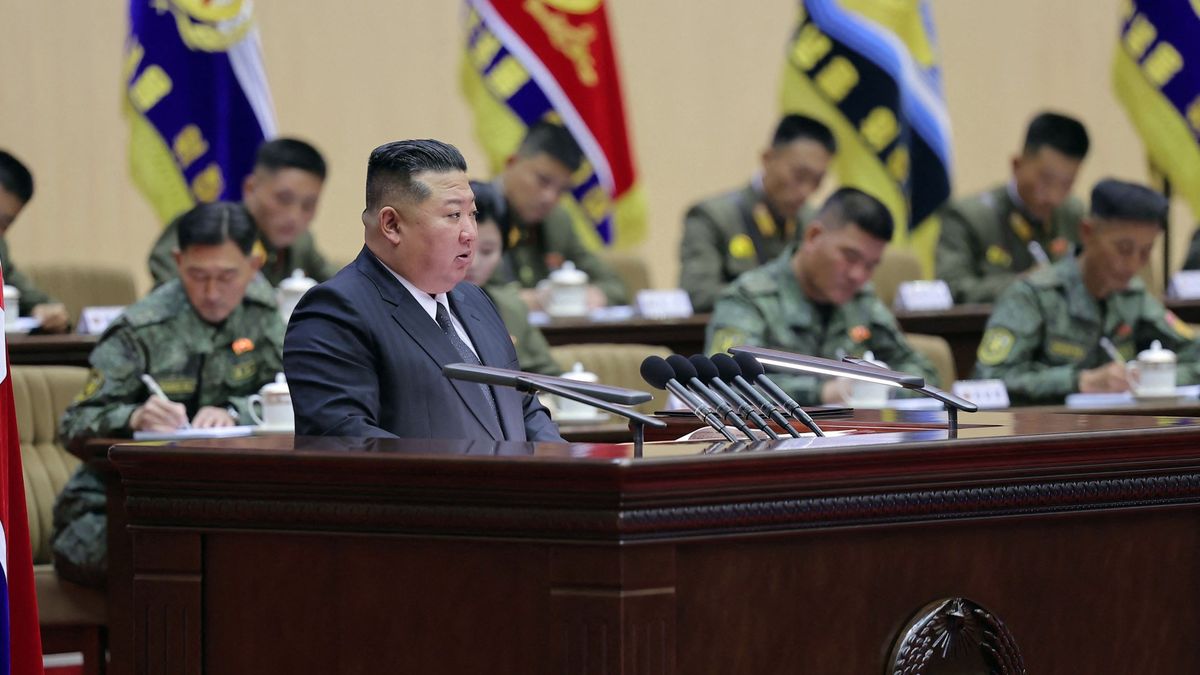
North Korean leader Kim Jong Un recently arrived in the Chinese border city of Dandong, utilizing a newly opened bridge that connects the two nations across the Yalu River. This visit, reported by South Korean media, occurred approximately one week after the New Yalu River Bridge was officially inaugurated, twelve years after its initial completion. The event signals a notable strengthening of economic and diplomatic ties between Pyongyang and Beijing, with China serving as North Korea's primary trading partner and a crucial source of support.
The opening of the New Yalu River Bridge, and Kim Jong Un's subsequent high-profile visit, is not merely an infrastructure development; it is a meticulously timed political maneuver orchestrated by Beijing to recalibrate its influence over Pyongyang and signal its strategic posture to the wider world. For over a decade, the completed bridge stood dormant, a testament to China's deliberate control over the pace and terms of its engagement with its reclusive neighbor. This delay was never solely about North Korea's lack of connecting roads or customs facilities; it was a powerful lever, allowing China to modulate its support based on its own geopolitical objectives and Pyongyang's behavior.
China's primary incentive is regional stability. A collapsed North Korea presents a nightmare scenario for Beijing: a flood of refugees across its border, potential instability in a critical buffer zone, and the prospect of a unified Korean peninsula allied with the United States. By opening this vital artery, China ensures North Korea's economic viability, preventing internal collapse while simultaneously reinforcing Pyongyang's dependence. This economic lifeline grants Beijing significant leverage, allowing it to exert influence without resorting to overt pressure, a strategy honed over decades of managing the unpredictable Kim dynasty.
For North Korea, the bridge represents a critical economic artery, especially under the weight of international sanctions. Pyongyang relies heavily on China for everything from food and fuel to raw materials and technology. Kim Jong Un's visit underscores this profound dependence, signaling his regime's ongoing need for Chinese patronage to sustain its military ambitions and maintain internal control. The bridge facilitates trade, both official and unofficial, providing a pathway for goods that can circumvent or soften the impact of international sanctions, thereby undermining global efforts to curb North Korea's nuclear and missile programs.
Furthermore, this development plays into a broader geopolitical alignment. As global power dynamics shift, with increasing friction between the United States and China, Beijing finds common cause with Pyongyang in pushing back against perceived Western hegemony. Strengthening ties with North Korea serves as a strategic counterweight, complicating Washington's regional alliances with South Korea and Japan. The renewed high-level exchanges, including Xi Jinping's visit to Pyongyang and Kim Jong Un's return visits to China, project an image of solidarity between two states often at odds with the liberal international order, reinforcing their shared strategic interests in a multipolar world.
While the opening of a major new trade route might, on the surface, suggest potential for economic uplift, the reality for the vast majority of ordinary North Koreans is starkly different. The benefits of increased trade facilitated by the new bridge are highly unlikely to trickle down to the general populace. Instead, the resources and revenue generated will predominantly be siphoned off by the ruling Workers' Party of Korea and its elite echelons. This capital will primarily serve to fund the regime's priorities: bolstering its military capabilities, sustaining its nuclear and missile programs, and supporting the lavish lifestyles of the political elite, rather than improving the living conditions of everyday citizens.
For decades, the North Korean state has maintained an iron grip on information and movement, isolating its people from the outside world. The new bridge, while physically connecting the nation to its largest trading partner, does little to break this internal isolation. The goods that cross the bridge are meticulously controlled, and the economic activity it generates is managed by state-owned enterprises, with minimal opportunity for private citizens to participate or benefit directly. The promise of connection and prosperity that such infrastructure might imply in other nations remains an unfulfilled dream for North Korea's populace, who continue to face chronic food shortages, limited access to healthcare, and severe restrictions on fundamental freedoms.
Even in the border regions, where increased trade might create some localized economic activity, the human cost is substantial. While some individuals might find opportunities in state-sanctioned trade or logistics, these activities often come with heightened surveillance and control by security forces. The increased flow of goods also brings with it the potential for increased smuggling, which, while offering a lifeline to some, also exposes individuals to severe penalties if caught. The border areas, far from becoming zones of open exchange, often become areas of intensified state scrutiny, where the risks of exploitation and punishment are amplified.
The most profound human cost lies in how Chinese economic support, facilitated by routes like this new bridge, enables the North Korean regime to sustain its repressive apparatus. With a reliable source of revenue and goods, Pyongyang can continue to divert resources away from public welfare towards maintaining its vast security forces, prison camps, and surveillance networks. This directly impacts the human rights situation, allowing the regime to perpetuate forced labor, arbitrary detention, and severe restrictions on freedom of expression, assembly, and religion. For those living under the Kim regime, the bridge symbolizes not an opening to the world, but a strengthening of the very system that keeps them in bondage, dependent on a state that prioritizes its own survival over the well-being of its people.
What governments and official statements consistently downplay or omit in discussions surrounding the North Korea-China relationship, particularly concerning developments like the new bridge, are the true motivations behind Beijing's strategic patience and the extent of Pyongyang's internal vulnerabilities. The official narrative typically centers on
The bridge's completion in 2014 was followed by a long delay, officially attributed to a lack of connecting infrastructure on the North Korean side. However, analysts suggest this delay was a deliberate strategic choice by China, allowing it to control the pace of engagement and exert leverage over Pyongyang based on its own geopolitical interests.
The newly opened bridge provides a significant new artery for trade between North Korea and China, potentially facilitating the flow of goods that could help Pyongyang circumvent international sanctions. While official trade figures are often opaque, the increased connectivity could undermine global efforts to isolate North Korea and curb its nuclear and missile programs.
The primary beneficiaries are the North Korean regime and its elite, who gain access to vital resources and revenue to sustain their military, political control, and lavish lifestyles. China also benefits strategically by maintaining stability on its border, asserting regional influence, and securing a buffer state against Western influence, while ordinary North Koreans see little direct improvement in their daily lives.
Editor's Note: Analysis is based on established geopolitical patterns and the specific event, with no significant uncertainties.
Source referenced: ALJAZEERA
This brief was synthesized by our Editorial Engine and reviewed by The Ground Narrative team.