TRENDING

Sunday, 25 October 2026
----------------------
14 Jumada Al-Awwal 1448 AH
A dramatic increase in Israeli tourism and investment is transforming Cyprus, leading to significant economic and social pressures for local communities. This influx is driven by a complex interplay of regional instability and economic opportunity.
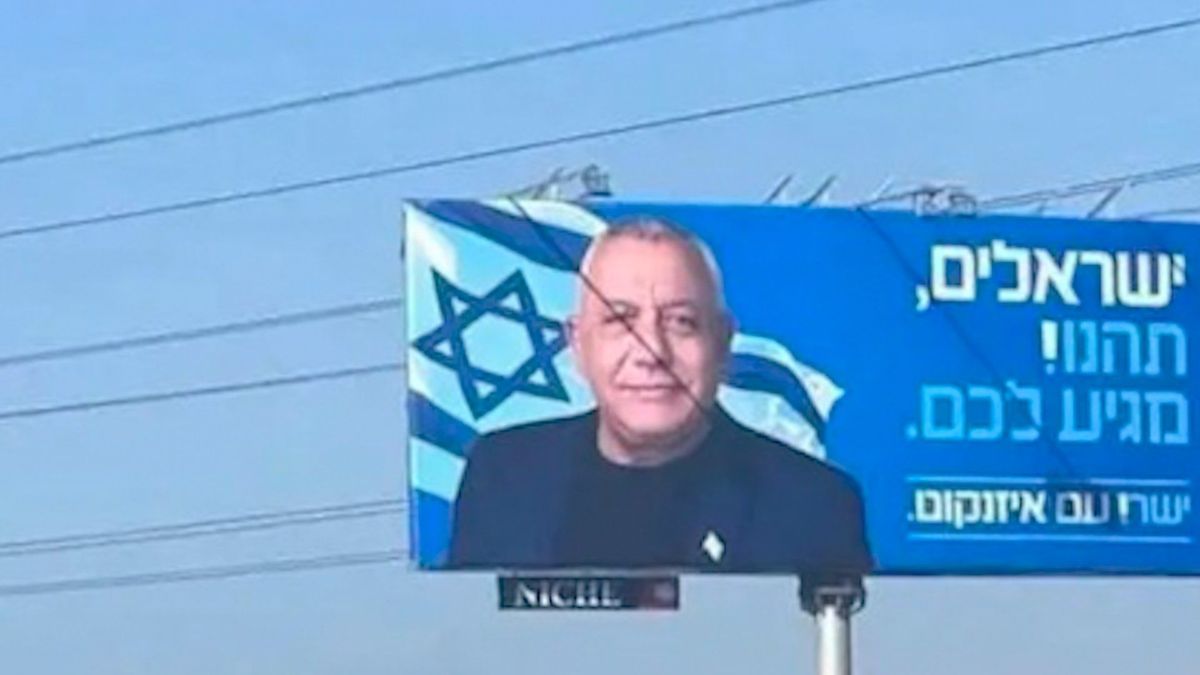
Cyprus, a small island nation in the Eastern Mediterranean, is experiencing an unprecedented surge in Israeli tourism and investment. Last year alone, nearly 600,000 trips were made by Israelis to the island, a figure that continues to climb. This influx extends beyond holidaymakers, with significant Israeli capital now flowing into various Cypriot industries, particularly real estate, technology, and hospitality. For many Cypriots, this economic boom comes with a steep price: rising property prices, displacement from traditional neighborhoods, and a growing sense that their communities are being reshaped by external forces.
The dynamics at play in Cyprus are a classic illustration of asymmetric power relations, where a smaller, more vulnerable economy becomes a recipient of capital and population flows from a larger, more robust, and often more geopolitically stressed neighbor. Cyprus, a member of the European Union, offers a unique combination of stability, Western legal frameworks, and geographic proximity to the Middle East, making it an attractive proposition for Israeli capital and citizens seeking a perceived safe haven.
From Cyprus's perspective, the allure of foreign investment is undeniable. The island nation's economy, still recovering from the 2013 financial crisis, has long relied heavily on tourism and real estate. Israeli investment provides a much-needed injection of capital, creating jobs and boosting GDP figures. The Cypriot government has actively courted foreign investors, offering incentives and streamlining processes, often prioritizing economic growth metrics over potential social impacts. Furthermore, Cyprus shares strategic interests with Israel, particularly in the burgeoning Eastern Mediterranean energy sector, where joint exploration and pipeline projects are under discussion. This energy cooperation, coupled with intelligence sharing and military exercises, solidifies a strategic partnership that the Cypriot government is keen to maintain, especially given its own unresolved conflict with Turkey over the divided island.
For Israel, the motivations are multi-layered. Economically, Cyprus represents a nearby, accessible market for investment diversification, particularly for real estate development and technology startups looking for an EU foothold. Geopolitically, the relationship with Cyprus serves as a vital anchor in a volatile region. As tensions escalate across the Middle East, from the ongoing conflict in Gaza to the precarious situation in Lebanon and the Red Sea, Cyprus offers a stable, democratic, and geographically convenient escape valve. This is not merely about tourism; it is about establishing a reliable fallback option for capital and, potentially, for citizens in times of crisis. The ability to move funds and establish residency in an EU member state provides a critical layer of security and flexibility for Israeli businesses and individuals. The perceived stability of Cyprus contrasts sharply with the unpredictable security landscape within Israel and its immediate neighborhood, making the island an increasingly attractive destination for long-term settlement and investment.
The power imbalance is evident in the scale of capital flow and demographic shift. Israel's economy, while facing its own challenges, is significantly larger and more dynamic than Cyprus's. This allows Israeli investors to outbid local Cypriots for properties and businesses, driving up prices and altering the economic landscape. The EU membership of Cyprus also means that capital flows are largely unrestricted, allowing for rapid and substantial investment that local regulatory frameworks may struggle to manage or mitigate in terms of social impact. This creates a situation where the economic benefits are concentrated, while the social costs are widely distributed among the local population.
While official narratives often highlight the economic benefits of increased tourism and foreign investment, the human cost for ordinary Cypriots is becoming increasingly apparent and severe. The rapid influx of Israeli capital and residents is creating significant social and economic dislocations, particularly in urban centers and popular coastal areas.
The most immediate and tangible impact is the escalating cost of living, primarily driven by a soaring real estate market. Israeli investors, often with greater purchasing power, are buying up properties at rates that local Cypriots simply cannot match. This phenomenon is pushing up rental prices and property values across the island, making it increasingly difficult for young Cypriots to afford homes in their own communities. Many long-time residents find themselves priced out of their neighborhoods, forced to relocate to less desirable areas or face severe financial strain. This isn't just an economic issue; it's a social one, eroding community ties and altering the demographic fabric of historic areas.
The transformation extends to the local economy. Traditional Cypriot businesses, such as small shops, tavernas, and family-run enterprises, struggle to compete with new, often larger and more capitalized, foreign-owned establishments catering to the tastes and preferences of the new clientele. This leads to a homogenization of the commercial landscape, where unique local character is replaced by more generic, tourist-oriented offerings. The cultural identity of these areas is slowly being diluted as the language, customs, and social norms of the new arrivals become more prominent, sometimes at the expense of local traditions. The subtle but persistent pressure on local businesses to adapt or perish creates a sense of cultural erosion and economic marginalization for many Cypriots.
The economic displacement and cultural shifts inevitably lead to social tensions. Resentment can simmer beneath the surface as locals perceive a loss of control over their own destiny and a feeling of being secondary in their own land. This can manifest in various ways, from everyday frustrations over crowded public spaces to more overt expressions of xenophobia or calls for stricter immigration and investment controls. These tensions can, in turn, be exploited by political factions, leading to increased polarization within Cypriot society and putting pressure on the government to address the concerns of its citizens without jeopardizing lucrative foreign relations.
Beyond the social and economic, there is an environmental cost. Increased development, often driven by foreign investment in large-scale tourism and residential projects, puts immense pressure on the island's finite natural resources, including water and land. The delicate ecosystems of a small island are particularly vulnerable to overdevelopment and increased population density, raising concerns about sustainability and the long-term ecological health of Cyprus.
What is often downplayed or entirely omitted in official statements and mainstream media narratives is the profound geopolitical undercurrent driving this demographic and economic shift. The surge in Israeli interest in Cyprus is not merely a benign economic phenomenon; it is inextricably linked to the escalating instability in the Middle East and Israel's changing regional position.
Governments, both Cypriot and Israeli, tend to frame the relationship in terms of mutual economic benefit, energy cooperation, and shared strategic interests. What they rarely articulate explicitly is that Cyprus is increasingly serving as a vital escape valve and a strategic fallback for Israel amidst the ongoing Gaza conflict and the broader regional conflagration. The unprecedented level of violence and uncertainty in Israel, coupled with the potential for wider regional escalation involving actors like Hezbollah in Lebanon or the Houthis in the Red Sea, has created an urgent need for stability and security for Israeli citizens and capital. Cyprus, with its EU membership and relative distance from direct conflict zones, offers precisely this.
This makes Cyprus not just a tourist destination or an investment opportunity, but a de facto
Source referenced: ALJAZEERA
This brief was synthesized by our Editorial Engine and reviewed by The Ground Narrative team.