TRENDING

Sunday, 25 October 2026
----------------------
14 Jumada Al-Awwal 1448 AH
Israel’s army imposed a full lockdown on the occupied West Bank, displacing hundreds of families and shutting all crossings. The move reshapes power balances while ordinary Palestinians bear the brunt.
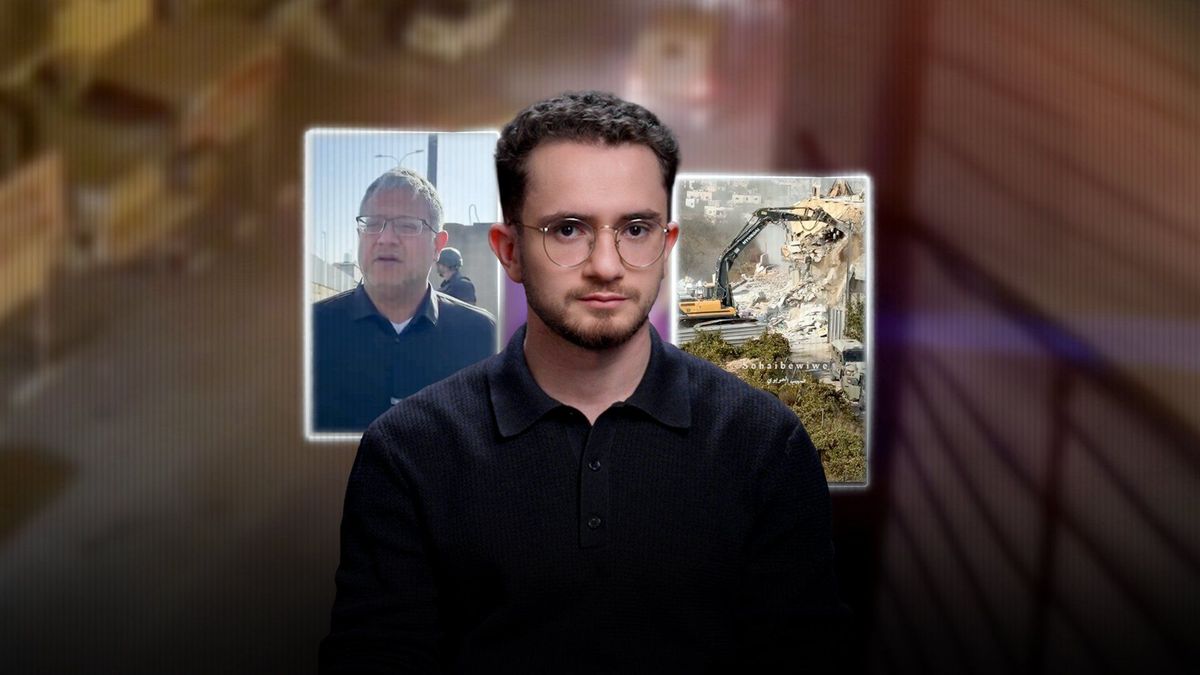
On 24 October 2026 the Israeli army began a sweeping lockdown across the occupied West Bank, sealing every checkpoint and crossing for Palestinians. Simultaneously, military operations forced roughly 200 Palestinian families out of their homes in Hebron, a city long marked by friction between settlers and residents. The closure halted civilian movement, commerce, and humanitarian aid, marking the most extensive restriction since the 2000‑2005 Second Intifada.
The lockdown serves multiple strategic calculations. First, the Israeli government faces mounting pressure from right‑wing settler factions demanding harsher security measures after a recent spike in attacks on Israeli civilians. By imposing a blanket restriction, Prime Minister Benjamin Netanyahu signals resolve to his base, bolstering his political survival ahead of the upcoming national elections.
Second, the move leverages Israel’s control over the West Bank’s infrastructure to pressure the Palestinian Authority (PA). The PA’s dwindling fiscal resources—exacerbated by reduced tax transfers from Israel and dwindling international aid—make it vulnerable to Israeli coercion. By choking movement, Israel can extract concessions on security coordination or settlement expansion without overtly violating any formal treaty.
Third, the operation aligns with Israel’s broader regional posture. With Iranian proxies intensifying activities in neighboring Syria and Lebanon, Israel seeks to pre‑empt any spill‑over by tightening internal security. The lockdown also serves as a rehearsal for rapid, large‑scale mobility control, a capability that could be repurposed if a wider conflict erupts.
Finally, the economic calculus cannot be ignored. The Israeli defense industry benefits from heightened security narratives that sustain export contracts, while settler‑linked businesses gain from reduced Palestinian labor competition. The lockdown thus reinforces a feedback loop where security measures generate economic gains for powerful domestic constituencies.
The forced eviction of 200 families—approximately 1,200 individuals—has immediate humanitarian repercussions. Families lose shelter, personal belongings, and access to essential services such as water and electricity. Many are now crammed into overcrowded UNRWA shelters where disease risk spikes, especially as winter approaches.
With all checkpoints sealed, daily wage laborers cannot reach construction sites in Jerusalem or Tel Aviv, cutting household incomes by an estimated 60 %. Small merchants in Nablus and Ramallah report a 70 % drop in sales, threatening the viability of local economies that already operate on thin margins.
Students are barred from traveling to universities in Birzeit and Al-Quds, halting academic progress for thousands. Hospitals in Bethlehem and Hebron face shortages of medicines and medical staff unable to cross into the territories, jeopardizing treatment for chronic conditions and emergencies alike.
The abrupt loss of home and mobility fuels collective trauma. Mental health professionals note a surge in anxiety and depression among both adults and children, a condition that can persist long after the physical restrictions are lifted.
Western governments, while condemning the humanitarian impact, have largely framed the lockdown as a temporary security measure. Diplomatic statements emphasize Israel’s right to self‑defence, downplaying the scale of civilian displacement. This framing sidesteps the broader question of whether the lockdown is a proportional response or a tool for political leverage.
Powerful settler lobby groups have quietly lobbied the Israeli Ministry of Defense for expanded security zones around settlements. Their influence is rarely disclosed in public briefings, yet the timing of the lockdown aligns with long‑standing settler demands for unrestricted access to Hebron’s Old City.
International donors are wary of committing additional funds to a context where access is severely limited. By restricting movement, Israel indirectly curtails the flow of aid, forcing NGOs to operate with reduced budgets and limiting their ability to document abuses. This creates an information vacuum that benefits the status quo.
Global media outlets often rely on official Israeli briefings for updates, resulting in limited on‑the‑ground reporting. The lack of independent journalists in the West Bank during the lockdown means many violations go unrecorded, allowing the narrative of a “controlled security operation” to dominate.
The next weeks will reveal whether the lockdown is a short‑term tactic or the prelude to a longer‑term annexation strategy. Key indicators include: (1) any formal statements from the Palestinian Authority regarding a cease‑fire or negotiation demands; (2) shifts in U.S. and EU diplomatic language, especially any moves to condition aid on movement freedoms; (3) settlement expansion permits issued during the lockdown period; and (4) the response of regional actors such as Jordan and Egypt, who traditionally act as custodians of the holy sites and may intervene if the humanitarian situation deteriorates further. Monitoring these signals will help gauge whether the power balance is tilting permanently toward Israeli control or if pressure will force a recalibration of the status quo.
Israel cited a surge in attacks on its civilians and the need to secure settlements. The move also serves political, economic, and strategic objectives, including pressuring the Palestinian Authority and appeasing settler factions.
Around 200 families, roughly 1,200 individuals, have been forced out of their homes in Hebron as part of the military operations accompanying the lockdown.
Western governments have expressed concern but framed the action as a temporary security measure. Aid agencies warn of humanitarian fallout, while regional actors monitor the situation for potential escalation.
Source referenced: ALJAZEERA
This brief was synthesized by our Editorial Engine and reviewed by The Ground Narrative team.


