TRENDING

Sunday, 25 October 2026
----------------------
14 Jumada Al-Awwal 1448 AH
A recent campaign rally saw former US President Donald Trump issue a new military threat against Cuba, drawing swift condemnation from Havana. This incident underscores the enduring tension between the two nations and the deep historical scars that continue to shape their relationship.
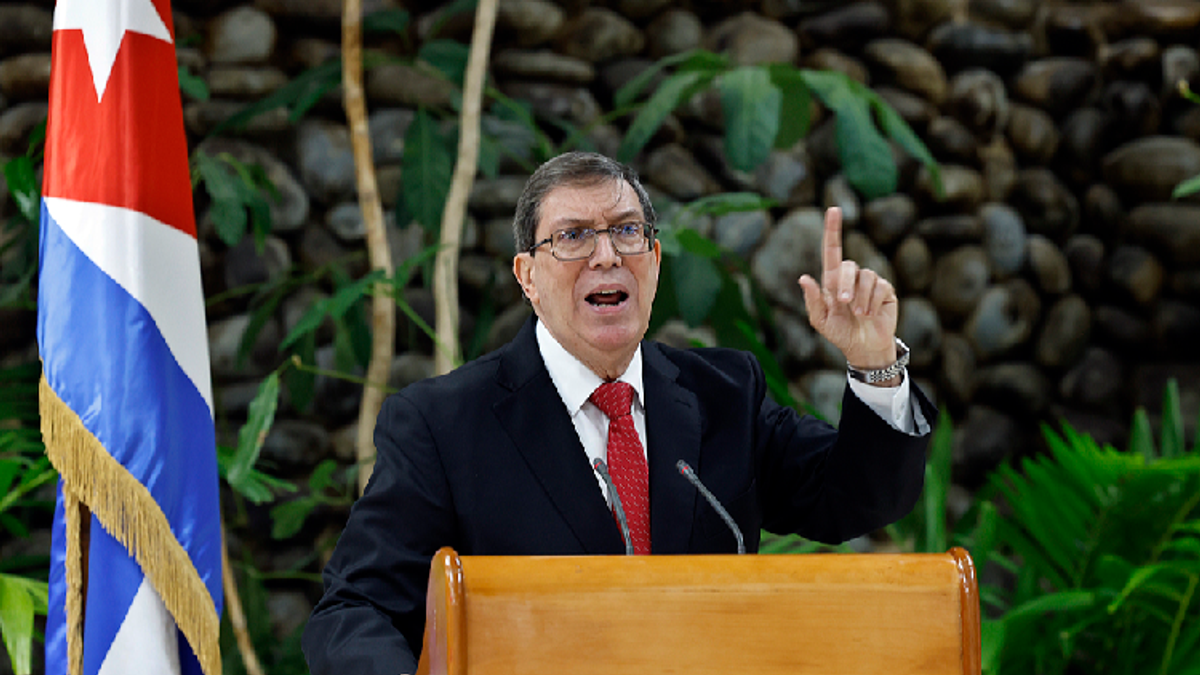
In October 2026, during a campaign rally in Fort Myers, Florida, former US President Donald Trump declared that US ships, returning from Iran, would "pass" Cuba, with one stopping approximately 50 yards off its coast. He added a provocative remark, stating, "They'll raise up their hands. And then we're going to send (Secretary of State) Marco Rubio in to finish up the deal." This statement, widely interpreted as a threat of military intervention, immediately drew a sharp rebuke from Cuban Foreign Minister Bruno Rodriguez. Writing on X, Rodriguez denounced "any threat regarding US ambitions toward Cuba," reiterating the island's sovereignty and its right to self-defense. This incident followed similar rhetoric from Trump in May 2026, when he suggested the United States would be "taking over Cuba almost immediately."
This latest verbal volley from a US presidential candidate against Cuba is not an isolated incident but a recurring feature of a deeply entrenched geopolitical dynamic. At its core, the US-Cuba relationship is a crucible of competing ideologies, historical grievances, and strategic calculations, often amplified by domestic political imperatives.
Florida is a critical swing state in US presidential elections, home to a significant and politically active Cuban-American diaspora. A substantial segment of this community holds strong anti-Castro sentiments and often favors hardline policies against the Cuban government. For US politicians, particularly those on the Republican side, adopting a tough stance on Cuba can be a potent electoral strategy to mobilize this key voter base. Trump's specific mention of Marco Rubio, a prominent Cuban-American senator from Florida known for his hawkish views on Cuba, was a clear signal to this constituency, framing the rhetoric as both a promise of action and a nod to their political influence. This transforms Cuba from a sovereign nation into a talking point, a symbol to be wielded in internal US political contests.
The historical backdrop is crucial. For over six decades, US-Cuba relations have been defined by the Cuban Revolution in 1959, the subsequent US attempts to overthrow the government (e.g., the Bay of Pigs invasion), the Cuban Missile Crisis, and the enduring US embargo. From Washington's perspective, Cuba has often been viewed through the lens of regional security, ideological opposition to communism, and a perceived challenge to US hegemony in the Western Hemisphere. For Havana, the relationship is one of constant vigilance against external aggression and a struggle to assert national sovereignty against a powerful neighbor. Cuban Foreign Minister Rodriguez's defiant response, invoking "diente de perro" (jagged coastal coral formations) inhospitable to hostile invaders, is a direct echo of this long history of resistance and a clear message that the island is prepared to defend itself, even if the immediate threat is rhetorical.
While military threats grab headlines, the most consistent and impactful tool of US power projection against Cuba remains the comprehensive economic embargo. Imposed in the early 1960s, it has been tightened and loosened over various administrations but remains largely in place. This economic pressure is designed to destabilize the Cuban government and force political change. Military threats, even if not immediately credible, serve to reinforce this pressure, creating an atmosphere of instability that deters foreign investment and further isolates Cuba economically. The mention of US ships returning from Iran also serves a rhetorical purpose, linking Cuba to a broader narrative of US adversaries and suggesting a global projection of US power against states deemed hostile.
Beyond the political posturing and diplomatic exchanges, the constant state of tension between the United States and Cuba imposes tangible and often severe costs on ordinary people, both on the island and within the diaspora.
The primary burden falls squarely on Cuban citizens. The US embargo, exacerbated by heightened rhetoric and the implied threat of military action, significantly restricts Cuba's access to essential goods, technology, and international finance. This translates directly into shortages of food, medicine, and other basic necessities, making daily life a continuous struggle. The fear of military intervention, however remote, adds another layer of psychological stress to a population already grappling with economic hardship. This environment fosters a sense of insecurity and limits opportunities for growth and development, trapping generations in a cycle of scarcity and uncertainty.
For the Cuban-American community in the United States, the impact is complex and often divisive. While some, particularly older generations, may welcome strong anti-Castro rhetoric as a sign of continued commitment to regime change, others, including many younger Cuban-Americans, advocate for a more pragmatic approach, emphasizing family reunification, remittances, and cultural exchange. The rhetoric of military threats can deepen these internal divisions, making it harder for families separated by the Florida Straits to connect and for a more nuanced dialogue about the future of US-Cuba relations to emerge. It can also lead to increased discrimination or suspicion against Cuban-Americans who do not align with hardline political views.
The persistent hostility between the US and Cuba also has broader regional implications. It can destabilize the Caribbean and Latin America, where many nations have sought to normalize relations with Cuba and advocate for an end to the embargo. Increased tensions can deter foreign investment in the region, disrupt tourism, and complicate diplomatic efforts to address shared challenges like climate change, migration, and drug trafficking. The focus on a Cold War-era conflict diverts attention and resources that could otherwise be directed towards collaborative solutions for the region's pressing social and economic issues.
Powerful actors, particularly political figures, often frame events in ways that serve their immediate interests, downplaying inconvenient truths or omitting crucial context. Trump's latest remarks on Cuba are a prime example of this selective narrative construction.
The most significant untold story is the extent to which Trump's "military threat" is less about genuine military intent and more about political performance. The specific details – "50 yards off the coast," "send Marco Rubio in to finish up the deal" – sound less like a serious military plan and more like lines delivered at a rally designed to elicit a specific reaction from a domestic audience. The true objective is likely to energize a particular segment of the Florida electorate, signaling a return to a perceived strongman foreign policy that resonates with his base. The actual logistical and international ramifications of such an action are almost certainly secondary to the immediate political gain. This reduces a sovereign nation to a prop in a domestic political drama, obscuring the real-world consequences for its citizens.
While a rhetorical military threat captures headlines, the ongoing, silent "war" of the US embargo is the true, continuous source of suffering for the Cuban people. Governments, particularly the US administration, consistently downplay the humanitarian impact of these sanctions. Official statements often frame the embargo as a tool to promote democracy or human rights, rather than acknowledging its direct role in limiting access to food, medicine, and economic opportunities for ordinary Cubans. The focus on a potential military confrontation distracts from the daily grind of survival under sanctions, which constitutes a far more pervasive and insidious form of pressure than any fleeting military threat.
On the Cuban side, the government, while genuinely concerned about US aggression, also leverages such threats to its advantage. External threats, real or perceived, are often used to rally nationalistic sentiment, consolidate power, and deflect internal criticism regarding economic mismanagement or political freedoms. The narrative of a besieged island, constantly under attack from a powerful adversary, reinforces the government's legitimacy and justifies its control over various aspects of society. This dynamic, while understandable given the history, means that the human cost of internal policies can sometimes be obscured by the focus on external threats.
Trump's specific mention of US ships returning from Iran is also a calculated maneuver. It serves to link Cuba to a broader narrative of "rogue states" or adversaries, elevating the perceived threat level and justifying a hardline stance. This framing allows US policymakers to present a coherent, albeit simplistic, worldview where various distant challenges are interconnected, even if the actual strategic links are tenuous. It plays into a narrative of global US dominance and the need to project power against multiple fronts, further downplaying the unique historical and political context of US-Cuba relations.
As the US election cycle progresses and US-Cuba relations remain volatile, several key areas warrant close attention from ordinary citizens seeking to understand the true impact of these power dynamics.
First, observe the evolution of rhetoric from US presidential candidates. Will the aggressive posturing intensify as the election nears, particularly in swing states like Florida? Or will it soften once the immediate electoral incentives diminish? The consistency, or inconsistency, of these statements will reveal whether they are genuine policy intentions or purely performative.
Second, look for any concrete policy shifts from the US government, beyond verbal threats. While a direct military intervention remains highly unlikely, watch for any tightening of the embargo, increased sanctions, or restrictions on remittances and travel. These less dramatic but equally impactful actions would signal a more sustained commitment to pressure on Cuba.
Third, monitor Cuba's responses on the international stage. Will Havana seek to strengthen alliances with other nations critical of US foreign policy, such as China, Russia, or Iran? Such moves could be a direct consequence of perceived US aggression and could further complicate regional and global power balances.
Finally, and most importantly, pay attention to the economic conditions and daily lives of ordinary Cubans. Any escalation of tensions, whether rhetorical or policy-based, will inevitably exacerbate existing hardships. Reports on food security, access to medicine, and the availability of basic goods will be crucial indicators of the human cost of this enduring geopolitical standoff. The resilience of the Cuban people in the face of these pressures will continue to be a testament to their struggle for sovereignty and survival.
Source referenced: CGTN
This brief was synthesized by our Editorial Engine and reviewed by The Ground Narrative team.