TRENDING

Sunday, 25 October 2026
----------------------
14 Jumada Al-Awwal 1448 AH
Israel has announced plans for a significant military operation in the West Bank, described by Prime Minister Netanyahu as unprecedented since 1967. This move follows a deadly attack in Hebron and signals a potential escalation of control and conflict.
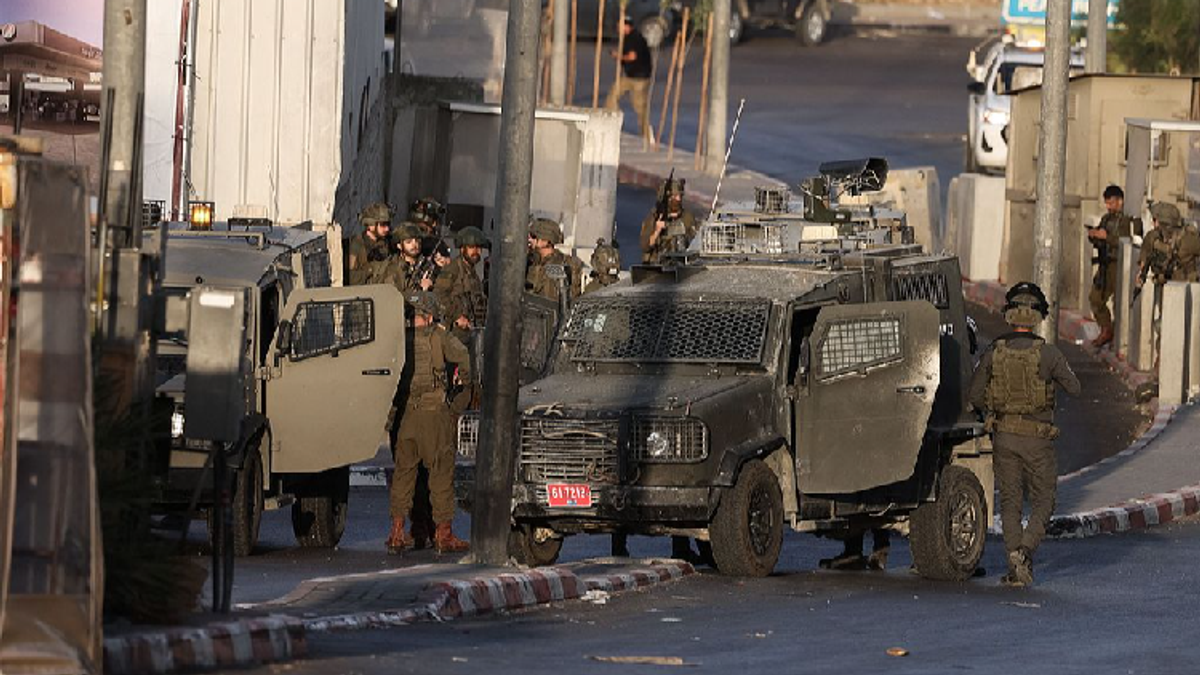
Israeli Prime Minister Benjamin Netanyahu has declared that Israel is preparing for a major military operation in the West Bank, a move he characterized as unlike any undertaken since the 1967 Middle East War. This announcement came in the wake of a shooting attack in Hebron that resulted in the deaths of two Israeli soldiers and two Palestinian attackers. Immediately following the incident, Israeli forces initiated raids in Hebron and surrounding areas, demolishing a residential building and imposing severe restrictions on the city's entrances and exits, effectively disrupting the daily lives of its more than one million Palestinian residents.
Netanyahu outlined that the operation would replicate a model previously used in refugee camps, involving the evacuation of residents, house-to-house searches, seizure of weapons, and the destruction of what he termed "terrorist infrastructure." While the Israel Defense Forces (IDF) are reportedly ready, the precise timing of this large-scale operation remains undecided, leaving the region in a state of heightened anticipation and fear.
This announced operation in the West Bank is a stark demonstration of the asymmetrical power dynamics governing the Israeli-Palestinian conflict. At its core, the move reflects Israel's long-standing policy of maintaining security control over the occupied territories, but it is also deeply intertwined with domestic political imperatives and a strategic calculus aimed at deterring resistance.
For Israel, the declared operation is framed primarily as a security necessity, a direct response to an attack that killed Israeli soldiers. This narrative emphasizes the government's responsibility to protect its citizens and deter future assaults. However, beyond immediate security concerns, Prime Minister Netanyahu's announcement carries significant political weight. His coalition government, often reliant on hardline factions, benefits from projecting an image of strength and decisiveness. A large-scale operation can consolidate support among his base, particularly those advocating for more aggressive measures against Palestinian resistance. It also serves to reinforce Israel's military dominance and its capacity to impose its will across the West Bank, a territory it has occupied since 1967. The stated goal of destroying "terrorist infrastructure" provides a broad mandate for extensive military action, allowing for wide-ranging interventions into Palestinian communities.
The Palestinian Authority (PA), which theoretically governs parts of the West Bank, finds itself in an increasingly precarious position. Its limited sovereignty and reliance on Israel for security coordination mean it has little ability to prevent or effectively respond to such an operation. The PA's condemnation of the restrictions in Hebron and warnings against collective punishment highlight its rhetorical opposition, but its practical power to protect its population from large-scale Israeli military incursions is severely constrained. This dynamic further erodes the PA's legitimacy in the eyes of many Palestinians, who perceive it as unable to deliver security or self-determination, thereby creating a vacuum that can be filled by other, often more radical, actors.
The decision to launch an operation of this magnitude also plays into broader regional and international calculations. While some Arab states, particularly those that have normalized relations with Israel through the Abraham Accords, might offer muted responses, others will likely issue condemnations. However, the consistent pattern of international reactions to Israeli operations in the Palestinian territories has often been one of verbal disapproval without significant punitive action. This perceived lack of consequences from major global powers, including the United States and the European Union, effectively grants Israel considerable latitude to pursue its security objectives as it defines them. The international community's focus often remains on de-escalation rather than addressing the underlying conditions of occupation that fuel cycles of violence.
When a military operation of the scale described by Prime Minister Netanyahu is launched, the immediate and enduring burden falls disproportionately on the civilian population. The West Bank, particularly densely populated areas like Hebron, is home to millions of Palestinians whose daily lives are already shaped by checkpoints, restrictions, and the constant presence of military forces. A major operation threatens to amplify these challenges to an unprecedented degree.
Netanyahu's plan explicitly mentions the evacuation of residents and house-to-house searches. This means thousands of families could be forced from their homes, even temporarily, creating a humanitarian crisis. The demolition of a residential building in Hebron following the recent attack serves as a grim precursor to what could become widespread destruction. Such demolitions not only render families homeless but also erase years of accumulated wealth and stability. Hebron, a vital economic hub in the southern West Bank, is particularly vulnerable. The closure of its main entrances and roads, as already implemented, cripples commerce, prevents workers from reaching their jobs, and isolates communities. Businesses will suffer, unemployment will surge, and the local economy, already fragile under occupation, could face collapse. This economic strangulation is a form of collective punishment, impacting countless individuals who have no involvement in militant activities.
The proposed operational model, involving extensive military presence and house-to-house searches, will transform everyday existence into a state of siege. Access to essential services like healthcare, education, and even food supplies will be severely hampered. Children will miss school, medical emergencies will face delays, and the simple act of moving from one neighborhood to another will become a perilous endeavor. The psychological toll on the population, especially children, is immense. Living under constant threat, witnessing military actions, and experiencing the disruption of normal life can lead to long-term trauma, anxiety, and a deep sense of despair and injustice.
Historically, large-scale military operations in densely populated areas inevitably lead to increased casualties, both among combatants and, tragically, civilians. The stated objective of seizing weapons and destroying "terrorist infrastructure" often involves intense engagements in urban environments, putting non-combatants directly in harm's way. The Palestinian Ministry of Foreign Affairs' warning of increased violence and collective punishment is not merely rhetoric; it reflects a predictable cycle where military action, even if framed as defensive, often generates further resistance and a spiraling conflict that claims more lives on all sides.
While official statements from Israel frame the impending West Bank operation as a necessary security measure in response to an attack, a deeper analysis reveals layers of context and motivations that are often downplayed or omitted. The narrative presented to the public frequently simplifies a complex reality, obscuring the long-term structural issues at play.
The term "terrorist infrastructure" is a powerful rhetorical tool, but its practical application can be exceedingly broad. While it certainly refers to weapons caches and operational bases, it can also extend to homes, community centers, and other civilian structures deemed to have connections, however tenuous, to militant activity. This expansive definition allows for widespread destruction and disruption, often impacting entire neighborhoods and communities. What is presented as a surgical strike against specific targets can, in reality, become a sweeping intervention that affects thousands of non-combatants, blurring the lines between legitimate military targets and civilian life. The demolition of a residential building in Hebron immediately after the attack, without a clear, publicly verifiable link to the attackers' specific actions, underscores this potential for broad application.
The current events are presented as a reaction to a specific incident, but they are inextricably linked to decades of Israeli military occupation of the West Bank and the continuous expansion of Israeli settlements. The presence of over 700,000 Israeli settlers in the West Bank and East Jerusalem, often protected by the IDF, creates daily friction and resentment among Palestinians. The checkpoints, movement restrictions, and administrative controls that define Palestinian life are not new; they are the fabric of occupation. An operation of this scale, while framed as a response to violence, also serves to reinforce and deepen this control, further entrenching the occupation rather than addressing its root causes. The powerful actors often omit how the daily realities of occupation contribute to the frustration and despair that can fuel resistance.
Beyond security, such a significant military announcement can serve a potent domestic political purpose for Prime Minister Netanyahu. Facing internal political challenges and a desire to maintain the cohesion of his right-wing coalition, a decisive security operation can rally public support and divert attention from other issues. By projecting strength and taking a hardline stance, Netanyahu reinforces his image as a strong leader capable of ensuring Israel's security. The timing of such announcements is rarely accidental; they often align with periods where a strong national security posture is politically advantageous, allowing powerful leaders to consolidate their position by appealing to nationalistic sentiments.
What is often downplayed is the role of the international community, particularly major powers, in perpetuating the cycle of conflict. While condemnations are often issued, concrete actions to hold parties accountable for violations of international law, including those related to occupation and collective punishment, are rare. This inaction effectively creates an environment where the powerful actors feel little pressure to fundamentally alter their approach, allowing the underlying conditions that breed conflict to persist. The focus remains on managing the symptoms of the conflict rather than addressing its structural causes, leaving the human cost to be borne by those on the ground.
As Israel prepares for what Prime Minister Netanyahu describes as an unprecedented military operation in the West Bank, several critical developments will shape the immediate future and the long-term trajectory of the region. The scale and nature of this intervention will have profound implications for millions of people.
First, closely monitor the geographic scope and intensity of the operation. Will it be confined primarily to Hebron and its immediate surroundings, or will it expand to other major Palestinian cities and refugee camps across the West Bank? The extent of the military deployment and the duration of the operation will indicate the true ambition behind Netanyahu's declaration. A widespread, prolonged campaign would signal a significant escalation of Israeli control and a potentially devastating impact on Palestinian civilian life.
Second, observe the humanitarian consequences. Pay close attention to reports of civilian casualties, forced displacement, and the destruction of homes and infrastructure. The United Nations and humanitarian organizations will be key sources for understanding the true human cost, particularly regarding access to essential services like healthcare, food, and water. Any widespread collective punishment, such as prolonged city closures or mass detentions, will exacerbate an already dire situation.
Third, watch for the response of Palestinian factions. Will the Palestinian Authority's already limited influence further erode, potentially leading to increased unrest or the rise of new militant groups? The operation could either deter future attacks or, conversely, act as a catalyst for further resistance, creating a dangerous feedback loop of violence and retaliation. The internal dynamics within Palestinian society will be crucial.
Finally, assess the international reaction. While initial condemnations are expected, the key question is whether any major global powers, particularly the United States or the European Union, will move beyond rhetoric to exert meaningful diplomatic or economic pressure. The absence of such pressure would signal continued international acquiescence, further entrenching the status quo and potentially emboldening future large-scale operations. The unfolding events will test the limits of international engagement and the resolve of global actors to address the underlying drivers of this protracted conflict.
Source referenced: CGTN
This brief was synthesized by our Editorial Engine and reviewed by The Ground Narrative team.