TRENDING

Sunday, 25 October 2026
----------------------
14 Jumada Al-Awwal 1448 AH
Widespread protests against Italy's rising cost of living and deteriorating public services have led to clashes, looting, and a significant state security response, with thousands of young people at the forefront of the unrest.
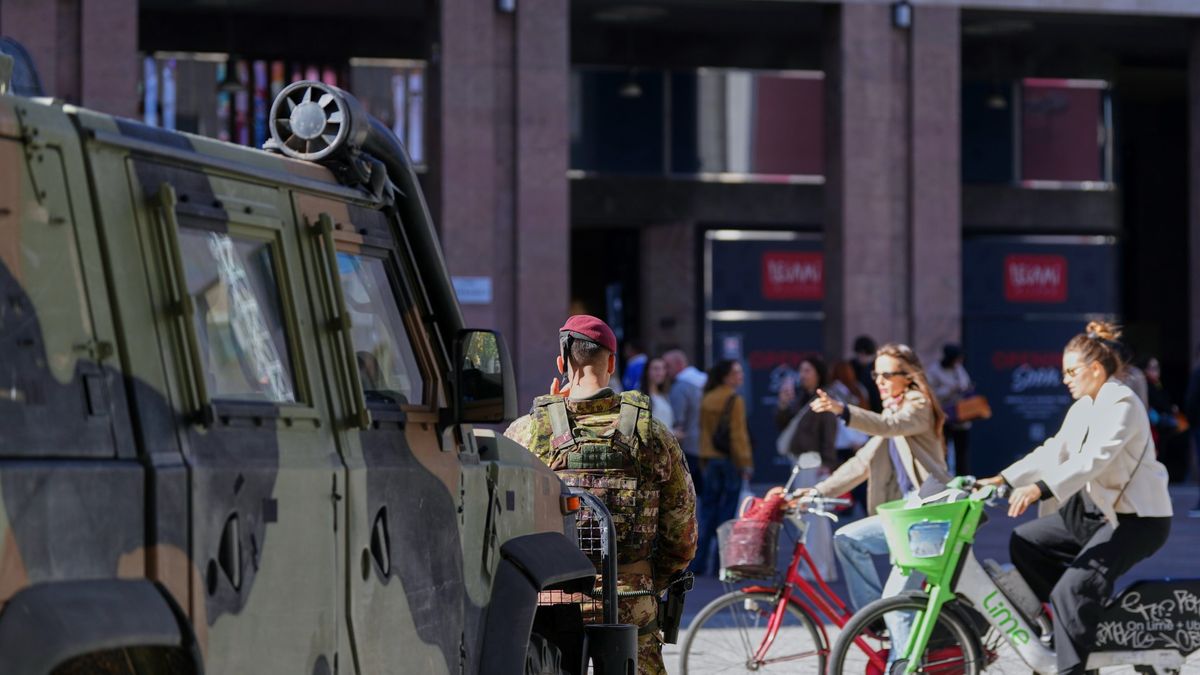
Milan, Italy's financial hub, and at least seven other Italian cities are bracing for renewed protests against Giorgia Meloni's right-wing government. These demonstrations are fueled by deep public dissatisfaction over the rising cost of living and deteriorating public services. The unrest follows a week of violent clashes and looting in Milan, prompting the government to deploy 500 soldiers and conduct extensive raids and searches against suspected participants. The newly formed 'October 17 Movement', alongside student federations, grassroots trade unions, and anti-war coalitions, has been instrumental in organizing these protests, with a significant number of young people, many under the age of 18, among those arrested.
The current wave of unrest in Italy exposes a classic tension between state authority and popular discontent, amplified by economic hardship. Giorgia Meloni's right-wing government, which came to power on a platform promising national renewal and stability, now faces the challenge of managing a population increasingly frustrated by daily economic realities. The deployment of army paratroopers in Milan is a potent symbol of state power, signaling a clear intent to restore order and deter further disruption. This move serves multiple purposes: it aims to reassure businesses and the public that the government can maintain control, it acts as a deterrent to potential rioters, and it projects an image of strength to both domestic and international audiences.
However, this show of force also carries significant risks. A heavy-handed security response can easily be perceived as authoritarian, especially by those who feel their legitimate grievances are being ignored. The government's decision to investigate the administrator of the 'October 17 Movement's' Instagram page and the Justice Minister's suggestion to expand youth detention facilities highlight a punitive approach to dissent. This strategy prioritizes immediate order over addressing the underlying causes of the protests, potentially deepening the chasm between the state and its citizens, particularly the younger generation.
Economically, the Meloni government is caught between global inflationary pressures and domestic expectations. The rising cost of living, particularly soaring fuel prices, is not unique to Italy, but its impact is keenly felt by ordinary Italian households and specific sectors like truck drivers, farmers, and fishermen. The government's swift offer of tax breaks and special funds to these groups earlier in the week demonstrates a pragmatic attempt to defuse targeted sectoral grievances. This selective relief is a common tactic: address the most organized and economically disruptive groups first, hoping to prevent their issues from merging with broader, more diffuse public anger. However, this approach often fails to satisfy the wider population, who continue to face the same economic squeeze without specific government intervention.
The significant involvement of youth in these protests, with a disproportionate number of arrests involving minors, reveals a deeper structural issue. Young people in Italy, like in many other developed economies, often face precarious job markets, high youth unemployment, and a sense of limited future prospects. Social media platforms like TikTok and Telegram act as powerful, albeit sometimes superficial, organizing tools, allowing for rapid mobilization but also potentially drawing in individuals with limited understanding of the political context. This digital mobilization challenges traditional forms of protest organization and presents a new dilemma for state security forces, who must grapple with decentralized, often anonymous, online movements.
The most immediate and tangible human cost of these protests falls squarely on the shoulders of the young people who have taken to the streets. With 220 out of 271 arrested individuals being under the age of 18, a significant portion of a generation is directly encountering the punitive arm of the state. These arrests can lead to legal repercussions, potential criminal records, and the psychological trauma of clashes with security forces. For many, like the 15-year-old reportedly drawn in by TikTok without understanding the protest's reasons, the experience can be disorienting and deeply impactful, potentially shaping their views on authority and civic participation for years to come. The Justice Minister's call to expand youth detention facilities underscores a worrying trend towards criminalizing youth dissent rather than understanding its root causes.
Beyond the arrests, the broader Italian population bears the daily burden of the rising cost of living. Soaring prices for essentials like food, fuel, and utilities erode household savings, reduce disposable income, and force difficult choices. For families already struggling, this economic pressure can lead to increased stress, decreased quality of life, and a sense of hopelessness. The deterioration of public services, another key grievance, further compounds this burden, impacting access to healthcare, education, and social support systems that are vital for vulnerable communities.
The government's response, characterized by the deployment of soldiers and widespread raids, risks alienating a significant segment of the population. When the state responds to economic grievances with security measures, it can foster a sense of distrust and resentment, particularly among those who feel their voices are being suppressed. This erosion of trust can damage social cohesion, making it harder for communities and the government to work together to solve complex problems. The narrative from some protesters, who view the government as
Protests in Italy are primarily driven by widespread dissatisfaction with the rising cost of living, deteriorating public services, and general discontent with Giorgia Meloni's right-wing government. Many young people are participating, expressing frustration over their economic future.
The Italian government has responded with increased security measures, including deploying 500 soldiers to Milan, conducting raids against suspected rioters, and investigating social media organizers. They also offered targeted tax breaks to truck drivers earlier in the week.
Social media platforms like Instagram and Telegram are crucial for organizing and mobilizing protesters, particularly among the youth. However, authorities also blame social media for misleading young people into participating in what they describe as 'insurrectional acts'.
Editor's Note: Analysis is based on the provided raw intelligence, interpreting power dynamics and human cost within The Ground Narrative's framework. The 'untold story' extrapolates on common governmental omissions.
Source referenced: ALJAZEERA
This brief was synthesized by our Editorial Engine and reviewed by The Ground Narrative team.


