TRENDING

Sunday, 25 October 2026
----------------------
14 Jumada Al-Awwal 1448 AH
The US Democratic Party is undergoing a significant internal realignment, recalibrating its policy stances across several critical issues in the wake of Donald Trump's 2024 presidential victory and ahead of the crucial 2026 midterm elections.
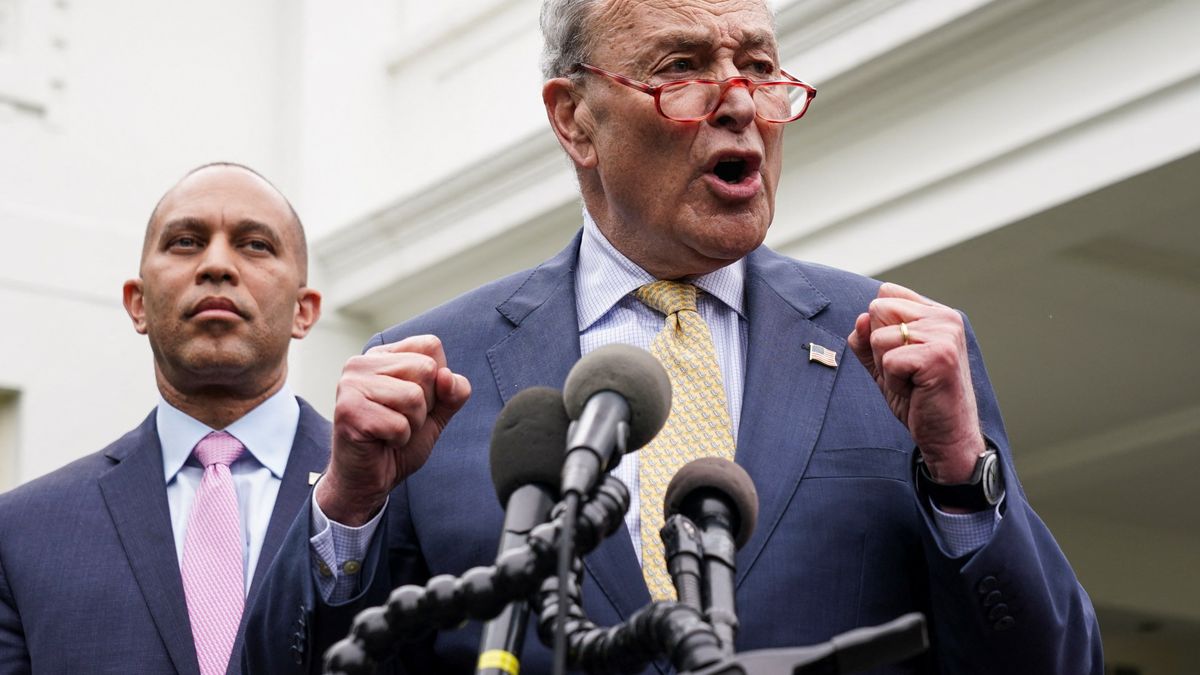
The US Democratic Party is undergoing a significant internal realignment, recalibrating its policy stances across several critical issues in the wake of Donald Trump's 2024 presidential victory and ahead of the crucial 2026 midterm elections. This reassessment, driven by a desire to reconnect with a disillusioned electorate and regain control of Congress, has seen shifts on the US-Israel relationship, transgender rights, immigration enforcement, and healthcare reform. The party's establishment is grappling with a rising tide of progressive populism, leading to pronounced divisions and a varied approach among candidates depending on their electoral battlegrounds.
The current policy shifts within the Democratic Party are a direct consequence of a fundamental power dynamic: the imperative to win elections. Following a significant defeat in 2024, the party leadership and individual candidates are engaged in a strategic re-evaluation, driven by the cold calculus of electoral viability. This is not merely an ideological evolution but a pragmatic response to perceived voter alienation and the potent messaging of their Republican rivals.
At the core of this recalculation is the electoral imperative. The defeat of Kamala Harris by Donald Trump in 2024 served as a stark warning that the party's previous positions were insufficient to secure a majority. This has forced candidates in tough battleground races to either moderate their stances on issues like transgender rights or amplify progressive positions on topics like Israel and healthcare where public opinion has demonstrably shifted. The goal is to capture the elusive "center" while simultaneously energizing the base, a delicate balancing act that often leads to internal friction.
Voter demographics and sentiment play a crucial role in dictating these shifts. Polling data, particularly on the US-Israel relationship, reveals a dramatic increase in unfavorable opinions towards Israel, especially among Democratic voters and younger generations. This groundswell of public opinion, fueled by the ongoing Gaza conflict, has empowered progressive movements like the Democratic Socialists of America and forced even long-time Israel supporters within the party, such as Senator Chris Coons, to consider a "thorough reexamination" of the alliance. The growing support for "Medicare for All" similarly demonstrates a public appetite for more robust government intervention in healthcare, pushing the party towards universal coverage, even if the specific mechanism remains debated.
The tension between party leadership and grassroots movements is another defining power mechanic. Establishment figures like Senate Minority Leader Chuck Schumer maintain an "ironclad" commitment to Israel's security, reflecting decades of entrenched foreign policy and powerful lobbying efforts. This stance often clashes with the demands of a more progressive wing, exemplified by Representative Alexandria Ocasio-Cortez, who advocates for unwavering support for marginalized communities and challenges the party's perceived compromises. This internal struggle highlights the difficulty of maintaining party unity when diverse electoral pressures pull candidates in different directions. The leadership's power lies in its control over party resources and messaging, but the grassroots holds the power of voter mobilization and primary challenges, creating a constant push and pull.
Finally, the relentless Republican pressure acts as a powerful external force shaping Democratic policy. The effectiveness of Trump's 2024 campaign, which weaponized issues like transgender rights ("Kamala is for they/them") and border security, demonstrated the electoral vulnerability of certain Democratic positions. This has led some Democrats to strategically distance themselves from previously held progressive stances, such as on transgender students in sports, in an attempt to neutralize Republican attacks and appeal to more conservative voters. Similarly, the Republican narrative around border security has compelled some Democrats, like James Talarico, to brand themselves as "border security Democrats," adopting a more hawkish stance to counter the perception of weakness on immigration. This dynamic underscores how the opposition's agenda can effectively dictate the terms of debate and force policy adjustments, even within the opposing party.
The policy recalibrations within the Democratic Party, while framed as strategic adjustments for electoral gain, carry significant human costs that often remain obscured by the political discourse. These shifts are not abstract debates but decisions that directly impact the lives, safety, and well-being of millions, both domestically and internationally.
Perhaps the most immediate and devastating human cost is borne by the Palestinian people in Gaza. The raw intelligence explicitly states Israel's "genocidal war" has killed "more than 74,000 Palestinians" since October 7, 2023. While a growing number of Democrats are now calling for a "thorough reexamination" of the US-Israeli relationship and even sanctions against Benjamin Netanyahu, this shift comes after years of unwavering US military and diplomatic support that enabled the conflict. For the Palestinians, the debate within the Democratic Party is a belated recognition of an ongoing humanitarian catastrophe. The human cost here is measured in lives lost, homes destroyed, and a generation traumatized by conflict, all while US policy, until recently, remained largely unchanged. The internal Democratic struggle over Israel reflects a belated reckoning with the moral and geopolitical consequences of a long-standing alliance, but the suffering on the ground has already reached unimaginable scales.
Domestically, the transgender community bears a direct human cost as their rights become a political football in tight electoral races. When Democratic candidates "downplay – or outright dismiss – support for the transgender community," particularly concerning participation in school sports, it sends a chilling message. As Representative Alexandria Ocasio-Cortez noted, abandoning the rights of one group compromises the rights of all. For transgender individuals, especially youth, these political maneuvers translate into increased discrimination, social isolation, and heightened vulnerability to violence. The political calculation to appease a perceived anti-trans sentiment for votes undermines the fundamental principle of equality and human dignity. It normalizes prejudice and contributes to a climate where transgender people feel "abandoned" and unsafe, impacting their mental health, access to services, and overall quality of life.
Migrants and asylum seekers at the US-Mexico border are perpetually caught in the crosshairs of US immigration politics. The push for "border security Democrats" and the rhetoric around "order at the border" often translates into harsher enforcement measures, increased detentions, and reduced access to asylum protections. The tragic incidents, such as federal immigration agents shooting dead US citizens Renee Good and Alex Pretti in Minneapolis, underscore the extreme and often lethal consequences of a militarized border approach. While some Democrats advocate for comprehensive reform, the emphasis on "securing the border" can overshadow the humanitarian aspects of migration, ignoring the root causes that force people to flee their homes. The human cost here is borne by families separated, individuals facing perilous journeys, and communities living in fear of deportation, all while their plight is instrumentalized for political gain. The debate over "abolish ICE" highlights the deep-seated concerns about the human rights implications of the current enforcement apparatus.
For millions of US citizens struggling with the cost of living and inadequate healthcare access, the Democratic Party's internal debate over healthcare reform represents a promise deferred. While there is a broad consensus within the party for "more government intervention" and a move towards "universal healthcare," the specifics remain contentious. The difference between championing "Medicare for All" and advocating for the return of Affordable Care Act (ACA) subsidies can mean the difference between guaranteed, comprehensive care and continued reliance on a patchwork system with high out-of-pocket costs. The human cost is measured in preventable illnesses, medical bankruptcies, and premature deaths for those who cannot afford care. The political wrangling over the "best way possible" to achieve universal healthcare prolongs the suffering of those who need it most, highlighting how ideological and pragmatic differences within the party directly impact the fundamental right to health.
Behind the headlines of Democratic Party policy shifts, several critical narratives are consistently downplayed, omitted, or strategically reframed by powerful actors, both within and outside the party. These omissions are not accidental; they serve to maintain existing power structures, deflect accountability, and shape public perception in ways that benefit the powerful while obscuring the deeper systemic issues at play.
While the raw intelligence highlights a "marked change in tone" among some Democrats regarding Israel's actions in Gaza, what remains largely untold is the deep, bipartisan, and historically entrenched nature of US support for Israel. The shift is often framed as a response to Netanyahu's specific policies or the current conflict, rather than a fundamental re-evaluation of a decades-long strategic alliance that has involved billions in military aid and diplomatic protection. The term "genocidal war," used in the intelligence, is rarely echoed in official US government statements, which typically focus on Israel's "right to self-defense" or humanitarian concerns without acknowledging the scale of destruction and loss of Palestinian life. Powerful pro-Israel lobbying groups wield immense influence, ensuring that any significant deviation from the "ironclad" commitment faces formidable resistance. By focusing on individual Democratic senators or specific votes, the broader context of US complicity and the systemic forces that perpetuate the conflict are often minimized, allowing the narrative to remain within the bounds of acceptable political discourse rather than questioning the foundations of US foreign policy in the Middle East.
The downplaying of transgender rights by some Democrats is presented as a pragmatic electoral adjustment to "voter concerns." What is omitted is that these "concerns" are often not organic but are actively manufactured and amplified by conservative media and Republican political campaigns. The "Kamala is for they/them" advertisement is a prime example of weaponizing social issues to create division and fear. By reacting to this manufactured culture war rather than robustly defending the rights of a marginalized community, some Democrats inadvertently legitimize the underlying prejudice. The untold story is that human rights are not bargaining chips to be traded for votes. The party's internal debate often focuses on the political cost of supporting transgender people, rather than the moral imperative and the societal cost of allowing discrimination to flourish. This framing allows politicians to appear "moderate" while sidestepping the responsibility to protect vulnerable populations from targeted attacks.
The narrative around US immigration is almost exclusively framed as a "border security" issue, with politicians on both sides emphasizing enforcement and control. What is consistently downplayed, particularly by those advocating for stricter measures, are the complex global and historical factors that drive migration. The US's own historical interventions in Central and South America, economic policies that destabilize regions, and the escalating impacts of climate change are rarely discussed as root causes of the influx of migrants. Instead, the focus remains on the symptoms at the border. The incidents involving ICE agents, like the shooting deaths in Minneapolis, highlight the violent consequences of an enforcement-first approach, yet the calls to "abolish ICE" are often dismissed as radical rather than seen as a response to systemic abuses. Governments on both sides of the aisle benefit from simplifying the issue, as it avoids accountability for the deeper, often uncomfortable, truths about global inequalities and US foreign policy's role in creating them.
While Democrats broadly agree on the need for "universal healthcare," the fierce resistance to a single-payer system like "Medicare for All" often has an untold story: the immense power of the US healthcare industry. Pharmaceutical companies, private insurance corporations, and hospital systems spend billions on lobbying and campaign contributions, actively working to prevent any reforms that threaten their profit margins. This corporate influence is rarely explicitly acknowledged by politicians debating healthcare policy. Instead, arguments against "Medicare for All" often center on cost, choice, or government bureaucracy, downplaying the fact that the current fragmented system disproportionately benefits corporate stakeholders at the expense of public health. The "return of Affordable Care Act subsidies" is a partial solution that maintains the private insurance model, which, while providing some relief, does not fundamentally challenge the power of these corporate giants or address the systemic inefficiencies and inequities of the US healthcare system.
As the Democratic Party navigates its internal divisions and recalibrates its strategy, several key developments will indicate the true direction and impact of these shifts.
First, the 2026 midterm election results will be the most immediate barometer of whether the party's adjustments have resonated with voters. Pay close attention to the performance of "border security Democrats" and those who have softened their stance on transgender rights in swing districts. Their success or failure will heavily influence future party platforms and candidate messaging. Conversely, the performance of staunch progressives, especially those who have vocally challenged the US-Israel relationship or championed "Medicare for All," will reveal the enduring strength of the party's left wing.
Second, observe the internal cohesion and leadership struggles within the Democratic Party. Will the progressive populism continue to gain ground, potentially leading to more primary challenges against establishment figures? Or will the moderate wing, perhaps emboldened by any midterm successes, consolidate its control and push the party towards a more centrist stance on contentious social issues? The rhetoric and actions of figures like Senator Chris Coons and Senate Minority Leader Chuck Schumer will be crucial indicators of how far the party is willing to deviate from its traditional foreign policy positions.
Third, closely monitor the evolution of the US-Israel relationship. The calls for a "thorough reexamination" and potential sanctions on Netanyahu represent a significant departure from historical norms. Watch for concrete legislative proposals, votes on military aid, and any changes in diplomatic language or actions from the White House (should Democrats regain it). Any tangible shift in US policy, beyond rhetoric, would signal a profound realignment with global consequences for the Middle East.
Finally, track the legislative landscape for social issues and healthcare. Will the downplaying of transgender rights manifest in a lack of legislative action to protect this community, or even a tacit acceptance of restrictive state laws? On healthcare, look for specific proposals that move beyond rhetoric. The debate between expanding the ACA and pursuing "Medicare for All" will define the future of US healthcare, impacting millions. The degree to which corporate lobbying influences these outcomes will be a critical, albeit often subtle, indicator of where power truly lies. The outcomes of these internal struggles will not only shape the Democratic Party's future but will profoundly impact the lives of ordinary citizens and the US's standing on the global stage.
Democrats are recalibrating their policies primarily to regain electoral power after Donald Trump's 2024 victory and ahead of the 2026 midterms. They are responding to evolving voter sentiment, particularly among younger demographics, and to the effective messaging of Republican opponents.
The most notable shifts include a re-evaluation of the US-Israel relationship, with some members calling for greater accountability; a downplaying of support for transgender rights in some battleground races; varied approaches to immigration, with some candidates emphasizing border security; and a broad push for universal healthcare, though methods like 'Medicare for All' remain debated.
The human cost is borne by Palestinians in Gaza due to the US-Israel relationship, transgender individuals facing diminished political support, migrants at the US-Mexico border potentially facing harsher enforcement, and US citizens struggling with healthcare costs as reforms are debated.
Editor's Note: The analysis is based on raw intelligence from October 2026, treating the described events and political landscape as current from that future perspective.
Source referenced: ALJAZEERA
This brief was synthesized by our Editorial Engine and reviewed by The Ground Narrative team.