TRENDING

Sunday, 25 October 2026
----------------------
14 Jumada Al-Awwal 1448 AH
Gunmen on motorcycles slaughtered at least ten people in Binnari, Taraba State, exposing the fragile security fabric of rural Nigeria. The raid highlights how banditry, state neglect, and profit motives intersect to endanger ordinary citizens.
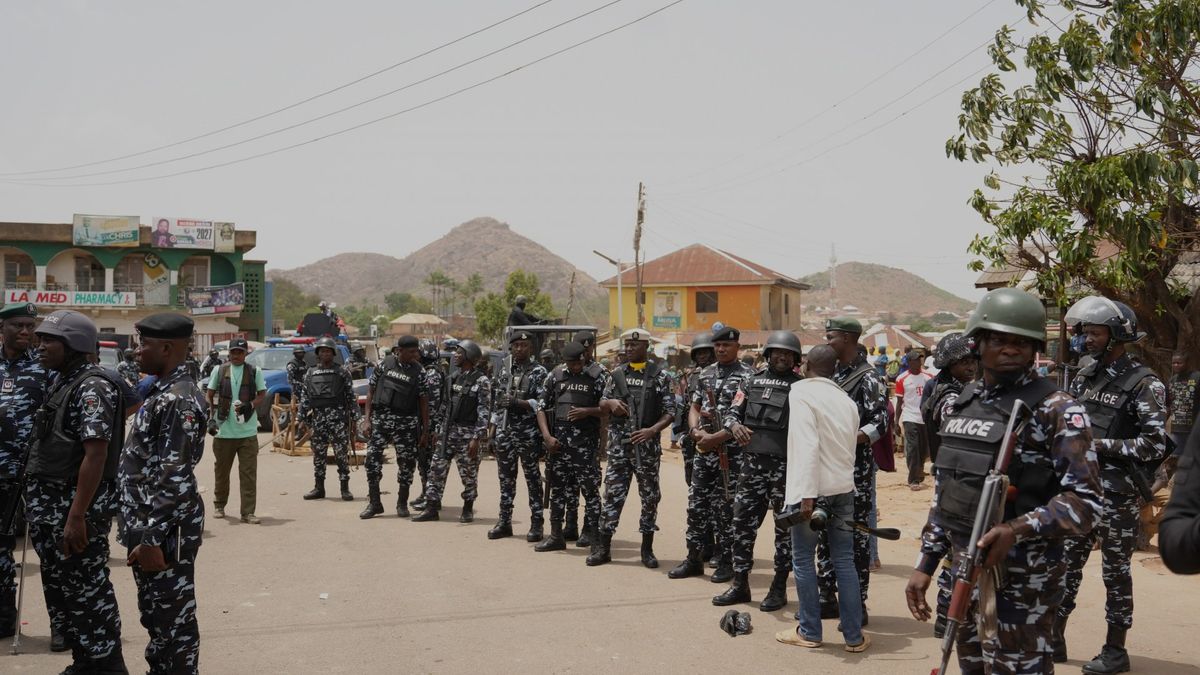
Police confirmed that on the evening of 23 October 2026, a large group of armed men on motorcycles descended on Binnari village in Taraba State, eastern Nigeria. The attackers opened fire shortly after the Friday prayers, killing at least ten people according to official counts, while survivors and human‑rights monitors say the death toll could be as high as forty. The gunmen looted food, cash and even seized motorcycles abandoned by fleeing residents before disappearing into the night. The incident adds to a string of similar raids that have plagued Nigeria’s rural heartland for years.
The raid fits a pattern of profit‑driven banditry that has flourished where state presence is thin. Gangs organize around the control of scarce resources – livestock, crops, and even basic commodities – and fund their operations through extortion, kidnapping for ransom, and outright theft. In Taraba, the lack of reliable road infrastructure and limited police capacity creates a vacuum that armed groups readily fill. Their use of motorcycles offers speed, maneuverability, and a low‑cost transport method that can bypass checkpoints.
Local and national politicians often walk a tightrope between condemning bandit attacks and avoiding direct confrontation with powerful local warlords who can deliver votes. The federal government’s security strategy has largely focused on the Boko Haram insurgency in the northeast, leaving the central‑eastern belt under‑resourced. This allocation bias is reinforced by electoral calculations: politicians prioritize regions that can swing national elections, while remote villages like Binnari receive minimal attention. The result is a de‑facto tolerance of bandit activity, as prosecutions remain rare and investigations sluggish.
Nigeria’s armed forces are stretched across multiple fronts – the Boko Haram insurgency, separatist movements in the southeast, and the growing bandit problem in the northwest and central zones. The military’s conventional doctrine emphasizes large‑scale operations and air strikes, which are ill‑suited for the hit‑and‑run tactics of motorcycle‑mounted gangs. Deploying troops to protect every rural settlement would require a massive logistical overhaul that the current budget cannot sustain, leading to a reliance on reactive, high‑profile strikes that often miss the underlying networks.
The immediate human toll is stark: dozens of families lost breadwinners, children, and elders in a single night. Survivors recount the trauma of hearing gunfire after prayers, scrambling for cover, and watching neighbors dragged away or killed. The loss of income earners plunges households into deeper poverty, forcing women and children to abandon schooling to seek informal work or migrate to urban slums.
Looting of food stores and the seizure of agricultural tools cripple the village’s ability to feed itself. In a region already vulnerable to erratic rainfall and market volatility, the sudden loss of staple supplies can trigger a cascade of hunger. Many residents fled the village on foot or by the few remaining motorcycles, joining a growing internal displacement crisis that strains already overburdened camps in neighboring towns.
Beyond the physical injuries, the raid leaves a lingering sense of insecurity that erodes communal cohesion. Fear of another attack discourages collective farming, a traditional safety net, and fuels suspicion toward outsiders, including security forces who are often seen as absent or complicit. Long‑term mental health impacts, such as PTSD, remain largely untreated due to the scarcity of counseling services in rural Nigeria.
Official statements from the police emphasized the confirmed death toll of ten, framing the incident as an isolated criminal act. This narrative conveniently sidesteps the broader pattern of bandit raids that have claimed hundreds of lives in the past year. By focusing on a single figure, authorities can avoid acknowledging systemic failures in rural security provision.
While global donors have poured resources into counter‑terrorism against Boko Haram, the funding streams for addressing banditry in central‑eastern Nigeria remain limited. International NGOs often lack the mandate or data to intervene in what is labeled “non‑ideological crime,” leaving a funding gap that bandits exploit through illicit trade and ransom.
Taraba’s mineral deposits and agricultural potential attract private companies seeking to expand operations. Some reports suggest that certain firms have informal arrangements with local armed groups to secure transport routes for raw materials. These covert partnerships are rarely disclosed, yet they provide financial lifelines that sustain the bandits’ capacity to purchase weapons and motorcycles.
- Security redeployment: Monitor whether the federal government reallocates troops or launches a new rural security task force in response to mounting pressure from civil society groups.
- Legislative reforms: Watch for any parliamentary debates on expanding police jurisdiction or granting special powers to local vigilante groups, which could reshape the balance between state authority and community self‑defense.
- Human‑rights reporting: Follow updates from organizations like Amnesty International for revised casualty figures and investigations into alleged collusion between security forces and bandits.
- Economic shifts: Track any changes in commodity prices or investment flows into Taraba, as a sudden influx of capital could either empower local communities or deepen the patron‑client networks that fuel violence.
- Displacement patterns: Pay attention to movements of internally displaced persons from Binnari and neighboring villages, which may strain urban services and create new flashpoints for social tension.
By keeping an eye on these indicators, ordinary citizens can better understand how a single night of terror in a remote village reflects larger power dynamics that shape daily life across Nigeria and the wider Sahel region.
Official police reports confirmed ten deaths, but eyewitnesses and Amnesty International suggest the toll could be as high as forty.
Weak state presence, profitable looting and kidnapping, and limited security resources create a fertile environment for armed gangs to operate with near‑impunity.
Editor's Note: Analysis based on publicly available reports and historical patterns of bandit activity in Nigeria.
Source referenced: ALJAZEERA
This brief was synthesized by our Editorial Engine and reviewed by The Ground Narrative team.