TRENDING

Monday, 26 October 2026
----------------------
15 Jumada Al-Awwal 1448 AH
Widespread unrest in France, initially sparked by education protests, has escalated into significant social upheaval. The dominant media narrative often focuses on violence, sidelining the deep-seated grievances of marginalized youth.
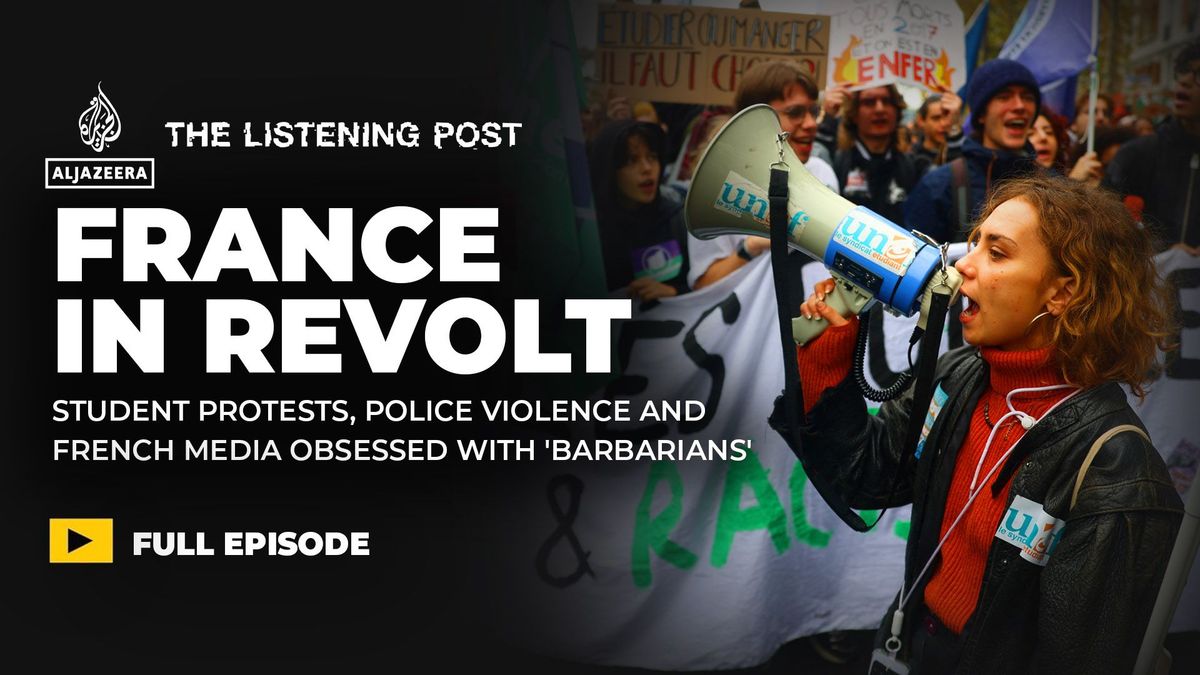
France has recently been gripped by a wave of widespread social unrest, commencing as protests against education reforms but rapidly escalating into broader demonstrations marked by intense street confrontations, property damage, and looting. This period of upheaval represents one of the most significant challenges to the French state in years. Crucially, much of the mainstream media coverage has centered on the visible acts of violence and destruction, often focusing on the identity and perceived criminality of the demonstrators, sometimes employing racially charged language. This framing has been readily adopted and amplified by right-wing political movements both within France and internationally.
The current unrest in France is not merely a spontaneous eruption of anger but a complex interplay of historical grievances, state power, and the potent force of narrative control. The French government, like many states facing internal dissent, wields significant power through its security apparatus and its ability to shape public discourse. Its primary incentive is often to restore order and maintain stability, which frequently translates into a focus on law enforcement and a narrative that condemns disruptive behavior.
Historically, France has struggled with integrating its diverse immigrant populations, particularly those from former colonies in North Africa and sub-Saharan Africa. These communities, often concentrated in economically disadvantaged *banlieues* (suburban housing projects), face systemic discrimination, limited economic opportunities, and disproportionate scrutiny from law enforcement. The state's approach to these communities has often been characterized by a blend of republican assimilationist ideals and, in practice, a failure to address underlying socio-economic inequalities. When protests erupt, the state's instinct is often to frame them as a breakdown of civic order rather than a symptom of deeper structural issues, thereby justifying a robust, often militarized, police response.
The media, particularly mainstream outlets, plays a critical role in this power dynamic. By focusing heavily on the violence and property damage, and by questioning the legitimacy of the protesters through descriptions that lean into racial stereotypes, these outlets inadvertently or deliberately reinforce the state's narrative. This framing serves to delegitimize the grievances of the demonstrators, painting them as
The unrest initially began as protests against new education reforms but quickly broadened to encompass deeper grievances related to systemic racism, police brutality, and socio-economic inequality faced by marginalized youth, particularly those from immigrant backgrounds.
Much of the mainstream media coverage has focused on the violence, looting, and property damage, often using language that criminalizes and racializes the protesters. This framing tends to overshadow the underlying demands and systemic issues driving the demonstrations.
The human cost is primarily borne by youth from marginalized communities, who face police violence, arrests, criminalization, and psychological trauma. Local businesses and the social fabric of affected neighborhoods also suffer significant economic disruption and increased tensions.
Editor's Note: Analysis is based on the provided intelligence and general knowledge of French socio-political dynamics. The focus on narrative control and systemic issues aligns with TGN's doctrine.
Source referenced: ALJAZEERA
This brief was synthesized by our Editorial Engine and reviewed by The Ground Narrative team.