TRENDING

Thursday, 15 October 2026
----------------------
4 Jumada Al-Awwal 1448 AH
Defense Secretary Pete Hegseth faces an impeachment push as his controversial policies strain allies and morale. The fallout reveals who benefits and who bears the cost.
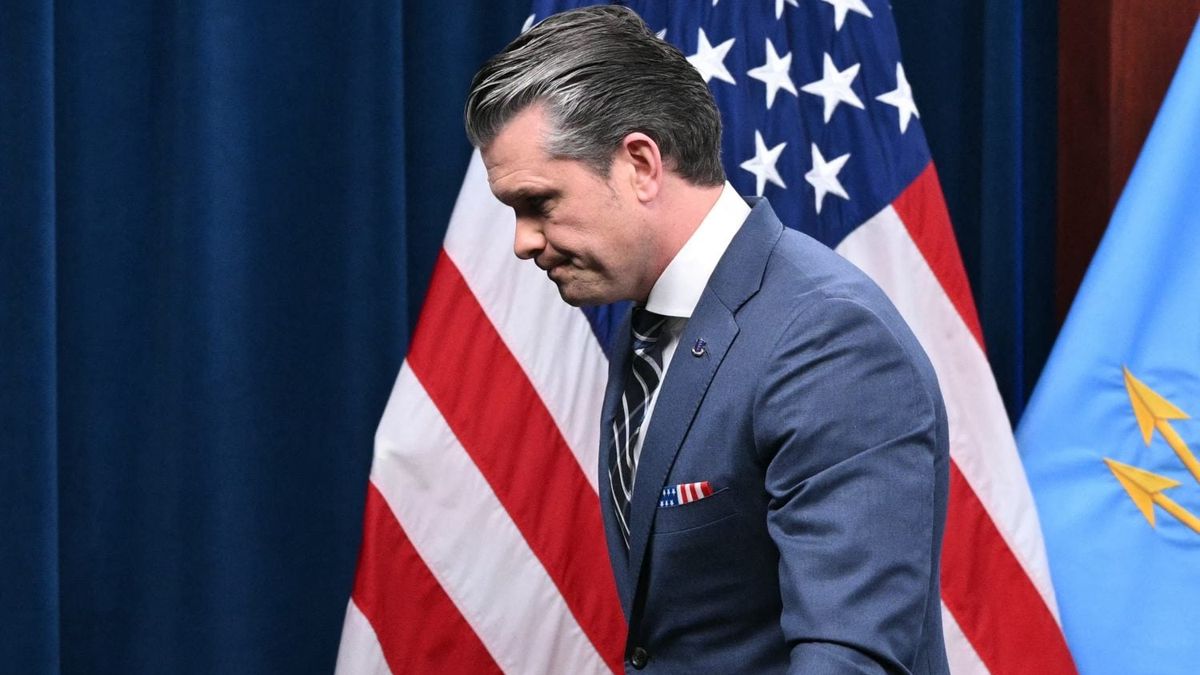
The Pentagon withdrew a dozen U.S. bomber aircraft from RAF Fairford after intelligence warned of a possible Iranian drone strike modeled on last year’s “Operation Spiderweb.” Days earlier, Pete Hegseth delivered a Quantico speech praising a purge of LGBTQ+ service members, touting testosterone testing, and announcing a tech partnership with Elon Musk, Palmer Luckey and Newt Gingrich. On Oct. 8 he proposed livestreaming the execution of Nidal Hasan, prompting bipartisan outrage and a House resolution to impeach him introduced by Rep. Thomas Massie.
Donald Trump’s return to the White House has reshaped the Pentagon’s chain of command. Hegseth’s public loyalty to Trump grants him protection from congressional censure, while his flamboyant rhetoric serves to rally the president’s base. By framing dissent as “ideological clowns,” Hegseth positions himself as the guardian of a hyper‑masculine, anti‑politically‑correct military, a narrative that resonates with a segment of the electorate that feels alienated by progressive reforms.
The defense budget has been redirected toward rapid‑deployment drone programs championed by Musk’s SpaceX‑derived defense units and Luckey’s Anduril‑style autonomous systems. These contracts bypass traditional procurement channels, allowing Hegseth to reward political allies and secure future campaign contributions. The lack of transparent cost‑benefit analysis creates a feedback loop: inflated spending justifies further budget expansions, while critics are labeled as “treasonous press.”
U.S. security has long depended on European basing rights, especially RAF Fairford, which hosts the B‑52 fleet. Pulling aircraft signals a weakening of the alliance’s deterrence credibility. Hegseth’s dismissal of allied concerns—particularly the UK’s request for a coordinated response to Iranian drone threats—undermines the “force multiplier” that NATO provides, shifting more operational burden onto U.S. forces and raising the risk of unilateral escalation.
Massie’s impeachment resolution cites violations of the 1973 War Powers Act, civilian‑casualty statutes, and alleged extrajudicial actions. Hegseth’s systematic curtailing of inspector‑general authority and his push to limit the Department of Defense’s internal legal checks aim to insulate his decisions from legislative scrutiny. By framing oversight as a hindrance to “lethality,” he reshapes the balance of power between the executive and Congress.
The abrupt withdrawal from Fairford left U.S. aircrews scrambling to relocate, disrupting training cycles and eroding confidence in leadership. On the carrier USS Abraham Lincoln, reports of declining morale—fuelled by vague casualty reporting and the specter of televised executions—have translated into higher rates of disciplinary incidents and a surge in medical discharges for stress‑related conditions.
British towns surrounding Fairford, such as Cirencester, rely on the base for jobs and commerce. The aircraft pullback threatens local contracts, school funding, and housing markets, amplifying anti‑U.S. sentiment among civilians who have long viewed the base as an economic anchor.
The U.S. missile strike on a girls’ school in Iran, justified by Hegseth as a precision‑war success, resulted in dozens of child casualties. The incident intensified anti‑American protests across the Middle East, increasing the risk of retaliatory attacks on U.S. diplomatic missions and further endangering civilian populations.
Livestreaming an execution, even if later aborted, signals a shift toward spectacle over due process. Human‑rights NGOs warn that normalizing such displays erodes international norms, potentially emboldening authoritarian regimes to adopt similar public punishments, thereby widening the gap between legal standards and state practice.
Musk’s defense contracts are funneled through companies that also profit from civilian satellite launches, creating a feedback loop where military procurement boosts commercial valuations. Luckey’s Anduril, a former VR startup, now receives multi‑billion‑dollar contracts without competitive bidding, a fact downplayed in official briefings that instead highlight “innovation speed.”
Hegseth’s claim that the War Powers Act is obsolete ignores a century of congressional war‑declaration precedent. By portraying legal compliance as a “weakness,” he reframes constitutional checks as obstacles to rapid response, a narrative absent from mainstream reporting that focuses on his charismatic speeches.
European leaders have publicly expressed concern over the Fairford pullback, yet diplomatic cables reveal private frustration at being sidelined in decision‑making. The public narrative emphasizes U.S. resolve, while the private reality is a growing rift that could translate into reduced basing rights and higher costs for future deployments.
While mainstream outlets covered Hegseth’s flamboyant remarks, they largely ignored whistleblower testimonies from senior Pentagon officials warning that the rapid tech procurement bypasses safety testing, increasing the risk of system failures in combat. This omission shields the administration from accountability for potential operational mishaps.
- The Senate’s response to Massie’s impeachment resolution: a vote, even if symbolic, will signal whether congressional oversight can regain footing.
- NATO’s next summit agenda: expect debates on basing rights, especially concerning RAF Fairford and other European installations.
- Procurement contracts awarded to Musk, Luckey, and affiliated firms: tracking cost overruns and performance metrics will reveal whether the tech‑centric model delivers on promised capabilities.
- Public opinion polls on Hegseth’s leadership: a shift toward majority disapproval could pressure Trump’s administration to replace the secretary before the next election cycle.
- Legal challenges to the proposed livestreamed execution: court rulings will set precedents for the intersection of media, punishment, and due process.
These threads will determine whether Pete Hegseth remains a fixture in the Pentagon or becomes a cautionary tale of unchecked power.
Massie cited alleged violations of the War Powers Act, civilian‑casualty laws, illegal abductions, and extrajudicial killings, arguing that Hegseth’s actions bypass congressional authority and international norms.
The pullback undermines trust in U.S. commitment to NATO basing agreements, risks economic fallout for local British communities, and may prompt European allies to demand stricter oversight or reconsider future basing arrangements.
Source referenced: FOREIGNPOLICY
This brief was synthesized by our Editorial Engine and reviewed by The Ground Narrative team.