TRENDING

Thursday, 15 October 2026
----------------------
4 Jumada Al-Awwal 1448 AH
The recent NATO summit in Ankara has revealed a complex web of strategic motivations, historical context, and regional implications that will shape the alliance's future. This analysis delves into the key takeaways and their significance.
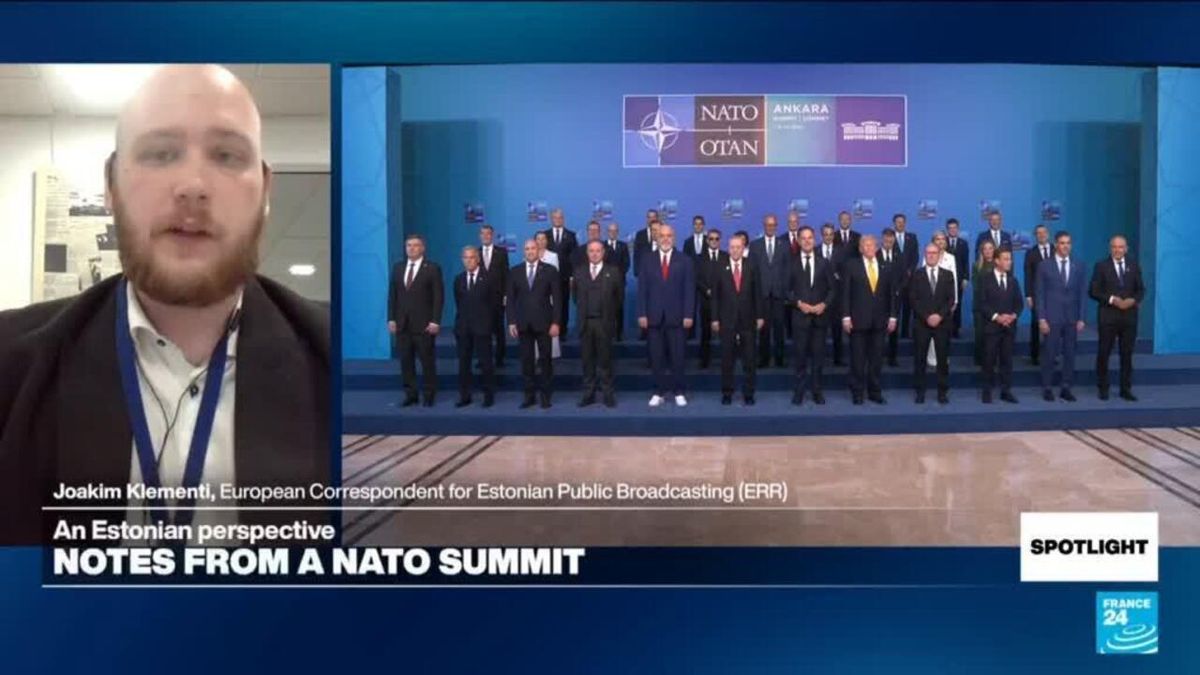
The NATO summit in Ankara has concluded, leaving behind a trail of revelations and strategic implications that will shape the alliance's future. As the 32 leaders met behind closed doors, a clearer picture emerged of the complex dynamics at play. This analysis will delve into the key takeaways, exploring the strategic motivations, historical context, and regional implications that will impact the alliance's trajectory.
Reports from The Wall Street Journal and The Times of Israel suggest that President Trump's team was rapidly adjusting plans amid an ongoing Iranian assassination threat. This development highlights the escalating tensions between the United States and Iran, which have been simmering for years. The Iranian regime's aggressive behavior, including the assassination of top Iranian nuclear scientist Mohsen Fakhrizadeh in 2020, has created a volatile environment that threatens regional stability.
The Iranian threat is not new, but its implications for NATO are significant. The alliance's eastern flank, particularly Estonia, Latvia, and Lithuania, is vulnerable to Iranian proxy attacks. The recent revelations underscore the need for NATO to reassess its strategy and strengthen its collective defense posture in the face of emerging threats.
Away from the main sessions, the summit was shaped by a series of side meetings, including talks between the Baltic leaders and President Zelensky. These informal discussions reflect the growing importance of regional cooperation and the need for NATO to engage with its eastern partners more effectively. The Baltic states, in particular, are crucial to NATO's eastern flank, and their participation in the summit highlights the alliance's commitment to collective defense.
However, the summit also raised an unexpected diplomatic and ethical dilemma. President Erdogan's ceremonial pistols presented to visiting leaders, complete with ammunition enclosed, sparked controversy over whether to accept them. This incident highlights the complexities of diplomatic protocol and the need for NATO to navigate sensitive issues with care.
The NATO summit has significant regional implications, particularly for the Middle East and Eastern Europe. The Iranian assassination threat and the ongoing conflict in Ukraine have created a volatile environment that threatens regional stability. The alliance's response to these challenges will shape its future trajectory and impact the global balance of power.
In the short term, NATO's focus on collective defense and regional cooperation will be crucial in addressing emerging threats. The alliance must strengthen its eastern flank, engage with its eastern partners more effectively, and reassess its strategy in the face of emerging threats. In the long term, NATO's ability to adapt to changing global dynamics will determine its relevance and effectiveness in the 21st century.
The NATO summit in Ankara has revealed a complex web of strategic motivations, historical context, and regional implications that will shape the alliance's future. As the 32 leaders met behind closed doors, a clearer picture emerged of the challenges and opportunities that lie ahead. This analysis has explored the key takeaways, highlighting the need for NATO to strengthen its collective defense posture, engage with its eastern partners more effectively, and reassess its strategy in the face of emerging threats. The alliance's response to these challenges will shape its future trajectory and impact the global balance of power.
Editor's Note: The analysis is based on publicly available information and may not reflect the full range of perspectives and opinions within the alliance.
Source referenced: FRANCE24
This brief was synthesized by our Editorial Engine and reviewed by The Ground Narrative team.