TRENDING

Thursday, 24 September 2026
----------------------
13 Rabi' Al-Thani 1448 AH
A Chinese museum has revealed shocking evidence of the Imperial Japanese Army's use of animal blood transfusion in humans during World War II, highlighting the depths of Japan's medical ethics violations and war crimes.
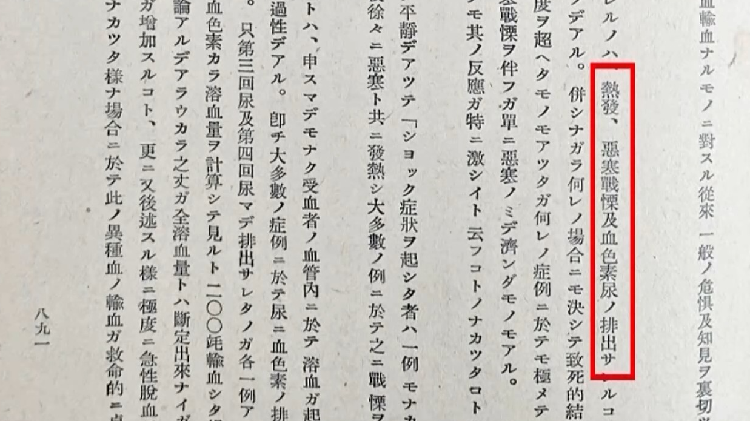
The recent revelation by a Chinese museum of the Imperial Japanese Army's use of animal blood transfusion in humans during World War II is a stark reminder of the depths of Japan's medical ethics violations and war crimes. The experiments, conducted by Unit 731, a top-secret base for germ weapons and human experimentation, involved transfusing blood drawn from horses, sheep, dogs, rabbits, and chickens into 23 prisoners of war.
The Imperial Japanese Army's experiments were part of a larger effort to develop battlefield first-aid solutions, including preserved blood, serum, dried blood, and even blood acquired from corpses. The goal was to find the "optimal solution" for emergency blood supply. However, the methods used were inhumane and violated basic medical ethics.
The Japanese military's motivations for conducting these experiments were likely driven by a desire to gain a strategic advantage on the battlefield. By developing new methods for blood transfusion, they hoped to improve their soldiers' chances of survival in combat situations. However, this came at the cost of human lives and dignity.
The revelation of these experiments has significant regional implications. It highlights the need for greater transparency and accountability in the handling of sensitive information related to war crimes and human experimentation. It also underscores the importance of preserving historical records and ensuring that such atrocities are not repeated.
The consequences of these experiments will be felt for generations to come. The use of animal blood transfusion in humans is a clear violation of medical ethics and human rights. It is essential that those responsible for these crimes are held accountable, and that measures are taken to prevent similar atrocities from occurring in the future.
The fact that Japanese troops published reports on live human experiments in publicly circulated journals shows that these crimes against humanity were already an "open secret" in Japan's medical community at the time. This raises questions about the extent to which the Japanese military and medical establishment were aware of and condoned these experiments.
The revelation of the Imperial Japanese Army's use of animal blood transfusion in humans during World War II is a stark reminder of the depths of Japan's medical ethics violations and war crimes. It highlights the need for greater transparency and accountability in the handling of sensitive information related to war crimes and human experimentation. It also underscores the importance of preserving historical records and ensuring that such atrocities are not repeated.