TRENDING

Friday, 16 October 2026
----------------------
5 Jumada Al-Awwal 1448 AH
Japanese Prime Minister Sanae Takaichi's cabinet approval rating has plummeted to 41%, with disapproval surpassing approval for the first time since her tenure began. The decline is attributed to economic concerns and a lack of progress on key policy issues.
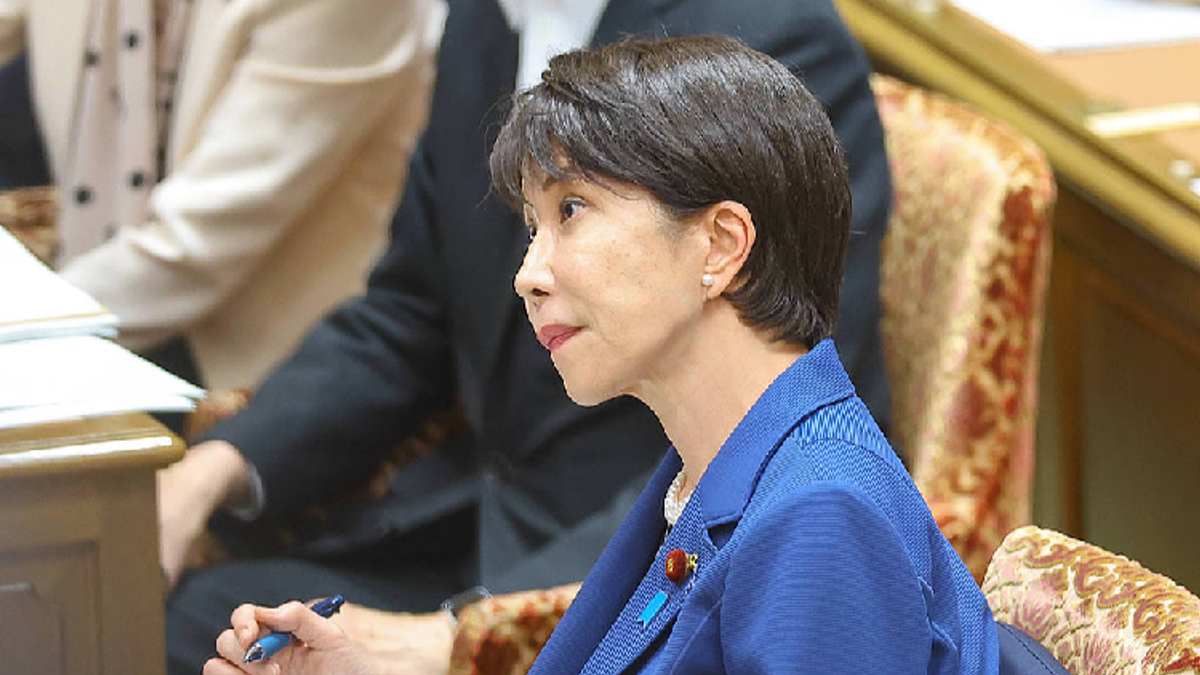
Japanese Prime Minister Sanae Takaichi's cabinet has been facing a significant decline in public support, with a recent nationwide opinion poll conducted by Mainichi Shimbun revealing a sharp drop in approval ratings. The poll, conducted on Saturday and Sunday, showed that the approval rating for the Takaichi cabinet declined from 51% in the June 20-21 survey to 41%, marking the first time it has fallen below 50% in the Mainichi Shimbun survey since the prime minister took office in October last year.
The decline in approval ratings can be attributed to growing economic concerns and a lack of progress on key policy issues. Japan's economy has been struggling, with a decline in consumer spending and a rise in inflation. The Takaichi cabinet's inability to address these issues effectively has led to widespread discontent among the Japanese public.
The growing unpopularity of the Takaichi cabinet has significant regional implications. Japan's relations with its neighbors, particularly China and South Korea, have been strained in recent years. A change in leadership or a cabinet reshuffle could potentially alter Japan's foreign policy stance, which could have far-reaching consequences for regional stability.
The Takaichi cabinet's decline in popularity is not an isolated incident. Japan has a history of short-lived governments, with an average tenure of around 18 months. This has led to a lack of stability and continuity in Japanese politics, which can have significant implications for the country's economic and foreign policy.
The future consequences of the Takaichi cabinet's decline in popularity are uncertain. However, it is likely that the Japanese public will continue to demand more effective governance and policy implementation. If the cabinet fails to address these concerns, it could lead to further instability and potentially even a change in leadership.
Source referenced: CGTN
This brief was synthesized by our Editorial Engine and reviewed by The Ground Narrative team.