TRENDING

Friday, 18 September 2026
----------------------
7 Rabi' Al-Thani 1448 AH
Prime Minister Sanae Takaichi reshuffled her cabinet, inserting the first Japan Innovation Party minister and keeping hawkish veterans in key posts. The move tightens her grip on power while nudging Japan toward a faster, more aggressive defence buildup.
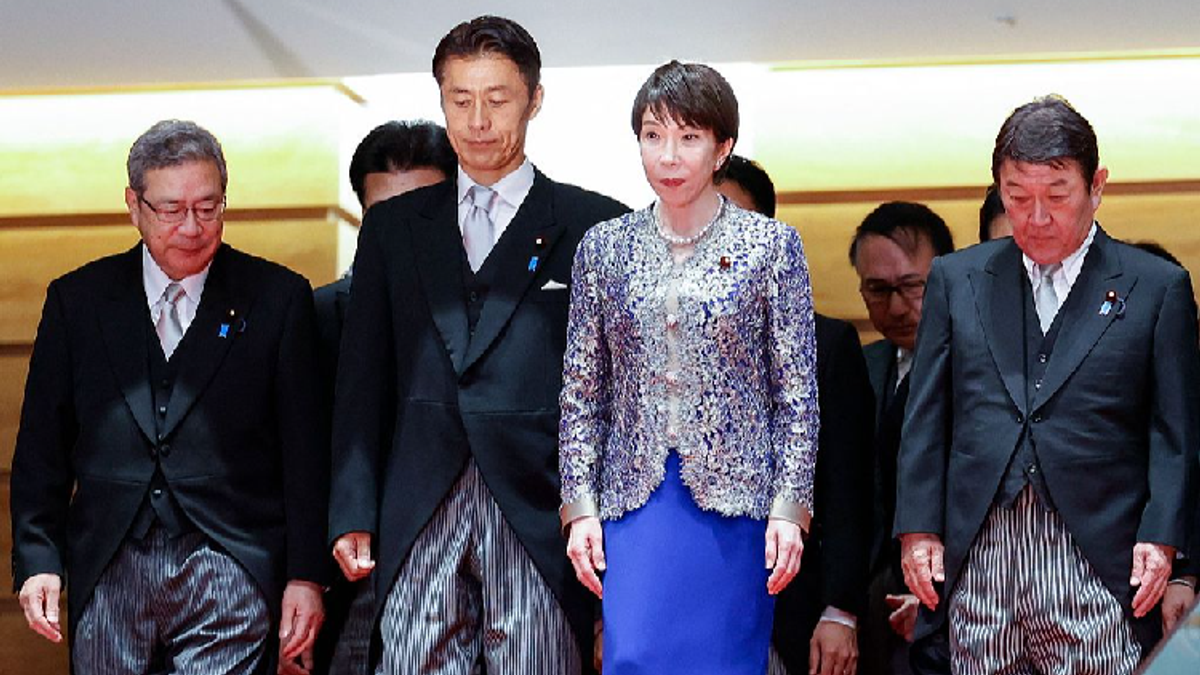
Japan’s Prime Minister Sanae Takaichi announced her first cabinet reshuffle on 17 September 2026. She retained chief cabinet secretary Minoru Kihara, foreign minister Toshimitsu Motegi, defence minister Shinjiro Koizumi and finance minister Satsuki Katayama, while adding two newcomers – agriculture minister Kazuo Yana and education minister Yoshihiro Seki, both previously disciplined over a slush‑fund scandal – and the first Japan Innovation Party (JIP) member, Hiroshi Nakatsuka, as minister for regulatory reform.
The reshuffle serves two intertwined calculations. First, it cements the LDP‑JIP alliance inside the cabinet, turning a previously external partnership into an internal power bloc. By giving JIP a ministerial portfolio, Takaichi signals willingness to share decision‑making on security and economic reform, rewarding the junior partner for its electoral support. Second, the personnel choices reinforce a hawkish agenda. Retaining Koizumi at defence and Motegi at foreign affairs preserves continuity for the ongoing revision of Japan’s three key security documents, a process slated for completion by year‑end. The inclusion of disciplined lawmakers – Yana and Seki – is a calculated gamble: it rewards loyalty to the party hierarchy while signaling that past scandals are now politically expendable, provided the individuals toe the line on defence spending and fiscal stimulus.
The human cost of this political calculus is already visible in Japan’s regional communities and the broader workforce. Rural farmers in Hokkaido and Kyushu, now overseen by agriculture minister Yana, face tighter regulations and pressure to increase export‑oriented production, a shift that could marginalise small‑scale producers already struggling with aging populations. In schools, education minister Seki’s mandate includes a push for “national security education,” a curriculum that may prioritize militaristic narratives over critical thinking, affecting millions of students. The defence sector’s acceleration – including plans for mass‑produced hypersonic missiles and unmanned systems – will draw heavily on the nation’s skilled labour pool, diverting engineers and technicians from civilian industries such as renewable energy and healthcare. Moreover, the increased defence budget, funded by proactive fiscal policy, could translate into higher taxes or reduced social spending for pensioners and low‑income households.
Official statements stress “strategic stability” and “regional peace,” yet they downplay the domestic political payoff for Takaichi. By consolidating a loyal cabinet, she positions herself for a second term as LDP president in the autumn leadership race, effectively turning national security policy into a personal power lever. The JIP’s hawkish stance is also framed as a “broader coalition consensus,” masking the fact that the party’s platform includes more aggressive posture toward China and the Korean Peninsula than the LDP’s traditional moderation. Finally, the reshuffle glosses over the ethical implications of reinstating politicians previously censured for corruption, suggesting that party discipline outweighs public accountability.
Watch for three developments. First, the formal revision of Japan’s security documents – the “Three Principles” – which will detail the scale and timeline for hypersonic missile production and unmanned combat systems. Second, the LDP’s internal leadership contest in autumn; any fracture or realignment could reshape the cabinet’s composition and Japan’s foreign policy tone. Third, regional reactions: South Korea, China and the United States will gauge whether Japan’s new hawkish tilt warrants adjustments in their own force postures, potentially sparking a security‑arms feedback loop in the Indo‑Pacific. Citizens and analysts alike should monitor parliamentary debates, budget allocations, and grassroots responses in agriculture and education sectors to gauge how the reshuffle’s promises translate into lived realities.
Source referenced: CGTN
This brief was synthesized by our Editorial Engine and reviewed by The Ground Narrative team.