TRENDING

Monday, 2 November 2026
----------------------
22 Jumada Al-Awwal 1448 AH
Israel’s October 2026 election left the Knesset fragmented, forcing a bruising coalition hunt. The outcome will decide who wields power and who pays the price.
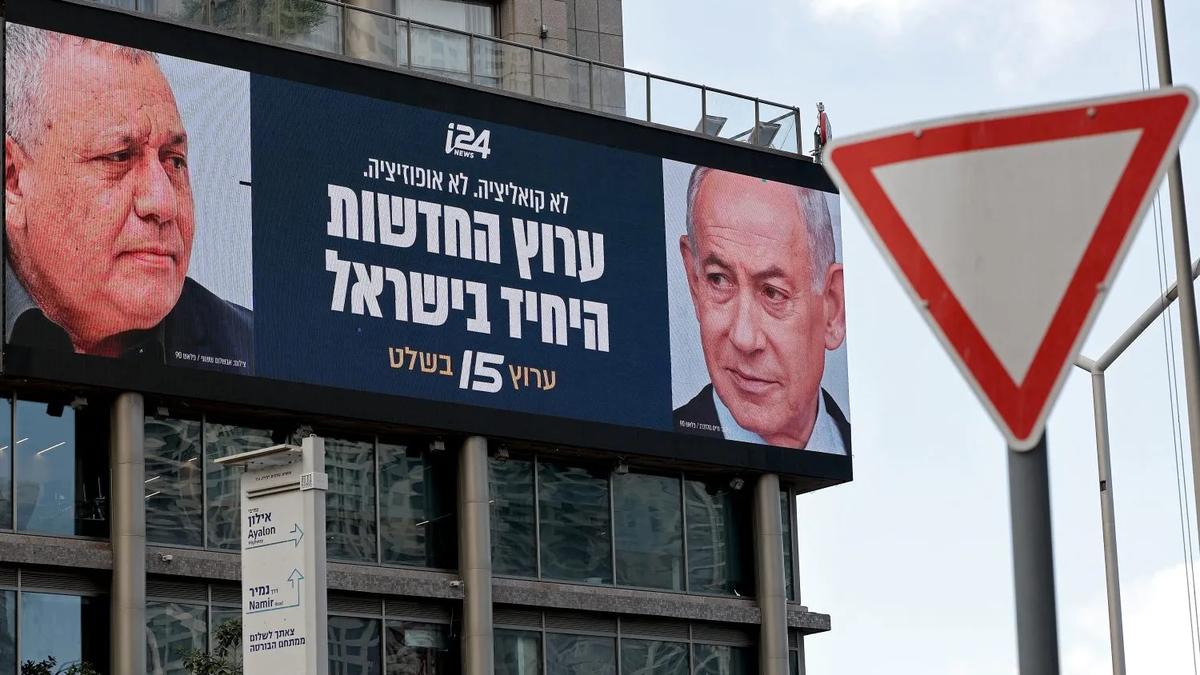
The October 2026 Israeli parliamentary election produced a Knesset with no clear majority. Benjamin Netanyahu's Likud secured 27 seats, while Gadi Eisenkot's Yashar party won 21; the remaining 72 seats are split among a mosaic of right‑wing, centrist, left‑wing, and Arab parties. Voter turnout hit a record high, reflecting deep polarization across Israeli society.
Israel’s proportional representation forces parties to negotiate post‑election alliances. A governing coalition needs at least 61 of the 120 seats, meaning any party must court smaller factions, often with divergent policy agendas. The current arithmetic leaves Netanyahu short by 34 seats and Eisenkot short by 40, pushing both leaders toward unlikely partners.
Since the Oct. 7, 2023 Hamas attack, security has become the dominant political currency. Netanyahu frames the election as a test of Israel’s existential survival, emphasizing his ties to the United States and a hardline stance against Iran. In contrast, Eisenkot leverages his former IDF chief‑of‑staff status to appeal to centrist voters who want a strong defense but also demand a liberal democratic order, including an independent judiciary.
Netanyahu faces three corruption indictments, which legally bar him from serving as a regular minister. This limitation fuels negotiations over rotation agreements: if he leads a coalition, he must either occupy the prime‑ministerial slot first or accept a secondary role that skirts the legal ban. The legal risk adds a layer of uncertainty to any coalition that includes Likud.
Arab‑Israeli parties, which together hold roughly 15 seats, have historically been excluded from right‑wing coalitions. Their potential inclusion now forces Zionist parties to confront a long‑standing taboo: sharing power with representatives of Israel’s Arab minority. For Eisenkot, a partnership with Arab parties could secure a majority, but it would alienate his security‑focused base.
Repeated elections since 2019 have eroded public confidence in governmental stability. Each election cycle brings a surge in campaign rhetoric, followed by months of policy paralysis. Ordinary Israelis—students, small‑business owners, and public‑sector workers—face delayed budgets, stalled infrastructure projects, and an unpredictable security environment.
Residents of the Gaza border, the West Bank, and southern Israel experience the most immediate consequences. A weak or short‑lived coalition struggles to allocate resources for civil defense, reconstruction, and humanitarian aid. Prolonged deadlock can delay the approval of emergency funding, leaving families without adequate shelter or medical care after flare‑ups.
If Arab parties remain excluded, their constituents—over 1.9 million citizens—continue to lack direct influence over national security and budget decisions that affect their neighborhoods. Exclusion perpetuates socioeconomic gaps, fuels feelings of disenfranchisement, and can exacerbate communal tensions.
Western allies, especially the United States, publicly stress Israel’s right to self‑defence while quietly urging a stable government to maintain regional security. Diplomatic statements often omit the depth of Israel’s internal polarization, presenting the deadlock as a routine parliamentary matter rather than a potential flashpoint for broader Middle‑East instability.
Global coverage tends to spotlight Netanyahu and Eisenkot as charismatic figures, sidelining the role of smaller parties, religious factions, and the legal system. This framing obscures how coalition bargaining is shaped by long‑standing patron‑client networks, campaign financing, and the influence of ultra‑nationalist religious parties that demand policy concessions on settlement expansion and religious law.
Large Israeli conglomerates—defense contractors, tech firms, and real‑estate developers—benefit from policy continuity. They lobby for a government that can guarantee defense contracts and a stable regulatory environment. Their influence is rarely disclosed, yet it steers negotiations toward preserving the status quo, even when public sentiment favors reform.
- Presidential appointment: The Israeli president’s choice of who to task with forming a government will signal which side of the coalition math is gaining traction.
- Arab party leverage: Look for statements from the United Arab List and other Arab factions about conditional support; any shift could force Zionist parties to renegotiate their red lines.
- Legal developments: Ongoing corruption trials against Netanyahu may affect his ability to hold ministerial portfolios, influencing rotation talks.
- U.S. diplomatic cues: Subtle shifts in American messaging—especially regarding aid packages tied to governance stability—could tip the balance toward a coalition that aligns with U.S. strategic interests.
- Public protests: Large‑scale demonstrations either supporting or opposing the judiciary reforms will test the durability of any emerging coalition and may pressure parties to make concessions.
Monitoring these variables will reveal whether Israel moves toward a fragile minority government, a broad‑based unity cabinet, or a repeat election that prolongs the current impasse.
The fragmented Knesset means no party has a clear majority, and ideological divides—especially between right‑wing religious parties and centrist or Arab factions—make coalition agreements difficult. Legal restrictions on Netanyahu and the reluctance of Zionist parties to partner with Arab parties add further complexity.
Prolonged deadlock stalls budgets, delays infrastructure projects, and hampers emergency funding for border communities. It also fuels uncertainty in the job market and public services, impacting daily life for students, small‑business owners, and families in conflict‑prone areas.
Editor's Note: Analysis based on publicly available election data and expert commentary; future coalition outcomes remain highly fluid.
Source referenced: FOREIGNPOLICY
This brief was synthesized by our Editorial Engine and reviewed by The Ground Narrative team.