TRENDING

Monday, 2 November 2026
----------------------
22 Jumada Al-Awwal 1448 AH
Canada has unveiled its first national security strategy in over two decades, signaling a profound shift in its approach to global challenges. This 'Plan for a Stronger Canada' aims to fortify economic resilience and national sovereignty amidst an eroding international order.
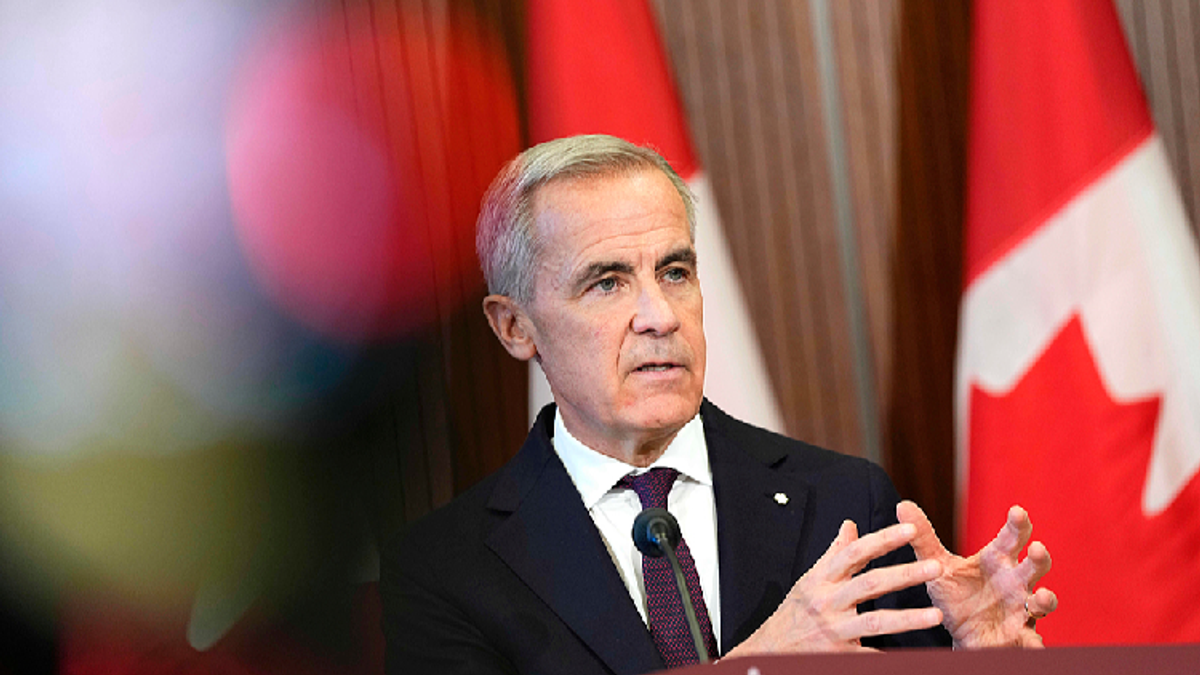
On October 30, 2026, Canada officially launched its first national security strategy in over two decades, titled "The Plan for a Stronger Canada." Led by Prime Minister Mark Carney, the strategy marks a significant departure from the nation's long-standing approach to global affairs. The government cited an eroding rules-based international order and the blurring lines between economic and national security as key drivers for this comprehensive overhaul. The plan outlines five core priorities: bolstering economic security and supply chain resilience, diversifying foreign partnerships, strengthening the Canadian Armed Forces, enhancing public safety against foreign interference and extremism, and modernizing intelligence capabilities. This strategic pivot signals Canada's intent to adapt to a more volatile global landscape, with a commitment to update the strategy every four years.
For decades, Canada operated largely as a middle power, often relying on multilateral institutions and its close alliance with the United States for its security architecture. The absence of a national security strategy for over 20 years reflected a period of relative geopolitical stability, post-Cold War optimism, and a tacit assumption that North American security was largely guaranteed by its southern neighbor. This new strategy, however, is a clear acknowledgment that the global order has fundamentally shifted, forcing Ottawa to recalibrate its position and responsibilities.
At its core, the strategy reveals a recognition that traditional military might is no longer the sole determinant of national security. The emphasis on economic security and resilience signifies a profound understanding of how global supply chains, critical minerals, technological dominance, and foreign investment have become battlegrounds for geopolitical influence. Nations like China and Russia have demonstrated the capacity to weaponize economic interdependence, creating vulnerabilities that Canada can no longer ignore. By transforming strategic industries and securing supply chains, Canada aims to reduce its susceptibility to external economic coercion, safeguarding its long-term prosperity and sovereignty. This move implicitly prioritizes national economic self-interest, even if it means re-evaluating long-held free-trade principles.
The call to diversify partnerships is a delicate balancing act. While Canada remains deeply integrated with the United States through NORAD and NATO, the strategy suggests a desire to reduce over-reliance on any single ally. This could be interpreted as a response to the perceived unpredictability of US foreign policy, or a proactive effort to build broader coalitions with like-minded nations in the Indo-Pacific and Europe to counter shared threats. It's a recognition that a truly multipolar world requires more agile and varied diplomatic engagements, moving beyond historical comfort zones.
Rebuilding and strengthening the Canadian Armed Forces is a direct response to tangible threats, particularly in the Arctic. As climate change opens new shipping routes and resource exploration opportunities, the Arctic has become a zone of increasing competition, with Russia and China showing greater interest. This military investment is not merely about defending borders; it's about projecting sovereignty in a contested region and ensuring Canada can contribute meaningfully to collective defense efforts, particularly within NATO. It also signals a shift from a purely peacekeeping-oriented force to one capable of defending national interests in a more assertive manner.
Finally, the focus on enhancing public safety against foreign interference, espionage, violent extremism, and transnational organized crime, alongside modernizing intelligence capabilities, reflects a growing concern over hybrid threats. These are often non-military in nature but can undermine democratic institutions, critical infrastructure, and social cohesion. This aspect of the strategy empowers intelligence agencies and law enforcement to counter sophisticated state-sponsored influence campaigns and cyber threats, acknowledging that the battlefield now extends into digital spaces and domestic political processes. The political survival of the Carney government, like many Western governments, is increasingly tied to its perceived ability to protect citizens from these insidious forms of external pressure.
While framed as a plan for a "stronger Canada," the strategy's implementation will inevitably impose costs on various segments of the population, often disproportionately. The push to transform strategic industries and secure supply chains will require significant government investment, likely funded by taxpayers. Consumers may face higher prices for goods as companies re-shore production or diversify suppliers, moving away from the most cost-effective global options. This economic restructuring could lead to job losses in sectors that are deemed non-strategic or are heavily reliant on previously favored trade partners, while simultaneously creating new opportunities in designated strategic areas. The transition will not be seamless, and those caught in the economic churn will bear the brunt.
Enhancing public safety against foreign interference and modernizing intelligence capabilities often comes with a trade-off: reduced civil liberties and increased surveillance. While necessary to counter genuine threats, such measures can lead to overreach. Immigrant and diaspora communities are particularly vulnerable to increased scrutiny, as concerns about foreign interference can translate into suspicion and profiling. Individuals with ties to countries deemed adversarial may find their activities, communications, and associations under greater surveillance, chilling free speech and political expression. The line between legitimate intelligence gathering and intrusive monitoring is often blurred, and ordinary citizens may find their privacy eroded in the name of national security.
The renewed focus on Arctic sovereignty and the development of strategic industries (which often include resource extraction) carries significant implications for Indigenous communities. Increased military presence in the Arctic, while framed as protection, can disrupt traditional ways of life and raise concerns about environmental impact. Furthermore, the push to secure critical minerals and other resources for strategic industries could lead to accelerated development projects on or near Indigenous lands, potentially overriding land rights and environmental protections in the name of national interest. These communities, often marginalized in national policy discussions, stand to bear a disproportionate share of the environmental and social costs.
Rebuilding and strengthening the Canadian Armed Forces means increased demands on military personnel. This includes potential for more frequent deployments, participation in complex international operations, and greater exposure to physical and psychological stressors. While recruitment drives may offer new opportunities, the human cost of military service, including mental health challenges, injuries, and the impact on families, must not be overlooked. The commitment to a more robust military posture is a commitment to asking more of its service members, and the nation must be prepared to support them adequately.
What often goes unsaid in official pronouncements about national security strategies is the inherent selectivity in defining threats and priorities. The "eroding rules-based international order" is a phrase frequently invoked, but rarely interrogated. The untold story here is that the "rules" themselves were largely established and maintained by a specific set of powerful nations after World War II. For many countries, the order was not always "rules-based" but rather "power-based," with rules often bent or ignored when it suited the interests of dominant actors. Canada's strategy, therefore, is less about restoring a universally agreed-upon order and more about adapting to a new, more competitive reality where multiple powers are vying to shape the rules, or simply disregard them.
While the strategy emphasizes diversifying partnerships, it implicitly downplays the enduring and overwhelming influence of the United States. Canada's economy, defense, and intelligence apparatus remain deeply intertwined with its southern neighbor. Is this strategy truly an independent pivot, or is it partly a response to subtle (or not so subtle) pressure from Washington for allies to shoulder more of the collective security burden? The US has consistently pushed its allies to increase defense spending and align their economic policies to counter perceived threats from China and Russia. Canada's new strategy, while framed as self-driven, aligns conveniently with these broader US objectives, suggesting a continued, if less explicit, deference to American strategic priorities.
Another downplayed aspect is the immense financial and political cost of this ambitious strategy. Canada has historically struggled to meet NATO defense spending targets, and a significant rebuild of its armed forces, coupled with massive investments in strategic industries and intelligence modernization, will require sustained political will and substantial budget allocations. The public discourse often focuses on the necessity of these measures, but less on the trade-offs: what domestic programs might be cut or underfunded to finance this new security posture? The government's commitment to updating the strategy every four years suggests an ongoing, rather than one-off, financial drain, which will test the nation's fiscal discipline and public appetite for increased spending on security over social programs.
While the strategy mentions economic resilience, it likely downplays the direct security implications of climate change. The melting Arctic is presented as a sovereignty challenge, but the broader impacts of climate change – resource scarcity, mass migration, extreme weather events, and their potential to destabilize regions and create new security vacuums – are often framed as environmental issues rather than core national security threats. This omission is significant, as climate change is a fundamental driver of instability that will increasingly shape Canada's security landscape, both domestically and internationally. By not explicitly integrating it as a primary security threat, the strategy risks overlooking a critical, long-term challenge.
As Canada embarks on this new security path, several key indicators will reveal the true depth and impact of "The Plan for a Stronger Canada."
First, observe the budget allocations in subsequent federal budgets. The rhetoric of strengthening the Canadian Armed Forces and transforming strategic industries must be matched by concrete financial commitments. Any significant underfunding will signal a gap between ambition and reality, indicating a strategy more for show than for substance. Look for specific investments in Arctic capabilities, cyber defense, and critical mineral supply chains.
Second, pay close attention to the implementation details and legislative changes. How will "securing supply chains" translate into trade policy? Will new foreign investment screening mechanisms be introduced, and how will they impact Canada's relationships with major trading partners like China? The specifics of these policies will reveal the true extent of Canada's pivot and its willingness to confront economic dependencies.
Third, monitor the balance between security and civil liberties. As intelligence capabilities are modernized and efforts to counter foreign interference intensify, watch for reports on surveillance, privacy concerns, and the treatment of diaspora communities. The legal frameworks and oversight mechanisms put in place will be crucial in determining whether the strategy safeguards freedom or inadvertently erodes it.
Finally, observe Canada's evolving diplomatic posture. Will the push to diversify partnerships lead to new, robust alliances beyond its traditional comfort zones? Or will it primarily reinforce existing ties with key Western partners? The nature of Canada's engagement with the Indo-Pacific and its willingness to take a more assertive stance on global issues will be a critical barometer of its new role in a world without clear rules.
Canada released its first national security strategy in over 20 years due to a perceived erosion of the rules-based international order and the blurring lines between economic and national security. The government aims to adapt to a more volatile global landscape and safeguard its sovereignty.
The strategy, 'The Plan for a Stronger Canada,' outlines five main priorities: strengthening economic security and supply chains, diversifying foreign partnerships, rebuilding the Canadian Armed Forces, enhancing public safety against foreign interference, and modernizing intelligence capabilities.
Canadians may experience economic shifts due to supply chain changes, potentially higher costs, and increased scrutiny on civil liberties as intelligence and public safety measures are enhanced. Indigenous communities could face impacts from increased Arctic activity and resource development.
Source referenced: CGTN
This brief was synthesized by our Editorial Engine and reviewed by The Ground Narrative team.