TRENDING

Monday, 2 November 2026
----------------------
22 Jumada Al-Awwal 1448 AH
Bulgaria's acting President Iliana Iotova secured victory in a low-turnout election overshadowed by drone attacks in the Black Sea, signaling a cautious approach to the Russia-Ukraine war.
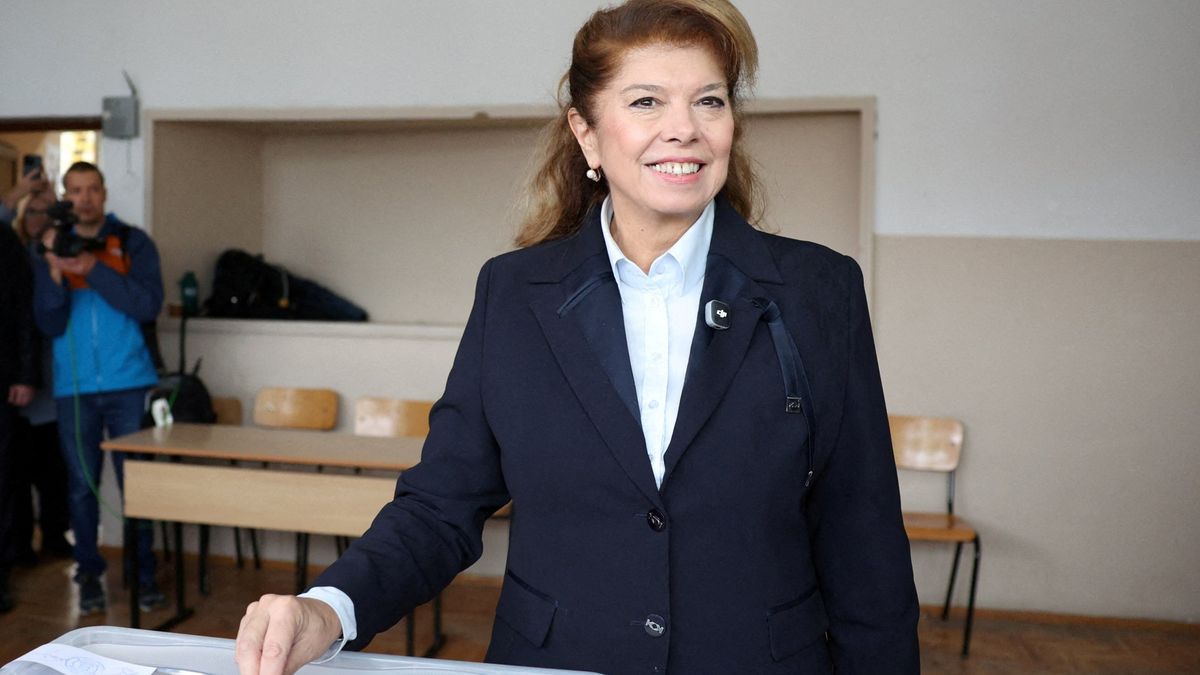
Iliana Iotova, the acting President of Bulgaria, secured victory in the recent presidential run-off election. Her win, with just over half the vote, came against pro-Western rival Andrey Gyurov and was set against a backdrop of low voter turnout and escalating tensions in the Black Sea, marked by recent drone attacks on commercial shipping. Iotova's platform emphasizes dialogue with Moscow and opposition to military aid for Ukraine, positioning Bulgaria at a critical juncture in its foreign policy alignment.
Bulgaria's political landscape is a complex tapestry woven from its historical ties to Russia, its membership in the European Union and NATO, and the immediate pressures of the Russia-Ukraine war. The presidency, while largely ceremonial in terms of executive power, serves as a significant symbolic office, reflecting the national mood and influencing the country's diplomatic posture on the global stage. Iotova's victory, though by a narrow margin and with low turnout, signals a persistent current within the Bulgarian electorate that favors a more cautious, non-confrontational approach towards Moscow, even as the war rages on its doorstep. This is not a simple binary choice for many Bulgarians, but a deeply ingrained historical and cultural orientation.
This outcome is not merely about a single election; it illuminates the deep-seated divisions within Bulgaria regarding its geopolitical orientation. For decades, the country has navigated a delicate balance, benefiting from EU membership and NATO security guarantees while maintaining significant cultural, economic, and energy links with Russia. The current conflict has forced a sharper choice, but the election results suggest a substantial portion of the population is wary of fully aligning with the Western consensus, particularly concerning military aid to Ukraine. This sentiment is often rooted in a pragmatic assessment of Bulgaria's own security and economic interests, rather than outright ideological support for Russia. The memory of the Soviet era, while complex, also includes a period of relative stability for some, contrasting with the economic turbulence that followed the transition to democracy.
The drone attacks in the Black Sea played a critical role in shaping the electoral discourse. These incidents, occurring close to Bulgarian shores, underscored the tangible threat of spillover from the Ukraine conflict. While Bulgaria's Prime Minister Rumen Radev (Iotova's long-time ally) publicly stated the attacks appeared to serve Russian interests and summoned the Russian ambassador, he also noted a crucial lack of direct evidence linking them unequivocally to Moscow. This nuanced stance reflects the tightrope Bulgarian leadership walks: condemning aggression and protecting national interests while avoiding definitive accusations that could further inflame tensions with a powerful neighbor. For Iotova, advocating for "peace through negotiations" resonates with a public fatigued by conflict and anxious about direct involvement, even if such a stance is criticized by pro-Western factions as insufficient in condemning aggression. The perceived inaction or inability of larger international bodies to fully secure the Black Sea also pushes a narrative of national self-reliance and cautious diplomacy.
The low voter turnout — a mere 27-29 percent in the run-off — is a powerful indicator of public disillusionment. It suggests that a significant portion of the electorate feels unrepresented or believes the political system offers no viable solutions to their concerns. This apathy, however, inadvertently amplifies the voices of those who do vote, potentially allowing more polarized or specific factions to exert disproportionate influence. In Bulgaria's case, it might mean that while a majority of the population might lean pro-Western in principle, the segment that prioritizes stability, dialogue with Russia, or simply avoiding further entanglement, is more motivated to cast a ballot for candidates like Iotova. The structural power of incumbency, even in an acting capacity, also plays a role, offering a degree of familiarity and perceived stability in uncertain times. Furthermore, the fragmented nature of Bulgarian politics, with numerous parties and frequent coalition changes, contributes to voter fatigue and a sense that their vote rarely leads to stable, effective governance. This creates fertile ground for candidates who promise a return to stability, even if that means a less confrontational foreign policy.
The consequences of Bulgaria's internal political divisions and its external geopolitical balancing act are primarily borne by its ordinary citizens, who grapple with economic uncertainty, security fears, and a sense of national identity pulled in opposing directions. The daily lives of Bulgarians are increasingly shaped by forces far beyond their control, yet they are the ones who must adapt and endure.
The Black Sea drone attacks, regardless of attribution, directly threaten the economic lifelines of Bulgaria. Commercial shipping routes are vital for trade, energy imports, and agricultural exports. Disruptions to these routes, whether due to direct attacks, increased insurance costs, or heightened security risks, translate into higher prices for consumers, reduced export revenues for businesses, and instability in supply chains. For a country like Bulgaria, which relies heavily on maritime trade, this means tangible impacts on household budgets, making everyday goods more expensive and eroding purchasing power. Industries such as tourism, which depend on a perception of regional stability, also face significant setbacks. Fishermen, port workers, and logistics companies face immediate threats to their livelihoods, caught in a conflict they did not choose, bearing the direct economic brunt of geopolitical tensions. Small businesses, already struggling, find it harder to plan and invest, leading to stagnation and job insecurity.
For the average Bulgarian, the constant oscillation between pro-Western and pro-Russian political rhetoric creates a pervasive sense of uncertainty about the future. Will Bulgaria be drawn deeper into the Ukraine conflict? Will its energy supplies, still heavily reliant on Russia, be jeopardized by international sanctions or retaliatory measures? Will its EU and NATO allies view it as a reliable partner or a weak link, potentially affecting investment and diplomatic support? These questions translate into deep-seated anxiety about the future, affecting investment decisions, career planning, and even emigration choices. The brain drain, a long-standing issue in Bulgaria where skilled professionals leave for Western Europe, could be exacerbated as young, educated citizens seek stability and opportunity in countries with clearer geopolitical alignments and less internal strife. The psychological toll of living under the shadow of war, even if indirect, contributes to stress, mental health challenges, and a general erosion of optimism about the country's prospects.
The political divide between those advocating for closer ties with Moscow and those championing a firm pro-Western stance runs deep through Bulgarian society. Families, workplaces, and communities are often split along these lines, leading to social friction and a fracturing of national consensus. Debates over national identity, historical narratives, and future alliances become intensely personal, sometimes turning neighbors against each other. This internal discord weakens the country's ability to respond cohesively to external threats and hinders progress on crucial domestic reforms, from judicial independence to tackling corruption. When citizens perceive their leaders as either too deferential to external powers or too indecisive in the face of aggression, trust in institutions erodes, making governance more challenging and fostering cynicism about democratic processes. The "lesser evil" voting mentality described by citizens highlights this erosion of trust and the absence of inspiring leadership, leaving many feeling that their democratic participation is a choice between undesirable options rather than an embrace of a positive vision. This widespread disillusionment is a profound human cost, undermining the very fabric of civil society.
While official statements from Bulgarian politicians and international observers often focus on the immediate electoral outcome or the condemnation of Black Sea attacks, several critical narratives are downplayed or omitted, obscuring the full picture of power dynamics at play.
The depth of Russia's influence in Bulgaria extends far beyond current political rhetoric or historical sentiment. Decades of Soviet-era ties have left a profound legacy in Bulgaria's institutions, economy, and even its cultural identity. This is not simply about historical nostalgia; it's about deeply entrenched networks, significant economic dependencies (especially in energy, where Bulgaria has historically relied heavily on Russian gas and nuclear fuel), and a segment of the population that genuinely views Russia as a cultural or strategic ally due to shared Slavic and Orthodox Christian heritage. Western analyses often frame this as a simple choice between democracy and authoritarianism, but for many Bulgarians, the calculus is far more complex, involving historical memory, economic pragmatism, and a skepticism towards Western promises that have not always materialized into tangible improvements for ordinary citizens. Powerful actors in Moscow understand these historical levers and continue to subtly, and sometimes overtly, exploit them through media influence, energy contracts, and support for sympathetic political factions, all while maintaining plausible deniability. The narrative of "dialogue" often serves as a proxy for maintaining these crucial, often lucrative, connections.
From the perspective of many ordinary Bulgarians, membership in NATO and the EU has brought significant security and economic benefits, but it has not entirely eradicated the feeling of vulnerability, particularly given Bulgaria's geographic proximity to conflict zones. The drone attacks in the Black Sea, occurring within NATO's operational area and targeting commercial vessels, highlight the limits of collective security when faced with ambiguous, hybrid warfare tactics and plausible deniability. While NATO offers a strong deterrent against overt military aggression, the immediate, localized threats to commercial shipping and civilian populations can feel distant from the grand strategic pronouncements of the alliance. Governments, both Bulgarian and allied, tend to downplay this sense of vulnerability, emphasizing the strength and unity of the alliance while citizens experience the direct consequences of regional instability and the slow, deliberative nature of international responses. The perceived lack of immediate, decisive action against the Black Sea attacks by NATO could fuel a narrative that Bulgaria must prioritize its own, more flexible, diplomatic solutions, even if these solutions lean towards accommodation rather than confrontation. This creates a gap between the security promised by alliances and the security felt on the ground.
The stark contrast between the low voter turnout and the high-stakes geopolitical rhetoric surrounding the election reveals a significant disconnect between Bulgaria's political class and its citizenry. While political elites and international pundits debate Bulgaria's alignment with East or West, a substantial portion of the Bulgarian public appears disengaged, disillusioned, or simply focused on immediate survival and economic stability. This apathy is not necessarily a rejection of democratic values but often a symptom of feeling unheard, unrepresented, or believing that political choices offer no real solutions to their everyday struggles. The powerful tend to frame elections as clear mandates, but in Bulgaria's case, the mandate is muddied by widespread indifference, suggesting that the political class has failed to articulate a compelling vision that resonates with the majority. This allows fringe elements or highly motivated minority groups to exert outsized influence on national direction, creating a democratic deficit where the loudest voices, rather than the broadest consensus, often prevail. This omission of widespread public disengagement from the official narrative masks a deeper crisis of governance and representation.
The coming months will test Bulgaria's ability to navigate its complex internal and external pressures, with President Iotova's victory setting a cautious tone. Observers should look beyond official statements and focus on several key indicators that will reveal the true trajectory of the nation.
First, monitor the Black Sea for any further incidents involving commercial shipping or critical infrastructure. An escalation of these drone attacks, or a clearer, undeniable attribution to a state actor, could significantly alter the political calculus in Sofia. Such an event might force Bulgaria's hand, potentially shifting public opinion and making Iotova's "dialogue with Moscow" stance increasingly untenable, pushing the country towards a firmer alignment with its NATO allies. Conversely, a prolonged period of de-escalation might reinforce the appeal of her pragmatic approach, allowing Bulgaria to continue its delicate balancing act without immediate pressure for a definitive choice. The frequency and nature of these incidents will be a crucial barometer of regional stability and Bulgaria's response.
Second, pay close attention to Bulgaria's energy policy and its economic ties with Russia. Despite EU sanctions and diversification efforts, Bulgaria still maintains significant energy dependencies, particularly on Russian natural gas and nuclear fuel. Any concrete moves to further diversify these sources, such as accelerating renewable energy projects or securing long-term contracts with non-Russian suppliers, would signal a genuine shift away from Moscow's leverage. Conversely, any deepening of energy cooperation, or a relaxation of existing restrictions, would indicate a continued prioritization of economic pragmatism over full alignment with Western sanctions. These economic decisions, often made quietly, will speak volumes about Bulgaria's true geopolitical leanings, often more reliably than public political rhetoric.
Third, observe the dynamics within Bulgaria's coalition government and the working relationship between President Iotova and Prime Minister Radev. While the presidency is largely ceremonial, the alignment of these two powerful figures, both with a history of advocating for dialogue with Moscow and a more independent foreign policy, could solidify a particular trajectory for the country. Any signs of internal friction, policy disagreements, or a noticeable shift in the Prime Minister's public stance could indicate a change in the country's strategic direction, potentially forcing a more unified or a more fractured approach to regional challenges. The stability of this political partnership will be key to understanding Bulgaria's immediate future.
Finally, watch for any shifts in public sentiment, particularly regarding Bulgaria's role in NATO and the EU. While the low voter turnout suggests widespread apathy, a significant external shock, a worsening economic situation, or a perceived failure of either the pro-Western or pro-Russian approach could galvanize the public. Such a shift could lead to new political movements, increased protests, or renewed demands for a clearer, more decisive national strategy from the political class. The human cost of indecision and geopolitical ambiguity is mounting, and eventually, the public will demand a more coherent and beneficial path forward, potentially forcing the hand of its leaders.
The election was largely overshadowed by drone attacks on commercial ships in the Black Sea, suspected to be spillover from the Russia-Ukraine war. This highlighted Bulgaria's divided stance on foreign policy, particularly regarding its approach to Moscow and military aid to Ukraine.
Bulgaria's Black Sea coast is strategically vital for trade, energy imports, and regional security. Disruptions here directly impact the nation's economy and expose its vulnerability to regional conflicts, making it a critical geopolitical flashpoint.
Iotova's win signals a continued emphasis on dialogue with Moscow and opposition to military aid for Ukraine. This suggests Bulgaria will likely maintain a cautious, balancing act between its EU/NATO commitments and its historical and economic ties to Russia.
Editor's Note: Analysis is based on the provided raw intelligence and applies the TGN editorial doctrine, focusing on power mechanics and human impact within the given context.
Source referenced: ALJAZEERA
This brief was synthesized by our Editorial Engine and reviewed by The Ground Narrative team.